-
 How Much College Aid Are Students Missing Out On?How Much College Aid Are Students Leaving on the Table?
 -
 4 Ways Parents Can Help Young Adults Avoid Overpaying for CollegeSending your child to college is a major milestone, and one that can have a big impact on your family's finances. Whether you're exploring undergraduate student loans or other funding options, understanding the full cost is essential. With the rising cost of college, many students may be wondering if they can afford a college education and whether they are making the right financial choices along the way. As a parent, you can play a pivotal role in supporting your child through this journey, especially when it comes to offering financial guidance. Here are some valuable tips you can share with your child to help them avoid overpaying for college and set them up for future success. Budget for expenses beyond tuition Tuition is typically the first thing most people think of when considering the cost of college, but college expenses go far beyond just that. Additional expenses like meal plans, transportation, books, living arrangements, and spending money can add up quickly, and must be factored into budget planning. Understanding how to budget can help you and your child when discussing different types of financial aid - such as scholarships, grants, and student loans - they’ll use to pay for college. Many forms of financial aid can be applied beyond tuition, while other forms are paid to the schools directly and may not be enough to cover total tuition and lifestyle expenses. Teaching your child how to budget can help them plan out monthly expenses and avoid spending more money than they have available. Most importantly, if your child plans to take out financial aid, having an accurate picture of their total expenses will help ensure they do not overborrow in student loans. Explore and pursue scholarship opportunities Scholarships are a great place to begin looking for college financial support because, unlike private student loans, they don’t need to be paid back. Thousands of scholarships are available every year including from colleges, non-profits, employers, private organizations, and religious or social groups. Scholarships can be merit-based, need-based, or set aside for a particular group of people such as women and military families. Finding these scholarships can take time, but there are several resources to help you and your child find scholarships including online scholarship directories, college financial aid offices, high school counselors, foundation or organization websites, employers, or your state’s grant agency. If your child is planning to apply for scholarships, help them research early and check the deadline and requirements for each application, as they can differ. There is no limit to how many scholarships a student can apply to, and some scholarships may even extend eligibility to parents. Remember: every dollar received in scholarships is a dollar saved toward paying for college. [cross_promotion_banner] Put in the time to fully understand loan options Ensuring your child completes the FAFSA is the first step to supporting them in securing financial aid. Once you know how much federal financial aid your child qualifies for, you can better support and plan for any gaps between their expected expenses and the federal aid available to them. Knowing the differences between federal and private student loans can also help educate them on supplemental student loan options, if needed. Some private student loans offer perks like flexible repayment terms, access to college and career coaching, and even cash back at graduation, so it can pay to do your research. Understanding the total amount they will need to borrow–and be responsible for paying back–is critical before applying for any loan. As you and your child consider colleges and loan options, also encourage them to think about their expected salary and how much they’ll be able to afford in monthly loan payments post-graduation. Using a college ROI calculator can help them make informed choices about their major or school selection based on their expected income after graduation. Ascent also offers a variety of flexible loan options you can explore, including student loans with no cosigner, parent loans, and cosigned student loans. Improve your financial literacy (and your child’s) Preparing for college is an exciting time for both you and your child. It’s also a great opportunity to learn alongside them and improve your own financial literacy while helping them succeed. Learning how to budget responsibly to understanding how factors like credit score and interest rates can impact personal finances are invaluable concepts when it comes to avoiding or taking on debt responsibly and saving for the future. It’s never too early to teach your kids (or yourself) about the importance of making informed financial decisions. There is a plethora of free financial wellness resources, loan counseling, and financial aid guides to help parents and students unpack everything they need to know about paying for college, and making smart financial decisions in general. Investing in your child by facilitating open dialogue around finances and the importance of planning early can help ensure they do not overpay for college and set them up for future success.
 -
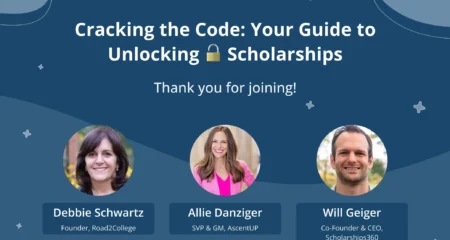 Webinar Recap: Cracking the Code on ScholarshipsAs the cost of education increases, scholarships have become a lifeline for countless students looking to pursue their academic dreams. However, with so much competition and so many options, the scholarship search can be disheartening. Understanding the nuances of scholarship applications, finding the right opportunities, and writing a winning scholarship essay remain daunting tasks for many. Luckily, Ascent and Road2College joined forces to discuss scholarship options, featuring panelists Will Greiger, Allie Danziger, and Debbie Schwartz. In case you missed our webinar, “Cracking the Code: Your Guide to Unlocking Scholarships,” you can watch some of the recording here: https://www.youtube.com/watch?v=X53OnJ5VQp0 What are the different types of scholarships? Understanding what types of scholarships are available is critical when trying to decide which ones to apply for. Will Greiger, CEO and Co-founder of Scholarships360, breaks down the four main types of scholarships: 1. Federal & government scholarships: These include grants such as the Pell Grant and other types of aid awarded through the Free Application for Federal Student Aid (FAFSA ®). Some states also have aid programs that fall into this category as well. 2. Scholarships from colleges: Like government scholarships, a college may also use information gleaned from your FAFSA to award you need-based aid. Many college scholarships are based off academics or talents (aka merit-based scholarships). A subset of college scholarships is a departmental scholarship, which you might earn for being in a specific area of study, studying abroad, or being a part of a club. 3. Non-profit scholarships: Non-profits are well-known for their generosity in scholarship awards. Some examples of these organizations would be the Elks Club, the Girl Scouts, or a smaller, local non-profit in your community. 4. Scholarships from private organizations: Many private companies also give out scholarships! To date, Ascent has given away over $330,000 in scholarships to students and families. Enter now for a chance to win one of our no-essay student scholarships – it only takes a few minutes! You do not need to have an Ascent loan to enter. https://www.ascentfunding.com/scholarships/ Common scholarship myths To get you started on the right foot, we take a moment to break down and debunk these top misconceptions about applying for scholarships: 1. “Only top achievers & athletes get scholarships” - While being a star athlete or straight A student can be a great thing to mention when applying for scholarships, there are plenty of opportunities out there if that’s not you. Researching for more niche scholarships that align with your unique passions, or entering more content style scholarships could be the best way to go. Plus, many scholarships are focused more on the financial need of the applicant, meaning federal and government scholarships may be a great fit for you! 2. “Scholarships are too competitive, so don’t bother applying!” - Applying for financial aid may feel competitive, but researching and applying for scholarships that align with your talents to boost you toward the top of the applicants. Applying for local scholarships will also mean less competition. 3. “Start researching for scholarships your senior year of high school” - While there may be plenty of scholarship opportunities out there during your senior year, there are scholarships available to you as early as your freshman year and plenty to keep exploring throughout your college journey. 4. “You must be a great essay writer to win scholarships” - Essay scholarships can feel daunting, and you should always invest time and effort into your submissions, but showcasing your creativity and who you are as an individual in your essay can be just even more valuable. Starting your scholarship search: Before diving into your scholarship hunt, our panelists suggest a quick look inward to find what you should be looking for in a scholarship: - Consider what makes you unique and start there. This will give you insight on the types of scholarships you should look for based off your passions, talents, and life experiences. - Be specific when you consider all the qualities of yourself that you might include in your scholarship research. Even the smallest or strangest interests could generate scholarship opportunities! - The more niche, the better! Finding a scholarship opportunity revolving around a lesser-known hobby or interest can mean less competition and a better chance of winning that money for school. A few key takeaways: As you embark on your journey of paying for college, we’ll leave you with these four key takeaways to keep your scholarship search successful: 1. Scholarships offer invaluable financial support for students and families on their educational journey. 2. Start your scholarship search early to maximize your opportunities 3. Leverage your various scholarship research tools, including online platforms, educational institutions, and organizations 4. Apply for as many scholarships as you can! Congrats to our latest scholarship winner! One of our top priorities at Ascent is to contribute to the success of all students. That’s why we have given over [scholarship_awards_amount] in scholarships to date! Join us in congratulating our most recent scholarship winner below: Kamiyah B., Pace University, Unlocking Scholarships $500 Scholarship Giveaway
 -
 How Long Does it Take to Get Student Loans? (Federal and Private)How long does it take to get a student loan? Factors such as when you submit the Free Application for Federal Student Aid (FAFSA®), your credit score, and the loan certification process all play a role in determining when you will receive your student loan funds. However, we understand that you must get your student loans in time to pay for tuition, books, and other college expenses. Let’s unpack how long the application and review process takes for federal and private student loans and the steps you can take to get ahead of the process. Key Takeaways Start your student loan application as early as possible—ideally right after your college acceptance—to give yourself enough time to complete paperwork, resolve issues, and secure funding before tuition is due. Federal student loans typically take several weeks to a few months to process, depending on when you complete the FAFSA and how quickly your school certifies the loan. Private student loan timelines vary by lender but often take anywhere from a few days to a few weeks, depending on eligibility checks, credit evaluations, cosigner involvement, and school certification. Loan disbursement usually happens shortly before the academic term begins, with funds going directly to the school to cover tuition and fees. Monitor your loan status using lender-specific portals or federal tools like the FAFSA mobile app, and contact your lender directly if you haven’t received your loan funds by the expected date. When to Apply for Student Loans The best time to apply for student loans is as soon as possible. For most students, this is shortly after their acceptance. There are several reasons for this timeline. Overall, loan providers (including the federal government) receive increasing applications as the school year approaches. Some loans and other forms of student aid are granted on a first-come-first-served basis, meaning that an earlier application makes it more likely you will receive them. Because timing fluctuates considerably from applicant to applicant, it’s challenging to estimate exactly how long it takes for student loan approval. However, you should still be aware of the general timeline for the process. Starting the loan application process as early as possible will help save you some stress in the long run and may even increase your chances of securing funding. It’s also important to consider that even if you qualify for federal loans, these may only cover part of the cost of college attendance. Because of this, it’s common to apply for other financing options, such as private student loans, or alternative forms of financial aid, such as grants and scholarships. Starting the application as soon as possible will give you more time to find supplemental funding if needed. How Long Does it Take to Get Federal Student Loans? How long does it take to get a student loan from the federal government? The average time to receive your funds can vary significantly based on several factors, primarily when you fill out your FAFSA application. The process generally takes several weeks to a few months, depending on how many applications they receive. Here is a general list of steps to be completed to receive your funds: Create an FSA ID: The Federal Student Aid (FSA) is your electronic signature for the FAFSA and other federal student aid documents. To create your FSA ID, visit https://studentaid.gov/fsa-id/create-account/launch. Gather necessary information: You will need your Social Security Number, full name, date of birth, tax information, and other details about your family’s financial situation. Complete and submit the FAFSA: The Free Application for Federal Student Aid is the application for federal student aid and will determine your qualifications for federal student loans. Receive and review your Student Aid Report (SAR): After processing your FAFSA, the government will send you your SAR. Review for accuracy and make any necessary corrections. Review financial aid offers: Colleges and universities you have applied to will send you financial aid offers once your FAFSA has been processed. Accept or decline federal student loans: If you choose to accept the loans, you will follow the instructions provided by the school. Complete entrance counseling: If you are a first-time borrower of federal student loans, you must complete entrance counseling to learn about your rights and responsibilities as a borrower. Sign the Master Promissory Note (MPN): The MPN is a legal document in which you promise to repay your federal student loan. How Long Does It Take to Get a Private Student Loan? Like federal loans, the typical timeline can vary. This is because each lender has its process, and each applicant must navigate it uniquely. Generally, most applications take a few days to several weeks or months. Here is a general list of steps to complete when working with Ascent to receive your funds: Determine loan amount – Calculate the amount you need to borrow, including tuition, fees, living expenses, and other educational expenses. Remember that private loans can cover up to 100% of the total cost of attendance, minus other aid received. Check your eligibility – Every lender has eligibility requirements for borrowers, but most consider credit history, income, enrollment status, and similar factors. Gather necessary information – The exact information required will vary but will likely include personal, academic, and financial information. Apply for the loan – Most loan applications can be completed online or at a lender’s office. Pass the credit check – Most lenders require a credit check to determine your creditworthiness. With Ascent, you can check your rate in under 3 minutes without impacting your credit score. Find a cosigner if necessary – If you lack sufficient credit history or do not meet the eligibility requirements of the loan, you may need a cosigner. (Even if you qualify without a cosigner, applying with one may qualify you for a lower rate or better terms). Get the loan approved – The lender will review your application after it’s submitted. Review and accept loan terms – If you are conditionally approved, you must carefully review all the loan terms, including interest rate, fees, and repayment terms. Then, you must decide whether to accept the loan offer. Complete school certification – Once you accept the loan offer, the school’s financial aid office may need to certify the loan amount by confirming your enrollment status and ensuring the loan amount adheres to the school’s cost of attendance. Finalize the loan – Complete any additional requirements the lender demands, such as signing the loan or providing additional documentation. Once your loan is finalized, review your loan terms and conditions to determine when the payment will be issued to your school. For example, Ascent’s student loans are distributed to schools on the second Wednesday after the program starts. How to Monitor Your Student Loan Status For a federal student loan, you must first access your personal FSA account to monitor your federal student loans. From there, you can view loan details and identify the loan servicer for each loan. You can also create an account on studentaid.gov using our FSA ID to access your federal student aid information and manage your loans. There is also a Federal Student Aid Mobile App that can help monitor your federal loan status. The process of monitoring your private student loans will vary significantly from lender to lender. The best way to begin is to contact your lender directly. Check your loan agreement or the lender’s website for contact information. Many lenders have an online portal where you can log in to view your account, while some (including Ascent) may offer a mobile app for added convenience. If you have specific questions or concerns about your student loan, contact your lender’s customer service department or the phone number on your monthly statement. If you’d like to contact your dedicated Ascent college student loan specialist, contact us at 877-216-0876 or [email protected]. Private Student Loans vs. Federal Student Loans: What’s Right for Me? Choosing what type of loan is right for you is entirely determined by your unique needs and circumstances. Some students will find that federal loans alone will meet their needs, but most will find they will need additional funding sources. Similarly, the amount of aid available to students will dramatically differ based on needs. The only way to know for sure whether federal, private, or both student loans are the right choice for you is to complete the application process and compare your options. Whatever option you choose, you must begin the process as soon as possible to give yourself the most time and options. For more information about student loans, visit our Student Loans 101 page or learn how to get a student loan. Learn More with Ascent Prioritizing your student financial aid and ensuring it is all in place before you start your college education is crucial to your success with the loan process. That means you should start the student loan application process as soon as possible. Luckily, you can start the process today. Ascent offers a variety of undergraduate student loans and graduate student loans to help you achieve your financial goals and academic dreams. With cosigned student loans and no cosigner student loans, you can find a loan type that best fits your unique needs. How Long Does it Take to Get a Student Loan FAQs How Long Do Student Loans Take to Process? The time it takes to process a student loan varies significantly by the lender and the school. While some loans may be processed in as little as a few days, others may take several months. Are Student Loans Given to You Immediately? Most student loans are paid out after some time and will be disbursed directly to the school shortly before the start of the school year. Why Hasn’t My Student Loan Been Disbursed? The only way to find out why your student loan hasn’t been disbursed is to contact your lender and speak with one of their representatives. Some common reasons why a lender would not have disbursed a student loan include incomplete loan requirements, enrollment status, school certification delays, incomplete verification process, incomplete loan acceptance, or the loan not yet scheduled to be disbursed.
 -
 Paying for Law School: Everything You Need to KnowPursuing a career as a lawyer can set you up for a rewarding future in the legal field, but the path to passing the bar requires a significant investment of time and finances. Paying for law school might seem like a big hurdle, but you can still achieve your dream with preparation and research. Understanding the cost of your education and finding the financial aid that works best for you is crucial to your success. Continue reading for some tips and cost breakdowns to get you on your way to paying for law school. Calculating the Cost of Law School: What Your First Year May Look Like If you’re ready to become a lawyer, understanding how you plan to pay for law school should be your first step. Remember, law school expenses extend beyond tuition; costs like textbooks, living expenses, and bar exam preparation can add up. The first step in your financial planning should be to calculate the total cost of your law school education. Tuition can vary widely depending on whether you attend a public or private institution or are an in-state or out-of-state student. Be sure to include other expenses like books, supplies, and living costs such as rent, utilities, and food. Sample Budget for the First Year of Law School Here's a sample budget for what the first year of law school might look like, broken down by category: Yearly Tuition and Fees Public School Tuition (in-state): $13,000 - $40,000 Private School Tuition: $45,000 - $69,000 Student Fees (library, gym): $1,000 - $2,000 Books and Supplies Textbooks: $1,000 - $1,500 Notebooks, pens, and other supplies: $100 - $200 Living Expenses Rent: $800 - $1,200 per month ($9,600 - $14,400 per year) Utilities (electricity, water, internet): $150 - $250 per month ($1,800 - $3,000 per year) Food: $300 - $500 per month ($3,600 - $6,000 per year) Transportation Public Transit: $70 - $120 per month ($840 - $1,440 per year) Car (if applicable): $200 - $400 per month ($2,400 - $4,800 per year) Health Insurance Student Health Plan: $1,500 - $3,000 per year Miscellaneous Personal Expenses (clothing, entertainment): $100 - $200 per month ($1,200 - $2,400 per year) Emergency Fund: $500 - $1,000 Total Estimated Cost for the First Year Public School (In-state): $45,000 - $68,000 Private School: $65,040 - $90,000 These figures are just estimated ranges, and the actual costs for your specific program can vary based on your location, personal spending habits, and other factors. How to Pay for Law School: 4 Tips After budgeting for school and living expenses, it’s time to get hands-on with the best tips to pay for law school. Utilize Financial Aid Resources Using all the financial aid resources available is crucial to determining how to afford law school. Start by filling out the Free Application for Federal Student Aid (FAFSA®) to determine your federal grants and loan eligibility. After assessing your FAFSA eligibility, make an appointment with your law school's financial aid office. They can usually provide students with personalized guidance and may know of school-specific scholarships or grants you can apply for. Other sources of financial aid, such as private loans or employer tuition reimbursement programs, may also be available if you're currently working and meet other eligibility criteria. Note: Stay up-to-date on the latest FAFSA deadlines here. Research Grants and Scholarships Scholarships and grants are invaluable resources that you don't have to pay back. Scholarships are often merit-based, while grants are usually need-based. Your first stop for both should be your law school's financial aid office, which can provide information on institution-specific opportunities. Legal organizations like the American Bar Association (ABA) and local bar associations also offer valuable scholarships to law students. Don't overlook your school's alumni network; many alumni groups fund scholarships for incoming students. In addition to federal grants, state governments offer grants, especially for residents attending in-state law schools. Law schools also offer need-based grants, so consult your financial aid office for details on your eligibility. Lastly, it’s a good idea to check with private organizations and foundations, such as the Law School Admission Council (LSAC), and your local, regional, or state bar association to see whether you qualify for grants based on either need or merit. Using Student Loans to Pay for Law School Utilizing student loans is a great option to pay for law school if you notice a gap in your financing. When considering using student loans, it's crucial to understand the terms and conditions of your loan and select a repayment plan that fits your budget and financial plans to maximize your financial wellness. Here are some tips for navigating the process: Research graduate school loans: Before embarking on your law school journey, understand the impact of attending law school on your financial future and carefully review the terms and conditions of potential loans. Graduate school loans are a great option for many. Explore all options: There are two main student loan options: federal and private law school loans. Federal loans often have lower interest rates and more flexible repayment options, but they may not cover all your educational expenses. Private law school loans can help fill the financial gap left by federal loans but may come with higher interest rates and less flexible terms. Plan early: After securing loans, plan your repayment strategy. Private loans offer grace periods and deferment options so you can focus on school and start paying off your loan after graduation, but it is still helpful to start budgeting for this as soon as possible. At Ascent, students can get up to a 1% discount when they sign up for automatic payments. Plus, when you enroll in auto payments, you never have to worry about missing a payment and what that may do to how much you owe. Be proactive: To minimize interest payments over the life of the loan, consider paying more than the minimum if your loan provider and budget allow it. Proactively planning your loan repayment can alleviate future stress and result in long-term cost savings. Learn More with Ascent From paying for college guides to undergraduate loans, Ascent is here to provide the tools and resources to make informed decisions about your education. Whether you're an undergraduate considering law school or already knee-deep in law study, explore our financial wellness resources for more tips on achieving your goals. FAQs Will FAFSA pay for law school? The Free Application for Federal Student Aid (FAFSA®) is the gateway to federal financial aid, including loans and grants for law school. While FAFSA itself doesn't pay for law school, it enables you to apply for federal financial aid that can help cover tuition and other expenses. It's important to fill out the FAFSA as early as possible to maximize your eligibility for federal aid. Law students often qualify for Federal Direct Unsubsidized Loans and Graduate PLUS Loans, which can substantially amountsto cover your school costs. Make sure to review the terms and conditions carefully to understand your repayment obligations. How do I waive my LSAT fee? The Law School Admission Test (LSAT) fee can be expensive for some prospective law students. However, the Law School Admission Council (LSAC) offers fee waivers for those who can demonstrate extreme financial need. The waiver covers the cost of two LSAT exams, the Credential Assembly Service fee, and a set number of law school reports. To apply for an LSAT fee waiver, you must provide detailed financial information to LSAC for review. This often includes tax forms and other financial documents. Approval can take several weeks, so try to apply before your LSAT test date to ensure you receive the waiver in time. What is the maximum federal loan for law school? The maximum amount you can borrow through federal student loans for law school varies depending on the type of loan and your circumstances. For Federal Direct Unsubsidized Loans, the maximum annual limit for graduate or professional students, including law students, is $20,500. However, you may also be eligible for a Graduate PLUS Loan, which can cover the remaining cost of attendance after other financial aid has been applied. There is no fixed maximum amount for Graduate PLUS Loans; instead, the limit is determined by your school's calculated cost of attendance minus any other financial aid you receive. Remember that both types of loans come with different interest rates and repayment terms.
 -
 Navigating Credit Scores: Your Key to Long-Term Financial SuccessYour credit score is a number between 300 and 850 that’s determined by a range of factors including the current amount of debt you have, the type and number of bank accounts you have open, how you utilize your credit, your payment habits, and your credit history (if you have any). By understanding credit scores and why they matter, you’re well on your way to reaching financial independence. Why does my credit score matter so much? Many people think that the main reason they need a good credit score is the ability to borrow money. While this is true and better credit can lead to better approval rates for credit products (like a credit card or loan), lower interest rates, and better credit terms and benefits, a good credit score is also important for your career success. Many careers and professional opportunities today may require you to manage finances or determine your department’s spending and budget, and at the very least show that you are responsible with finances. Employers occasionally check credit history as part of the interview process – and you want your credit history to look good! Curious what kind of student loan rates you can get without impacting your credit score? Check your rates here. Have a lower score? Here are 6 ways to build your credit history: 1. Learn to budget Think of budgeting as a roadmap for your money. You calculate how much money you earn, and figure out what you can and can’t afford. When you budget well, you're more likely to pay your bills on time and manage your debts responsibly. This shows lenders that you're reliable, which can gradually increase your credit score. Whether it’s finding a mentor, using free education tools like AscentUP2, helpful budgeting apps, or keeping track of subscriptions that can sneak up on you, budgeting is essential for managing your finances effectively and achieving your financial goals. If you’re looking for more information on how other students budget, learn from Gemma Cook, a past intern at Ascent, on her best practices on our blog! 2. Apply for a secured card A secured credit card can help you build your credit history. As an example, with the NerdUp by NerdWallet card, you don’t need credit history to build credit history. Designed for people looking to build or rebuild their credit history, there’s no interest, no annual fees, no application fees, and no catch*. How the NerdUp by NerdWallet card works: Make a deposit: Put down an initial deposit of $100 or more to set your credit limit Build your credit: As you make on-time payments and strengthen your credit, you may start to become eligible for unsecured cards. Get a new card: When you're ready to graduate, NerdWallet will recommend smart unsecured credit cards from its partners based on your spending. 3. Keep track of deadlines to avoid late or missed payments Be sure to keep track of when your bills are due - if you miss a payment or pay late, it can negatively affect your credit score. But don't worry! By staying organized, being proactive, and making sure you pay on time, you're showing lenders that you're good at managing your money which gives you an opportunity to boost your credit score. Be sure to keep a planner or set calendar reminders with all your due dates and sign up for autopay to avoid late or missed payments! (TIP: Some lenders will give you discounted rates when you sign up for autopay.) 4. Consider credit counseling Credit counseling can be a smart move if you're struggling with debt or managing your finances. When you meet with a credit counselor, they'll take a close look at your finances, including your income, expenses, debts, and savings. Based on this information, they'll help you come up with a plan to manage your money better. Working with a credit counselor not only helps you manage your finances better but can also positively impact your credit score. So, it's not just about managing your money—it's also about making your credit score look good too! 5.Add your rental history to your credit reports Adding your rental history to your credit reports can be a smart move for building your credit history. Your payment history is a key factor in determining your credit score, and including on-time rental payments can demonstrate responsible financial behavior to lenders. By showing that you consistently pay your rent on time, you're building a positive credit history, which can help you qualify for loans, credit cards, and other financial products with better terms in the future. 6. Choose your lenders wisely Good lenders can help you build a strong credit history, making it easier to get approved for loans and credit cards in the future. But if you choose lenders who aren't so great—maybe they have sneaky fees or unfair practices—it could actually hurt your credit and wallet. At Ascent, we are committed to helping students and families build responsible credit; as a leading student lender, we are focused on each student’s journey to academic and financial success, ensuring they have the right tools, knowledge and skills to be set up for long-term success. We put our borrowers first with benefits like a 1% cash back graduation reward1, access to AscentUP2 a professional training platform to help learners get access to career readiness tools and resources that can help them succeed in school and in their careers, autopay discounts3, and much more. So, take your time, do some research, and choose a lender that treats you right, and helps you reach your credit goals without any nasty surprises! Your credit score can stick with you for a long time, but it doesn't have to be a burden. With the right tools and patience, you can build your score and create more opportunities for yourself. It's all about establishing credit responsibly, being proactive and managing your credit wisely by paying bills on time and keeping balances low. It takes time, but with dedication, you can make positive changes and set yourself up for financial success! *NerdUp by NerdWallet credit card: NerdWallet is not a bank. Bank services provided by Evolve Bank & Trust, member FDIC. The NerdUp by NerdWallet Credit Card is issued by Evolve Bank & Trust pursuant to a license from Mastercard International Inc. The NerdUp maximum credit limit is $10,000. Any deposits above this amount will not increase your credit limit beyond $10,000. Impact on your credit may vary, as credit scores are independently determined by credit bureaus based on a number of factors including the financial decisions you make with other financial services organizations. Failure to make monthly minimum payments by the payment due date each month may result in delinquent payment reporting to credit bureaus which may negatively impact your credit score. This product will not remove negative credit history from your credit report. There are instances when cardholders will be assessed a fee, including but not limited to ATM withdrawals, cash advances, returned payments, or late payments. See NerdUp by NerdWallet and cardholder terms and conditions for details. 1Ascent’s 1% Cash Back Graduation Reward is for eligible college students only and subject to terms and conditions. Eligible students must request the graduation reward from Ascent. Learn more at AscentFunding.com/CashBack. 1% Cash Back Reward amount dependent upon total loan amount for Ascent college loan borrowers; approximately $365 average reward amount based upon eligible borrowers who received Cash Back Rewards in 2023. 2Eligibility for the AscentUP platform requires that a student be an undergraduate associated with an Ascent college loan, either as the borrower or through a parent, grandparent, guardian, or sponsor who has applied for an Ascent parent loan. Ascent’s graduate student loans and consumer loans for bootcamps do not qualify for access to AscentUP. Eligible students must agree to the AscentUP terms of service and privacy policy before accessing AscentUP. 3The final ACH discount approved depends on the borrower’s credit history, verifiable cost of attendance, and is subject to credit approval and verification of application information. Automatic Payment Discount of 0.25% is for credit-based loans and a 1.00% discount is for outcomes-based loans when you enroll in automatic payments. For more information, see repayment examples or review the Ascent Student Loans Terms and Conditions.
 -
 When Do I Have to Pay Back My Student Loans?The world of higher education often means navigating student loans, which can sometimes be confusing. These loans can be a helpful tool for pursuing your academic goals, so you might wonder, "Do I have to pay student loans while in school?” The answer to this question depends on several factors, and understanding how student loans work and your financial responsibilities while still in school is key to managing your finances effectively. This article will guide you through the details of when, and how, you might need to start repaying your student loans based on your unique circumstances. Key Takeaways Different loan types have different repayment timelines. Most federal loans offer a grace period following graduation, but some private loans may require immediate repayment. Federal student loans generally provide more flexible repayment options, including income-driven plans, deferment, forbearance, and loan forgiveness options. Private loan repayment terms vary by lender. It’s important to shop around before borrowing. Ascent provides repayment options for 5, 7, 10, 12,15, or 20 years, depending on the loan type. Interest begins accruing on student loans immediately after disbursement. While the government pays interest on subsidized loans during enrollment and the grace period, students can reduce overall costs on unsubsidized or private loans by making interest payments while in school. Understanding your loan terms is critical to avoiding surprises, including when repayment starts and how interest accrues. Review your loan agreement to understand your repayment obligations. Understanding Payment Obligations for Private Student Loans Private student loans are a popular choice for many students and can help bridge the financial gap if federal loans and scholarships fall short of your total expenses. However, it's essential to be aware that private student loans often come with repayment terms different from those of federal loans. Repayment obligations for private student loans can vary depending on the lender. Some lenders may require you to start making payments while still in school. In contrast, others might offer a grace period that allows you to begin repayment after graduation. Reading and comprehending your loan agreement will clarify when your repayment obligations kick in. Key Differences Between Private and Federal Student Loan Repayment While private and federal student loans finance education, they differ in repayment terms. Federal student loans may provide more flexibility, including income-driven repayment plans, loan forgiveness programs, and additional deferment and forbearance options. On the other hand, private student loans are typically offered by banks, credit unions, and financial institutions. These financial institutions generally set the terms and conditions, including interest rates and repayment schedules. Private loans may offer different flexibility or benefits than federal loans. Nevertheless, they can be a valuable resource for students seeking additional funding beyond federal aid. Here’s a quick comparison between the two: AspectFederal Student LoansPrivate Student LoansRepayment OptionsOffer income-driven plans, loan forgiveness, deferment, and forbearance optionsRepayment terms set by lenders may vary in flexibilityInterest RatesFixed or variable rates set by the governmentSet by the lender and may depend on creditworthiness and market conditionsGrace PeriodTypically offers a grace period after graduation before repayment beginsVaries by the lender; some may require immediate payments during school while other lenders, like Ascent, offer up to 9 months of a grace period Loan ForgivenessEligible for public service loan forgiveness and other forgiveness programsFew private lenders offer forgiveness programsDeferment and Forbearance OptionsGenerous deferment and forbearance options for economic hardshipsTerms and availability may vary depending on the lender External Factors Impacting Student Loan Repayment Your ability to repay your loan isn’t always in your control. Broader economic conditions like recessions or high inflation can take a toll on your wallet. So can personal financial challenges like changes in income, employment status, or family size. What can you do if you find yourself struggling to keep up with payments? Some options to explore include: Deferment or forbearance: You may be able to postpone making student loan payments or reduce your payment amount through deferment or forbearance options. Generally, you’ll have to meet certain criteria to qualify. And you may still accrue interest during pauses in payments. Loan consolidation: You can combine multiple federal loans into a single Direct Consolidation Loan, which may provide access to additional repayment plans and options. Loan forgiveness programs: Depending on the industry you work in, you may qualify for partial or full student loan forgiveness. For example, public service workers meeting specific criteria may be able to take advantage of the Public Service Loan Forgiveness (PSLF). Income-driven repayment (IDR) plans: IDR arrangements enable you to base your monthly payment on income and family size. Examples include Income-Based Repayment (IBR), Pay As You Earn (PAYE), Income-Contingent Repayment (ICR) Plan, and the Saving on a Valuable Education (SAVE) Plan (formerly known as the REPAYE Plan). In more extreme cases, events like the COVID-19 pandemic can lead to temporary relief measures, such as loan forbearance or suspension of interest accrual. Do You Have to Pay Private Student Loans While in School? Whether you pay student loans while in school depends primarily on your lender's terms and conditions. Some private student loan lenders require you to make full or interest-only payments while in school, while others may defer payments until after you graduate or leave school. Many private lenders offer flexible repayment options you can tailor to your situation. For example, Ascent offers some of the most diverse repayment options in the industry, with options spanning 5, 7, 10, 12, 15, or 20 years, depending on the loan type. Eligible borrowers may also be able to pause payments for up to 9 months after graduation, or take advantage of our progressive repayment program that lets you gradually increase your payment amount over time. It's important to understand your loan's terms before you borrow. If you're unsure about any aspect of your loan agreement, don't hesitate to ask your lender for clarification. Remember, taking out a student loan is a significant financial decision, and it's essential to understand all the details. Interest Accrual During School One important aspect to consider when taking out private student loans is how interest accrues on student loans during school. Unlike some federal student loans, which may not accrue interest while in school or during deferment periods, private student loans typically accrue interest from the day the loan is disbursed. This means that even if you're not required to make payments while you're in school, the interest on your loan continues to accumulate. This accruing interest can significantly increase the total amount you owe over the life of your loan, so it’s important to factor this into your financial planning. Important Considerations and Resources When dealing with private student loans, it's crucial to consider all aspects of the loan, not just the repayment terms. Be sure to consider the interest rate, whether fixed or variable, and any potential fees associated with the loan. It's also a good idea to check if there are any benefits or discounts available, such as cash back rewards for automatic payments. Remember, if you're struggling with managing your student loan payments, plenty of resources are available to help. Many lenders offer hardship programs or temporary payment reductions for borrowers facing financial difficulties. Don't hesitate to contact your lender if you have trouble making payments. Loan Terms and Repayment Conditions Understanding your loan terms and repayment conditions is crucial when dealing with private student loans. These terms dictate how much you'll pay over the life of your loan and when you're expected to start making payments. Some private lenders like Ascent offer flexible repayment options for college loans, so read your loan agreement carefully or contact your lender for details. Contacting Loan Services If you have any questions or concerns about your private student loans, don't hesitate to contact your loan servicer. Your loan servicer is there to help you understand and manage your student loans. They can provide information about your terms, repayment options, and potential fees or penalties. Other Financial Assistance While student loans can be a helpful tool in financing your education, they're not the only option. Scholarships, grants, and work-study programs can also provide valuable financial assistance. These types of aid can be particularly beneficial as they don't need to be repaid. Here's a more detailed look at these alternatives: Scholarships: These are funds that you do not have to pay back and are often awarded based on merit, which can include academic, athletic, artistic, or other abilities. Scholarships can come from various sources, including schools, private organizations, nonprofits, and community groups. Merit-based Scholarships: These scholarships are awarded based on a student's academic, artistic, or athletic talent rather than financial need. They can come from colleges or private organizations. Need-based Scholarships: These scholarships are awarded based on a student's financial need. They often require students to complete the Free Application for Federal Student Aid (FAFSA®) to determine eligibility. Grants: Like scholarships, grants are a type of financial aid that you do not have to pay back. However, grants are typically need-based and may be offered by your state or federal government, college or career school, or a private or nonprofit organization. Federal Grants: The U.S. Department of Education offers several federal grants to students attending four-year colleges or universities, community colleges, and career schools. Pell Grants and Federal Supplemental Educational Opportunity Grants (FSEOG) are the most common. State Grants: Many states offer grants, which can be awarded based on need, merit, or specific areas of study. Check with your state's Department of Education to see what's available. Work-Study Programs: These programs provide part-time jobs for students with financial needs, allowing them to earn money to help pay education expenses. The program encourages community service work and work related to the student's course of study. Exploring all your options when planning for your education costs is important since every little bit of financial aid can help. Many students will combine several financial aid sources to fund their education to ensure they’re maximizing their federal aid. Learn More with Ascent At Ascent, we're committed to helping students navigate the world of student loans during school and beyond. Whether you're just starting your college journey or are already working on repaying your loans, we're here to help every step of the way. Check out our financial wellness hub for more tips on student success, and keep in mind that all Ascent borrowers have access to AscentUP, a resource of academic support, budgeting tips and workplace readiness skills. FAQ Do I Have to Pay Student Loans While in School? Whether or not you have to pay student loans while in school depends on the type of loan and the lender's terms. For federal student loans, repayment generally starts after you graduate, leave school, or change your enrollment status to less than half-time. This means that you typically won't have to make loan payments during your time as a student, allowing you to focus on your education without immediate financial burdens. The situation can be different for private student loans. Some private lenders may require payments while you're still in school. In contrast, others may offer deferment options until after you graduate. If your lender requires in-school payments, factoring this into your budgeting and financial planning during your academic years is crucial. How Soon Do You Usually Have to Pay on a Student Loan? The repayment timeline for a student loan can vary based on the type of loan and the terms set by the lender. For federal student loans, repayment typically begins six months after you graduate, leave school, or drop below half-time enrollment. These six months are known as a grace period, which allows you some time to find stable employment and get your finances in order before starting to repay the loan. During this grace period, interest may still accrue on certain federal loans, so it's important to understand the implications. Repayment terms for private student loans can vary widely, so check with your lender to understand when your repayment obligations will begin. Some private lenders may offer a grace period, which could be shorter or longer than the federal grace period. Knowing these timelines will help you plan and ensure a smooth transition into the repayment phase after completing your education.
 -
 How Do Student Loans Work? A Comprehensive Guide for ParentsIf your child plans to attend college, one of your primary concerns may be how to help them fund their education through options like undergraduate student loans. Student loans could help make their dreams a reality. But navigating the complex world of student loans isn’t easy. This student loan guide for parents covers what you need to know to support your child through the student loan process. We’ll demystify the process by breaking down everything from how to choose between federal and private student loans to how to consolidate and refinance student loans. Can Parents Get Student Loans For Child? As a parent, supporting your child through the student loan process helps pave the way for their academic and financial success. In addition to helping your child graduate with minimal debt, your involvement in the loan process could help them secure a larger loan amount or more favorable loan terms. Helping your child choose the right student loan typically begins with researching the types of federal and private student loans available. Before comparing lenders, you should also familiarize yourself with interest rates, repayment plans, loan forgiveness plans, and other loan terms. While student loans are one form of financial aid, you should encourage your child to explore all available financial aid options, including: Federal aid, such as Pell Grants and subsidized loans, may be available depending on your family’s financial circumstances. Students can determine their eligibility by completing the Free Application for Federal Student Aid (FAFSA®). Explore our FAFSA 101 guide for an in-depth review of the FAFSA application process and deadlines you and your child should be aware of. Scholarships and grants are available through various sources, including private organizations, charities, labor unions, community groups, and religious organizations. Some organizations award based on academic or extracurricular achievements, financial need, or a specific field of study, while some organizations (like Ascent) extend scholarship eligibility directly to parents. Private student loans are issued by banks, credit unions, and lenders like Ascent. Private student loans can cover any gap between federal aid and the full cost of tuition and expenses, helping to limit out of pocket costs. Private loan interest rates vary by lender and are influenced by the borrower’s credit score, credit history, loan type, and other factors. Private student loans may offer more flexible borrowing limits, more repayment options, and faster approval times compared to federal loans. Choosing Between Federal or Private Student Loans While thousands of student loan options are available, federal and private student loans are the two most common types. The United States government provides federal student loans and typically has uniform application processes, eligibility requirements, interest rates, and loan terms. Private student loans are issued by private organizations, with loan options, terms, and approval criteria that vary by lender. Federal Student Loans for Your Child Several types of federal student loans are available, each with unique terms and conditions. The most common include PLUS loans, direct subsidized loans, and direct unsubsidized loans. Parent PLUS loans are another loan option specifically designed to help parents finance their dependent children’s undergraduate education by bridging the gap in financial need not covered by other forms of aid. One major advantage of federal student loans is that the government offers several loan forgiveness and repayment programs. Two of the most prominent are: Public Service Loan Forgiveness (PSLF): This program is available to those working in qualifying public service jobs. Income-Driven Repayment (IDR): These plans base your monthly payments on your income, and the remaining balances are forgiven after a certain period. Federal loan repayment begins shortly after your child graduates. Typically, there is a six-month grace period before payments begin. Depending on your child’s financial circumstances, several repayment plans are available, including income-driven, as mentioned above, as well as standard, which offers a fixed monthly payment over a set period of time, usually 10 years and extended, which offers repayment beyond the 10 years. While it’s hard to know what post-graduation will look like, you can find comfort in options like student loan deferment and student loan forbearance which may also be available to help your child have a smoother repayment journey during financial hardship, if needed. Private Student Loans for Your Child Private student loans can help bridge the financial gap when federal student aid does not cover the full cost of your student’s degree. They can also help cover tuition expenses if your child is deemed ineligible for federal aid, based on financial need. Each private lender and loan type has unique qualification criteria, loan terms, and conditions. Carefully research your options and compare different lenders. Consider elements such as lender reputation, interest rates, repayment term options, quality of customer service, and if they offer support in your career journey post-graduation. Unlike federal student loans, which have fixed interest rates that remain the same regardless of market conditions, private loans may offer either fixed or variable rates that go up and down. Understanding the future economic outlook is critical when determining which type of interest rate will be best for your student over the long term. It is also important to know the repayment terms, grace periods, and available forbearance options, which can vary significantly from those available on federal student loans. Application Process and Eligibility Requirements While some lenders allow you to check your rates without a hard credit check upfront, private lenders generally conduct a credit check to determine loan eligibility. If your child has a limited credit history or poor credit, they may not be eligible for no cosigner student loans. However, as their parent, you may be able to cosign your child’s loan or apply for a parent student loan, the latter in which the parent or guardian is the sole borrower. Applying as a cosigner has several benefits. As a cosigner, you may help your child meet minimum qualification criteria, qualify for a larger loan amount, or secure more favorable terms. This decision should not be taken lightly, however, as cosigning means you will take responsibility for repayment of the loan if they cannot. Every private lender has a unique application process, and your child will need to apply directly with each of their chosen lenders with a separate application for each loan. Approval and available interest rates will be contingent on your child’s creditworthiness, including their credit score and credit history (or lack thereof). In addition, cosigning a loan can impact your credit positively or negatively, depending on how repayment is handled. Make sure that you and your child are fully aware of all terms and conditions before accepting any private loan to ensure you can fulfill your financial obligation. Planning for Student Loan Repayment with Your Child Helping your child plan for student loan repayment may dramatically improve their financial health and reduce their stress during and post-graduation. Charting a repayment plan is a big step toward managing your child’s student debt successfully and responsibly. It also helps them understand the implications of their financial commitment, budget effectively, and avoid stress. A structured plan can help your child make timely payments and build a positive credit history. Here are five tips for healthy repayment practices: ACH Payments: Set up automatic payments so you don’t miss a payment! Some lenders (like Ascent) offer a discount for enrolling in automatic payments. Proper Budgeting: Don’t budget just for student loan repayments. Craft a comprehensive budget that includes all monthly loan payments, essential living expenses, savings, recreational money, and all other regular expenses. Extra Payments: Making extra payments or paying more than the minimum when possible will speed up the repayment process and reduce the total interest paid. Some student loan providers will even offer discounts to incentivize borrowers to start making minimum payment during in school and grace periods. Refinancing: Refinancing can lower interest rates, decrease monthly payments, and lower the total repayment cost. Loan Forgiveness Programs: Forgiveness programs like PSLF offer a pathway to debt relief after a qualifying period, especially for federal student loans. Emergency Fund: Building an emergency fund provides a financial safety net that helps avoid missed loan payments when unexpected expenses arise. Additional Student Loan Resources for Parents Although the world of student loans can seem complex, your family is not alone in this process. Plenty of resources exist for parents and students alike to help navigate this major financial decision. Here are some to check out: Financial aid offices and counselors at colleges and universities you are considering Parent support networks like College Parents of America or institution-specific groups Online tools and mobile apps for tracking repayment of student loans and other debt, such as Mint and EveryDollar The Federal Student Aid (FSA) website The Institute of Student Loan Advisors (TISLA) Ascent’s Student Loans 101 guide and blog Learn More with Ascent At Ascent, we’re committed to helping your child achieve their educational dreams while building a strong financial foundation for their future. From our award-winning loan options to our dedication to student success and financial wellness, we go beyond the typical student loan experience. Our graduate and undergraduate student loans are designed with your family in mind. Whether you’re cosigning your child’s loan or applying for a parent student loan, Ascent has the right loan for you with some of the most flexible and competitive repayment terms in the industry. FAQ Do parents have to take out student loans for their kids? Parents do not have to take out student loans for their kids, and many lenders (including Ascent) offer non-consigned loans for students who qualify. A cosigned loan may be a good option for students who do not qualify for a loan in their name. A cosigned loan can help student borrowers build their credit history. In contrast, the added financial security of the cosigner may help qualify them for a better interest rate and loan terms. Plus, borrowers with cosigners can apply to release their cosigner after making 12 consecutive full, on-time payments. How much can a parent borrow for student loans? The amount a parent can borrow for student loans will vary from one parent to the next depending on their financial qualifications, the loan type, and the lender terms.
 -
 An Update on FAFSA Delays: What Parents and Students Need to KnowThere have been countless adjustments to the Free Application for Federal Student Aid (FAFSA) process this past year, and the changes keep coming. A revamped FAFSA application process was introduced for the 2024-2025 academic year, with changes that aim to provide a smoother submission experience for students and families. One of the most pivotal changes was the shift from Expected Family Contribution (EFC) to the Student Aid Index (SAI) as the metric to help determine a family’s eligibility for federal student aid. Previously, many families completing the FAFSA thought the EFC was the amount they’d be expected to contribute to college costs. In reality, the EFC reflected the amount of aid families were eligible for. The “rebranding” of this metric as the Student Aid Index (SAI) was intended to reduce confusion, but that is apparently not what is happening in practice. FAFSA delays – What's going on? Problems in the FAFSA process are certainly coming to a boil, with some local governments even declaring a state of emergency over the issue. Recent data from the National College Attainment Network revealed the number of successful submissions among high school seniors has dropped nearly 30% from 2023. This drop is even more pronounced for low-income and minority families, which could exacerbate disparities in college attendance for the upcoming fall semester if more financially vulnerable families opt out of registration due to a lack of reliable funding. Technical glitches are behind some of the recent issues. Some returning FAFSA applicants have reportedly lost access to their submission data from the previous year. This means students looking to make minor adjustments to their existing FAFSA can no longer do so. Others have reported blank fields or incorrect codes on their processed forms. There may also be instances of the application platform importing incorrect or partial tax data, which can result in mismatched information. For example, applicants and contributors without a Social Security number may encounter an error message if the information they enter on the invitation doesn't match what's listed on their StudentAid.gov account. Additionally, a technical glitch reportedly prevented undocumented parents of U.S. citizen students from completing their portion of the FAFSA for months, with no known workaround. There has been a significant effort to find solutions to these types of FAFSA, according to fsapartners.ed.gov. [cross_promotion_banner] How Delayed FAFSA impacts students? For many students and their families, problems with the FAFSA are only adding to the existing pressures of the college application season. And the impact is alarming. Even College Decision Day, which typically falls on May 1, has been delayed by hundreds of schools that have yet to receive the FAFSA data needed to inform financial aid letters. This situation has created a sense of unease for parents reluctant to send their children off to college without knowing the full scope of their family’s financial commitment. In turn, students may hesitate to choose a school if they have not received their financial aid results. And they could be forced into a quick decision to meet college application deadlines. While some students await technical assistance for FAFSA glitches, non-U.S. Citizens looking for aid continue to await crucial answers about Social Security numbers and Federal Student Aid (FSA) IDs. Where can students and families go for guidance? The FAFSA situation is fluid and continues to evolve daily. One of the best things parents and students can do now is stay in the loop on all things FAFSA as the bugs are resolved. Monitoring updates via StudentAid.gov and utilizing their FAFSA Help Center can help students and families stay up to date. The Knowledge Center on the Federal Student Aid website is another helpful resource for real-time updates on the 2024-2025 FAFSA. What you can do while you wait: If you are awaiting IT assistance to complete the FAFSA, be proactive and ensure you have all your personal information and documentation ready. Who you can reach out to in the meantime: For updates tailored to your preferred colleges and your financial aid eligibility, you may want to reach out to the schools’ financial aid offices directly. Financial aid advisors may have advice on next steps specific to their college or university. They can also advise on additional funding options to explore while you await your FAFSA outcome. As you reach out to schools, it's a good idea to confirm their specific application deadlines and whether your school of interest has implemented a grace period to accommodate those impacted by the FAFSA delays. Explore alternative funding Financial aid can be a lifeline for many students, providing the necessary resources to pursue their career dreams. While the FAFSA issues are worked out, students can explore other ways to pay for college, including scholarships, grants, private student loans, and work-study programs. Each type of financial aid serves a unique purpose and has its own set of eligibility criteria and repayment terms, so be sure to do your research to understand which is best for your unique financial circumstances. For example, scholarships and grants are types of financing that do not need to be repaid, whereas federal and private student loans must be repaid with interest. Work-study programs, on the other hand, provide students with part-time employment to help pay for their education expenses while building valuable career experience. The Ultimate Guide to Paying for College offers expert tips and best practices for paying for college, including: Choosing a school that aligns with your budget Understanding tuition bills so you can manage them effectively Getting the most out of your financial aid Taking the stress out of student loans Borrowing responsibly This interactive guide gives parents, guardians, students, and cosigners the confidence to navigate college financing. Ascent is here to help! Ascent is committed to providing students and their families with the knowledge and resources to succeed this FAFSA season, no matter the obstacles. While you wait to hear back about your financial aid, consider the alternative routes you can take to pay for school. At Ascent, we’ve given out up to $80,000 in scholarships annually to students in need. Browse Ascent’s scholarship opportunities, including our monthly no-essay scholarship opportunities here. Check out our FAFSA resources to ensure the best chance of getting the funding you need for school. On the Ascent Blog, we lay out everything from the very basics of the FAFSA process to choosing the right school. And our Ultimate Guide to Paying for College can help deepen your understanding of the tuition process. We designed this quick and interactive program because Ascent cares about the ability of all students to receive aid and attend their dream school.
 -

-
 How to Afford Nursing SchoolPursuing a nursing career is an exciting decision that brings the promise of affecting countless lives. As you embark on your career in healthcare, it’s important to have a roadmap of how you’ll finance your nursing school education. From tuition and textbooks to uniforms and lab fees, the cost of nursing school can quickly add up. Through careful planning and research, nursing school students can navigate the path to a rewarding career while gaining financial wellness skills along the way. This article will share key tips on how to enter this rewarding field. Key Takeaways Scholarships and grants don’t need to be repaid, making them valuable for reducing out-of-pocket costs while paying for nursing school. Nursing-specific awards are available from schools, nonprofits, and healthcare organizations. Students should first complete the Free Application for Federal Student Aid (FAFSA) to determine eligibility for financial aid for nursing school, including federal grants and loans. Private student loans can help pay for nursing school if scholarships, federal loans, and grants don’t completely cover the cost. Compare rates, terms, and benefits across multiple lenders to make an informed decision. Loan forgiveness programs like Public Service Loan Forgiveness (PSLF) and Nurse Corps Loan Repayment Program (NCLRP) can significantly reduce student debt, especially for nurses working in underserved areas or high-demand fields. Understanding How to Afford Nursing School Nursing school is an investment in a rewarding career, but it comes with its costs. While tuition and other expenses might seem overwhelming at first, know there are multiple financial options you can explore to help you along your journey. From scholarships to federal aid, there are many avenues designed to help students pay for college. By researching and understanding these options early on, you can create a financial plan that allows you to focus on your education while responsibly covering your expenses. 4 Ways to Pay for Nursing School Nursing students often finance their education using one or a combination of the following options. If you plan to attend a nursing program and can’t fully cover your expenses with funds on hand, you may consider the following options: 1. Federal Student Loans Federal student loans serve as a lifeline for countless students, offering a more affordable way to finance higher education. These loans are backed by the U.S. government, which often means they come with lower interest rates compared to their private counterparts. Determining your eligibility for federal student loans begins with completing the Free Application for Federal Student Aid (FAFSA®) application. The FAFSA is a primary gateway to federal financial assistance for higher education and can open doors to various federal aid options tailored to your financial situation. Federal student loans offer various repayment plans, some of which are based on your post-grad income. This can make them a more manageable option for new graduates. However, it's crucial to borrow only what's necessary. While federal student loan terms are more lenient, the loan is still borrowed money that can result in long-term financial implications if not repaid. To secure federal aid, it's essential to submit your FAFSA application early and ensure all information is accurate to maximize the aid you can receive. Regularly checking for updates and understanding the yearly deadlines can also position you better in the aid allocation process. 2. Private Student Loans When federal loans, scholarships, and grants aren't enough, private student loans are an option that can help bridge the financial gap. Private lenders like Ascent offer student loan options like undergraduate student loans and medical school loans to help students finance their education. Private lenders may offer larger loan amounts compared to federal loans. It’s essential to understand the interest rates and repayment terms to ensure you don’t take on a loan you can’t pay back. Each lender will have unique eligibility criteria, so compare rates and terms across multiple lenders to ensure you're making an informed decision. 3. Nursing Scholarships Scholarships are an asset for nursing students because they provide financial support without the burden of repayment. Numerous organizations, institutions, and even individuals offer scholarships for students pursuing a nursing career. Whether based on academic excellence, community involvement, or specific areas of nursing, these awards can significantly reduce out-of-pocket expenses. When applying for scholarships, start your search early, make sure you fit the eligibility criteria, and keep an organized list of deadlines so you don’t miss out on potential funds. Additionally, university hospitals and nonprofit organizations like the American Association of Colleges of Nursing offer scholarships and financial aid resources for students across the country. If you’re passionate about nursing but wondering how to pay for nursing school, nursing school scholarships are the best place to start. 4. Grants for Nursing School Much like scholarships, grants are financial gifts that students don't have to pay back. The primary difference between scholarships and grants is that grants are typically awarded based on financial need. Sources of grants can be diverse, ranging from federal programs like the Pell Grant to state-specific grants and private organizations. Because they do not need to be repaid, grants tend to be highly sought after. Early application and thorough research are key to helping secure funds to help you manage the costs of your nursing education. Student Loan Forgiveness and Reimbursement for Nursing Students The healthcare industry needs dedicated professionals, and underserved areas can be impacted by the lack of health resources. Recognizing this, various loan forgiveness programs have been established to incentivize nurses to serve in these communities. Some of these programs include the Public Service Loan Forgiveness Program (PLSF), Nurse Corps Loan Repayment Program (NCLRP), and many more. By committing to work in specific medical fields or regions with a high demand for healthcare services, nurses can benefit from significant reductions in their student loan balances. Some of these programs might cover a portion of the loan, while others might offer complete loan forgiveness. Working in underserved areas exposes nurses to diverse medical cases and allows them to make impactful differences in communities that truly need their expertise. While the financial benefits are undoubtedly appealing, the opportunity to profoundly impact lives and communities is an equally compelling reason for many nurses to consider these programs. Resources and Support for Nursing Students If you’re ready to embark on the journey to a rewarding career in healthcare, remember that you’re not alone. From public and private scholarships to work-study programs, there are many financial resources dedicated to helping nursing students pay for school. Financial Literacy for Nursing Students While investigating how to pay for nursing school, it's vital to equip yourself with the knowledge and tools to manage your finances effectively. Financial literacy is more than just understanding how much you owe; it's about making informed decisions that can benefit your financial health in the long run. If you’re considering an advanced degree, understanding the nuances of graduate student loans is an important first step. Graduate student loans often have different terms, interest rates, and benefits than undergraduate student loans. Additionally, if you're venturing into specialized areas of nursing or other health professions, many lenders offer health professions student loans with terms that meet the unique needs of students in health-related fields. By understanding your financial options early on, you'll be better prepared to navigate the complexities of student loans, budgeting, and saving. This knowledge will not only help you during your time in school but also set the foundation for a secure financial future as you embark on your nursing career. Learn More with Ascent Embarking on a nursing career is a fulfilling journey, and the experience can be made even more seamless if you know how to plan for and manage your expenses. From federal and private student loans to scholarships and grants, there are multiple options to help you fund your education and achieve your dreams. As you navigate the path to becoming a nurse, Ascent has the resources and support you need to make informed financial decisions about your education. Visit our financial wellness hub or check out our blog for more tips and student success resources to help you in school and beyond. FAQ How do you get nursing school paid for? Securing funds for nursing school involves exploring a mix of financial aid options. Scholarships and grants are excellent starting points as they don't require repayment. Additionally, federal and private loans can bridge any remaining financial gaps, but it's crucial to understand their terms and repayment structures. How much is nursing school? The cost of nursing school can vary widely based on several factors. Different institutions have distinct tuition rates, and the program's length, whether it's an associate's, bachelor's, or advanced degree, can influence the overall cost. To get a clear picture, prospective students should reach out to specific schools or programs for detailed tuition and fee information. Do nurses get tuition forgiveness? Indeed, many nurses can benefit from tuition forgiveness programs. These initiatives are often designed for those who commit to working in underserved or high-need areas for a specified period. By fulfilling these work commitments, eligible nurses can have a portion, if not all, of their student loans forgiven.
Tips to save
Ways to earn
Your Ultimate Guide to College Funding
Discover interactive tools, expert insights, and real-world strategies to help you pay for college with confidence.