-
 Ascent Recognized as One of Southern California's Best Places to WorkWe’re proud to share that Ascent has been recognized as one of Southern California’s Best Places to Work by Best Companies Group, an independent organization that honors companies creating strong workplace experiences for their teams. Best Places to Work SoCal is a research-driven program from Best Companies Group that reviews participating companies’ practices, programs, and benefits, then gathers employee feedback about their workplace experience. Companies that meet the program’s criteria are named among the Best Places to Work SoCal. For Ascent, this recognition reflects more than our benefits or programs. It reflects the people who make our work meaningful every day. At Ascent, we’re focused on building a workplace where people feel supported, trusted, and able to grow. Our mission is to help students access education and move toward academic and economic success, and we know that work starts with our own team. When employees feel valued and connected to the work they do, they’re better equipped to make a meaningful impact. Our team is curious, collaborative, and open to new ideas. Leaders encourage learning, create space for feedback, and support career growth across the company. We believe great ideas can come from anywhere, and we work to make sure employees feel heard, included, and empowered to contribute. Supporting employees means supporting the whole person. Ascent offers flexible and hybrid work options, generous PTO and leave policies, paid parental leave, wellness support, continuing education opportunities, and a 401(k) match. These benefits are designed to help team members care for themselves, grow professionally, and build sustainable careers. Recognition is also part of how we show appreciation. Through programs like Cosmic Kudos, professional development opportunities, and company-wide celebrations, Ascent makes time to acknowledge the work happening across the team. It’s one way we help create a culture where people support each other, celebrate progress, and take pride in the impact they’re making. “We’re proud to have built a workplace where employees feel trusted, supported, and genuinely connected to the work they do,” said Emily Skoubo, Director of Human Resources at Ascent. “This recognition reflects the collaborative culture our team has created together and our continued focus on providing an environment where people can grow, contribute, and feel valued.” At its core, Ascent’s culture is people-first and purpose-driven. Team members support one another, celebrate wins together, and stay connected to a shared goal: helping students and families plan for, pay for, and succeed in school. That mix of mission, collaboration, and opportunity is what makes Ascent a great place to work. We’re grateful to every employee who helps shape that culture every day and proud of what we’ve built together. As Ascent continues to grow, we’ll keep investing in our people, strengthening our culture, and creating opportunities for employees to do meaningful work while building rewarding careers. Because when our people succeed, the students and families we serve benefit too.
 -
 Financing Graduate School: Student Loans, Grants & Fellowships ExplainedGraduate school is a meaningful step toward what’s next. Paying for it can feel a little less straightforward, especially as Grad PLUS loan changes shifted on July 1, 2026 on how many students plan for graduate and professional programs. Grants, fellowships, assistantships, federal loans, private student loans, employer support, scholarships, and personal savings can all play a role in paying for school, and understanding how they work can help you build a plan that fits your goals. This guide walks through common ways to pay for grad school so you can choose the best option for you with confidence. What Are Grants for Graduate School? Grants are financial aid that usually does not need to be repaid, as long as you meet the program’s requirements. For graduate students, grants may come from your school, state programs, nonprofit organizations, professional associations, or certain federal programs. Graduate grants can be need-based, field-specific, or connected to a service commitment. For example, some education-related grants may require recipients to teach in a high-need field or eligible school after graduation. Read the requirements closely so you understand what’s expected and whether the grant could turn into a loan if the service commitment is not completed. Where to Look for Grad School Grants Your graduate school’s financial aid office Your academic department or program coordinator State higher education agencies Professional associations in your field Nonprofits, foundations, and community organizations Employer tuition assistance or reimbursement programs Can Graduate Students Get Scholarships? Yes. Graduate students can apply for scholarships, though the search may look a little different than it did in undergrad. Graduate scholarships are often tied to your field, academic achievement, career goals, research area, community involvement, financial need, or professional path. Scholarships may be offered by universities, nonprofits, employers, professional associations, private companies, community organizations, and even lenders. Some are open to many types of graduate students, while others are specific to MBA, law, medical, education, STEM, public service, or doctoral programs. Graduate scholarships can be competitive, so it helps to stay organized. Track deadlines, eligibility rules, essays, recommendation letters, and award amounts in one place. Even if one scholarship does not cover a large part of your program, several awards together can help reduce what you may need to borrow. For more tips, read out guide on how to find and win scholarships. What Are Fellowships? Fellowships are competitive awards that can help fund graduate study, research, professional development, or living expenses. Some are offered by universities, while others come from government agencies, foundations, research organizations, or private institutions. Unlike assistantships, fellowships may not require you to teach, research, or work for a set number of hours each week. They often have specific eligibility requirements, application deadlines, essays, recommendation letters, and goals tied to the award. If you’re applying to research-focused programs, especially doctoral programs, ask each school what fellowship opportunities are available before and after admission. Some programs automatically consider applicants for internal fellowships, while others require a separate application. What Are Assistantships? Assistantships are school-based roles that may provide a stipend, tuition support, or both in exchange for work. Common options include teaching assistantships, research assistantships, and graduate assistantships. These roles can be helpful because they may give you hands-on experience in your field while lowering your education costs. Ask how many hours are required, whether tuition is fully or partially covered, and whether the assistantship can continue for more than one term or academic year. How Federal Student Loans Work for Grad School Federal loan options for graduate students are changing, so it’s worth reviewing the latest guidance before you borrow. Grad PLUS loans have historically helped graduate and professional students borrow beyond standard federal Direct Unsubsidized Loan limits to cover the full cost of attendance, minus other financial aid. Starting July 1, 2026, Grad PLUS loans are no longer available for new borrowers, which may leave some students with a larger funding gap to plan for. Graduate students may still have access to federal Direct Unsubsidized Loans, depending on eligibility and program type. Current Ascent resources note annual federal unsubsidized loan caps of $20,500 for graduate programs and $50,000 for professional programs, which may not cover the full cost of some programs. Your school’s financial aid office can help you understand what options may apply to your program, timeline, and borrower status. Before borrowing, review your financial aid offer and ask your school what federal aid you qualify for, how much you can borrow each year, when interest begins accruing, and what repayment options may be available after you leave school. When Private Graduate Student Loans May Fit Into Your Plan Private graduate student loans may help cover remaining education costs after you’ve reviewed scholarships, grants, fellowships, assistantships, savings, employer assistance, and federal aid. These loans are offered by private lenders and banks, and eligibility, rates, repayment terms, and borrower benefits can vary. Before choosing a private student lender, compare the interest rate, repayment term, in-school payment options, grace period, fees, cosigner release options, and total cost of borrowing. Ascent’s Student Loan Calculator can help you estimate your potential monthly payment and total loan cost, so you can compare options with a clearer picture of what repayment may look like. Estimate What You May Need to Borrow Once you’ve added up grants, fellowships, scholarships, assistantships, employer support, savings, and federal aid, you can estimate your funding gap, or the amount you may still need to cover. How to Compare Grad School Funding Options As you build your plan, it can help to compare each funding source side by side. Look at what the money can be used for, whether it needs to be repaid, how competitive it is, and what obligations come with accepting it. Funding Option Usually Repaid? Best For What to Watch Grants No Need-based, field-specific, or service-based aid Some grants may have service requirements Scholarships No Reducing out-of-pocket costs Deadlines, eligibility rules, and essay requirements Fellowships No Research, professional development, or advanced study Competitive applications and specific requirements Assistantships No, but work is required Tuition support, stipends, and experience Weekly hour commitments and renewal rules Employer Assistance No, depending on policy Working students Reimbursement limits, grade requirements, or retention rules Federal Loans Yes Eligible students who want federal borrower protections Annual limits, interest accrual, and Grad PLUS changes Private Student Loans Yes Covering remaining funding gaps Credit requirements, repayment terms, and total loan cost Final Thoughts Financing grad school can feel like a lot, but you do not have to figure it out all at once. Start with your total cost, look for funding you do not have to repay, understand how federal loan options and Grad PLUS changes may apply to your timeline, and use loan calculators to estimate what borrowing could look like before you make a decision. Ascent is committed to providing students and families with the financial resources needed to pursue their dreams. From financial wellness resources to our flexible private student loans and undergraduate student loans, we are here to help students and their families make informed decisions about their future in college, and beyond.
 -
 Student Loan Certification: What Does It Mean and How Does It Work?Getting approved for a student loan is an important step in the process, but it doesn’t always mean the money is ready to be sent right away. Before your lender can send funds to your school, your school usually needs to complete one more step: certification. Here’s what school certification means, why it matters, how long it can take, and what you can do if your loan is still waiting for certification. What Does “Certified by Your School” Mean? Student loan certification is the step where your school confirms your enrollment, eligible college costs, and loan amount before funds are sent. It helps make sure you’re borrowing the right amount for the right academic period and that your loan fits within your school’s cost of attendance. When your student loan is certified by your school, it means your financial aid office has reviewed the loan request and confirmed key details with your lender. This often includes your enrollment status, academic term, expected costs, and whether the requested loan amount fits within your remaining financial need. Put simply, certification is your school’s way of confirming that the loan amount works for your enrollment period. Once that happens, your lender can continue with final loan steps and prepare to send the funds to your school. Why Do Schools Certify Student Loans? School certification helps make sure your loan amount lines up with your actual school costs and makes sure you don’t borrow more than you’re eligible for. Your lender may approve you for a certain amount, but your school determines how much can be certified based on your cost of attendance and other financial aid you have already received. Your cost of attendance, often called COA, is your school’s estimate of what it costs to attend for a specific academic period. It can include tuition, fees, housing, food, books, supplies, transportation, and certain personal expenses. Grants, scholarships, federal student loans, work-study, and other aid may lower the amount you need to borrow through a private student loan. That means your certified loan amount may be lower than the amount you originally requested. That’s not always a bad thing. It usually means your school adjusted the loan to match your remaining eligible education expenses and ensure you don’t over-borrow. How the Student Loan Certification Process Works The exact process can vary by school and lender, but student loan certification usually follows a few common steps. You apply for a student loan. After submitting your application, the lender reviews your information and may approve you for a loan amount. The lender sends the loan request to your school. Your school’s financial aid office reviews the request and checks it against your enrollment and financial aid records. Your school verifies your eligibility. The school may confirm your enrollment status, academic term, graduation date, cost of attendance, and other financial aid. Your school certifies, reduces, or declines the loan amount. If the requested amount is higher than your remaining eligible costs, your school may certify a lower amount. The lender finalizes the loan. Once certification is complete, the lender may send final disclosures and prepare the loan for disbursement. Funds are sent to the school. Student loan funds are typically disbursed directly to your school first. If money remains after school charges are paid, your school may issue the remaining amount to you through its refund process. Because processes can vary by school, be sure to check with your financial aid office. What Information Does Your School Verify? During student loan certification, your school may verify: Your enrollment status, such as full-time, half-time, or less than half-time The academic term or period covered by the loan Your expected graduation date Your school-certified cost of attendance Other financial aid you’ve already received or accepted Whether the requested loan amount fits within your remaining eligible costs Whether you meet school requirements, such as satisfactory academic progress, if applicable Why Was My Student Loan Certified for Less Than I Requested? If your student loan was certified for less than you requested, it may be because your school determined you didn’t need the full amount to cover your eligible education expenses. Common reasons your certified loan amount may be reduced include: You received additional grants, scholarships, or federal aid. Your cost of attendance was lower than expected. You requested more than your remaining financial need. Your enrollment status has changed. Your school adjusted the loan to match the correct academic term. If the certified amount doesn’t look right, contact your school’s financial aid office first. Your school is typically the best source for explaining how the final certified amount was calculated. How Long Does School Certification Take? School certification can take anywhere from a few days to several weeks, depending on your school’s process, the time of year, and whether any information is missing. Certification may take longer during busy periods, such as the weeks before a new semester begins. To help avoid delays, apply early, monitor your student portal, respond quickly to emails from your lender or financial aid office, and confirm whether your school needs any additional forms or steps from you. What Should You Do If Your Student Loan is Waiting For School Certification? If your loan status says it’s waiting for school certification, don’t panic. This is a normal part of the student loan process. That said, you can take a few simple steps to keep things moving. Check your school’s financial aid portal for outstanding requirements. Confirm your enrollment status for the term covered by the loan. Make sure your requested loan amount matches your remaining costs. Complete any private loan self-certification form if your lender requires it. Contact your financial aid office if the status hasn’t changed after a reasonable amount of time. Ask your lender whether anything is missing on their end. If your tuition deadline is approaching, let both your school and lender know. Your financial aid office may be able to explain whether a pending loan certification affects your student account, payment deadline, or class registration. Is School Certification Different for Federal and Private Student Loans? Both federal and private student loans involve school verification, but the process may look different depending on the type of loan. For federal student loans, your school uses information from your financial aid application and school records to determine your eligibility and loan amount. For private student loans, the lender may approve your application first, then send the loan request to your school for certification before the loan can be finalized and disbursed. With either loan type, the goal is the same: to confirm that the loan amount aligns with your school costs, enrollment, and available financial aid. Final Notes If your student loan is still waiting for certification, check your student portal, respond to any lender or school requests, and reach out to your financial aid office with questions. A little proactive follow-up can help you understand where your loan stands and what may need to happen before funds are sent. Still learning how to pay for college? Check out Ascent’s How to Pay for College Webinar for everything you need to know about financial aid — from completing the FAFSA to finding scholarships, understanding work study, and knowing when private loans make sense. Frequently Asked Questions About Student Loan Certification Does certified mean my student loan is approved? Not always. Loan approval and school certification are related, but they are not the same thing. Your lender may approve your application, but your school still needs to certify the eligible amount before funds can be disbursed. Can my school deny certification? Yes. A school may decline to certify a loan if you are not enrolled, if the loan period does not match your enrollment, if you are not eligible under school requirements, or if your financial aid already covers your cost of attendance. Can I change my loan amount after certification? It depends on your lender and school. If you need to change the certified amount, contact your financial aid office and lender as soon as possible. Your school may need to review the request before any adjustment can happen. When are funds disbursed after certification? After certification, your lender may still need to finalize disclosures or wait through any required cancellation period before sending funds. Once disbursed, funds generally go to your school first to cover eligible charges. Who should I contact about school certification? Start with your school’s financial aid office because they manage certification and can explain your cost of attendance, other aid, and certified amount. You can also contact your lender to confirm whether they have received the certification or need anything else from you.
 -
 What is the Difference Between a Grant and a Scholarship?If you’re looking for ways to pay for college, you’ve probably seen the terms “grant” and “scholarship” used together. That’s because both can help lower your college costs without adding to your student loan balance. But, while grants and scholarships are both forms of financial aid, they’re not exactly the same. In this blog, we’ll discuss the difference between these types of aid and how to find opportunities that may help make college more affordable. Grant vs. Scholarship: What is the Difference? The difference between a grant and a scholarship is how students typically qualify and where the aid comes from. Grants are often tied more directly to financial need and may come from federal, state, or school-based aid programs. Scholarships can also be need-based, but they can be awarded based on a wider range of criteria, including academics, talents, background, field of study, community involvement, financial need, or other qualifications. In most cases, neither has to be repaid as long as you meet the program requirements. Grant vs. Scholarship: Quick Comparison Category Grant Scholarship Typical Basis Often financial need Financial need, merit, talent, background, interests, major, community service, or other criteria Common Funding Sources Federal government, state government, colleges, and some organizations Colleges, nonprofits, private companies, community groups, employers, and organizations Application Process Often starts with the FAFSA, though some grants may require additional steps Often requires a separate application, essay, recommendation, portfolio, or transcript Do You Repay It? Usually no, unless eligibility requirements are not met Usually no, unless program rules are not met Best For Students who demonstrate financial need Students who meet need-based, merit-based, or other specific eligibility requirements What is a Grant? A grant is a type of financial aid that is typically awarded based on financial need. Many grants come from the federal government, state governments, or colleges and universities. For example, federal grants may be offered to eligible undergraduate students who demonstrate financial need after completing the FAFSA. Common examples of federal grants include the Federal Pell Grant, Federal Supplemental Educational Opportunity Grant, and TEACH Grant. Grants generally do not need to be repaid, but there are exceptions. For example, a student may have to repay part of a grant if they withdraw from school early, change enrollment status, or do not meet specific service obligations tied to the grant. What is a Scholarship? A scholarship is another form of financial aid that usually does not have to be repaid. Scholarships may be awarded for many reasons, including financial need, academic achievement, athletic ability, artistic talent, leadership, community service, career goals, field of study, personal background, or a combination of factors. Scholarships can come from colleges, private companies, nonprofits, local community organizations, professional associations, and other groups. Some scholarships are quick to apply for, while others may ask for essays, transcripts, letters of recommendation, interviews, or proof that you meet certain eligibility requirements. How Are Grants and Scholarships Similar? Grants and scholarships are both often called “gift aid” because they can help pay for college without requiring repayment in most cases. That makes them different from student loans, which must be paid back with interest. Because grants and scholarships may come from different sources and have different requirements, it’s a good idea to apply for both. Even smaller awards can add up and help reduce the amount you may need to borrow for tuition, fees, housing, books, supplies, and other education-related expenses. How to Apply for Grants and Scholarships Complete the FAFSA. The FAFSA is the starting point for many federal, state, and school-based financial aid opportunities, including grants. Review your financial aid offer. After you’re accepted to a school, your financial aid offer may include grants, scholarships, work-study, and loan options. Search for scholarships early and often. Look for opportunities through your school, local organizations, employers, professional groups, and trusted scholarship search tools. Track deadlines. Grant and scholarship deadlines can vary, and some funds may be limited. Read the renewal requirements. Some awards require students to maintain a certain GPA, enrollment status, major, or service commitment. Is a Grant or Scholarship Better? One isn’t automatically better than the other. The best option is the one you qualify for and can use toward your education costs. Since grants and scholarships usually do not need to be repaid, students should look for as many opportunities as possible before considering loans. Frequently Asked Questions Do grants and scholarships have to be paid back? In most cases, grants and scholarships do not have to be paid back. However, students should always review the requirements. Some grants or scholarships may need to be repaid or may be lost if a student withdraws, changes enrollment status, does not meet renewal requirements, or fails to complete a required service commitment. Do you need the FAFSA for scholarships? Not always. Many private scholarships use their own applications and may not require the FAFSA. However, some school-based or need-based scholarships may use FAFSA information to determine eligibility, so completing it can help you access more financial aid opportunities. Can you get both a grant and a scholarship? Yes. Many students receive a mix of grants, scholarships, work-study, family contributions, and loans to pay for college. Just keep in mind that outside scholarships may affect your overall financial aid offer, depending on your school’s policies. Should I apply for grants or scholarships first? Start by completing the FAFSA so you can be considered for federal, state, and school-based aid. Then keep applying for scholarships throughout the year. The more aid you can secure, the less you may need to borrow. Final Notes Grants and scholarships can both help make college more affordable, but they usually differ in how they’re awarded and where they come from. Grants are often tied more directly to financial need, while scholarships may be based on financial need, merit, talents, background, interests, or other eligibility criteria. Applying for both can help you maximize free aid before turning to student loans.
 -
 Ascent Funding Closes $45MM Series C Financing to Support the Future of Student LendingSAN DIEGO, Feb. 19, 2026 Ascent, a leading provider of innovative financial products and student support services, today announced the successful close of its Series C funding round. Federal policy shifts that cap the amount of federal loans available for education are driving more students toward private lenders to help cover their tuition bills. The private student loan need is projected to double to $26B over the next three years, and Ascent is positioned to support these students looking to pursue their educational goals. The round was led by a global asset manager and provides the capital Ascent needs to grow its leadership team, scale its unique education financing platform and expand into critical new education verticals. Ascent has built significant momentum to meet this demand, establishing partnerships with more than 2,300 institutions and training providers, resulting in a 30% increase in loan originations year over year. Over the last decade, Ascent has disbursed over $1.5 billion in education loans to more than 220,000 families through its diverse suite of traditional college loans, including cosigned and non-cosigned options, and its industry-leading outcomes-based financing. "At Ascent, we've always believed that a student's potential shouldn't be limited by their current financial circumstances, but rather fueled by their future success," said Ken Ruggiero, Co-Founder and CEO of Ascent Funding. "As federal policies shift and traditional funding gaps widen, our mission to offer financing for traditionally overlooked and underserved individuals and families so they can gain access to post-secondary education and build a foundation for durable economic mobility has never been more important. This new capital will allow us to double down on our goals, providing students with the funding they need to invest in their future." Ascent is grounded in delivering innovative financing alongside a culture of respect, dignity, and personalized financial education and support, equipping students with the tools and confidence to succeed. This funding allows Ascent to continue to bring innovative products to students: Graduate Outcomes Based Loan Product — As federal policy shifts make graduate school harder to access, many qualified learners are at risk of being left behind. Ascent is committed to changing that through its continued focus on Outcomes Based Lending and bringing this solution to graduate students by evaluating each student's expected post-graduation earning potential, not just their current credit profile, to offer loans that they can afford to pay back post-graduation. Aviation Loan Program — Flight training tuition and expenses often exceeds $100,000 and are frequently ineligible for federal aid, leaving aspiring pilots with limited financing options. Ascent's Aviation Loan program is designed around early-career aviation pathways, evaluating students based on expected starting income rather than current credit history or cosigner access. The initiative builds on Ascent's established track record supporting skilled trades such as electrical lineworkers, welders, and healthcare professionals. Grad School Loan Calculator — A proprietary interactive digital tool that provides immediate clarity on the cost of advanced degrees. The calculator allows students and financial aid officers to model the total cost of attendance and the need for private student loans vs. federal loans, helping borrowers assess funding needs against future earning potential rather than traditional credit constraints. Ascent's growth is anchored by a team that understands both the complexity of student financing and the real lives behind every application. With this new funding, Ascent is announcing several leadership appointments to support its next phase of growth: Ryan Gray, has been appointed Co-President and will oversee Finance, Capital Markets, Credit & Analytics, Technology, Operations and Human Resources. Tristan Fleming, has been appointed Co-President and will lead Sales & Marketing, Product, Impact, and Legal & Compliance. "Ryan Gray and Tristan Fleming have been instrumental to Ascent's growth for the last 10+ years and are widely respected leaders in education finance," said Ruggiero. "Their new roles position Ascent to accelerate innovation, bring new products to market faster, and respond to the evolving needs of students and schools." Along with a strong team of more than 120 professionals headquartered in San Diego, Ascent will continue to differentiate itself from traditional lenders by partnering closely with institutions and families, combining flexible financing with practical financial wellness support. This relationship-driven approach enables Ascent to scale across diverse markets while advancing our mission to increase borrower income by $10 billion by 2028, as well as remain focused on serving credit-invisible borrowers who are often overlooked by traditional credit models. TD Securities served as exclusive placement agent for Ascent on the Series C financing, and Cooley served as legal advisor to Ascent. For more information about Ascent's innovative financing and student success initiatives, visit ascentfunding.com. ABOUT ASCENTAscent is a leading provider of innovative financial products and wrap-around student support services that enable more students to access education and achieve academic and economic success. Everything Ascent offers is designed by leading industry professionals and with advanced technology and innovation to increase every student's ability to plan, pay, and succeed. Ascent's rare Outcomes-Based Loan provides funding to credit-invisible borrowers who generally do not benefit from traditional credit. Ascent products also include: Cosigned Loans, Solo Loans, Career Loans, Parent Loans, Graduate Loans, Access Loans, Enterprise Loans and Impact Loans. For more information, visit www.ascentfunding.com.
 -
 What Does the End of Grad PLUS Loans Mean for Higher Education?For nearly twenty years, the Grad PLUS loan program has been a major pillar of federal financial aid for graduate and professional students. These loans allowed students to borrow beyond traditional federal limits and cover their full cost of attendance, including tuition, housing, books, and living expenses. For many, Grad PLUS was the bridge that made graduate school financially possible. However, starting July 2026, new Grad PLUS loans will no longer be available under the One Big Beautiful Bill (OBBB) Act. This pivotal change raises a central question: What will the end of Grad PLUS loans mean for the future of graduate education? While the full impact remains to be seen, one word comes to mind: opportunity. Opportunity to innovate, rethink graduate funding, and build smarter, more sustainable solutions for students and institutions alike. What’s Changing: New Federal Limits Under the new law, federal borrowing for graduate students will be capped: Graduate (Academic) Programs: $20,500 annual limit, $100,000 lifetime maximum Professional Programs (Law, Medicine, etc.): $50,000 annual limit, $200,000 lifetime maximum. Borrower Category Pre-OBBBA Limit New OBBBA Limit Undergraduate Stafford (Dependent) $5,500 - $7,500 per year; $31,000 aggregate Unchanged Undergraduate Stafford (Independent) $9,500 - $12,500 per year; $57,500 aggregate Unchanged Parent PLUS (Parents of Undergrad) Full Cost of Attendance $20,000 per year; $65,000 aggregate per student Graduate Stafford (Masters/PhD/MBA) $20,500 per year; $138,500 aggregate $20,500 per year; $100,000 aggregate Graduate Professional Stafford (MD/JD/DDS) $20,500 per year; $138,500 aggregate $50,000 per year; $200,000 aggregate Graduate Grad PLUS Full Cost of Attendance Eliminated All Federal Loans Combined No lifetime cap $257,500 lifetime cap Previously, Grad PLUS loans allowed students to borrow beyond federal limits, filling gaps left by Direct Unsubsidized Loans. Once the program is phased out, students will need to explore other options, such as private loans, scholarships, or institutional aid, to fund their education. Financial aid offices will be crucial partners in helping students navigate these choices and stay on track with their goals. A Brief Look Back: Grad PLUS and Its Impact Grad PLUS loans weren’t just widely used; they shaped graduate education. While only 16% of graduate students rely on the program, Grad PLUS accounted for 32% of all federal graduate lending, showing just how central it became in helping students pursue advanced degrees. These loans were especially common in high-cost programs, with nearly a quarter of students in programs costing $25,000 to $70,000 using Grad PLUS, and that share rising to 30% for programs above $70,000, according to a 2024 report from the Georgetown University Center on Education and the Workforce. Beyond helping students, Grad PLUS also influenced institutions. The availability of additional federal funds allowed schools to expand programs, support student opportunities, and invest in resources. However, research suggests that tuition increases sometimes offset the benefits of increased federal lending. Today, according to recent federal data, about 1.8 million borrowers hold Graduate PLUS loans totaling approximately $119.2 billion in debt, a scale that demonstrates the program’s significance and the magnitude of this transition. What’s Next: A New Era in Graduate Funding With Grad PLUS loans being phased out, graduate education is entering a new era, one that calls for creativity, collaboration, and thoughtful planning. For Students For students, this shift requires the exploration of a broader mix of funding options. Scholarships, grants, and institutional aid will play an increasingly central role in covering costs, while private loans can provide flexible solutions to bridge any gaps. Engaging early with financial aid offices can help students build a comprehensive plan, minimize uncertainty, and feel more confident about their financial path through graduate school. Thoughtful planning now can reduce stress later and ensure students can focus on their studies and career goals without unexpected financial obstacles. For Institutions The end of Grad PLUS loans is prompting schools to rethink how graduate programs are funded. Hybrid approaches that combine scholarships, grants, and external funding can help students cover high-cost programs without relying on a single source of support. Institutions are also exploring ways to make aid more flexible and targeted, from directing resources where they’re most needed to offering modular programs or tuition schedules that let students progress at their own pace. Partnerships with private lenders can further support students, offering customized loan programs, streamlined processes, and flexible repayment options. Some lenders provide resources beyond financing, such as career readiness tools, coaching, and internship opportunities, to help students graduate on time and launch successful careers. By combining these strategies, schools can create funding systems that are clear, manageable, and tailored to student needs, helping students navigate the post-Grad PLUS world with confidence. For Private Lenders As federal aid changes, private lenders can play a key role in supporting the graduate funding landscape post-Grad PLUS. Thoughtful partnerships open the door to solutions like customized loan programs, flexible repayment options, and streamlined processes that reduce administrative hurdles. Many lenders also provide additional support, offering resources including financial wellness tools, career readiness programs, and internship opportunities to help students successfully complete their programs and transition into their careers. When considering private student loans, it’s important to choose a lender that’s transparent about rates and fees, offers flexible repayment options, and provides responsive support throughout your borrowing journey. Look for lenders who prioritize student needs, allow for cosigner release, and offer benefits like autopay discounts or hardship protections. Avoid companies that aren’t upfront about terms or make unrealistic promises, and always research reviews to ensure you’re partnering with a trustworthy lender who will support your goals from enrollment to repayment. Check out our Guide to Choosing the Best Private Lender here, for more information. Final Thoughts The end of Grad PLUS is a moment for all stakeholders to think strategically, plan proactively, and embrace flexible solutions. With careful planning, collaboration, and thoughtful use of available resources, the post-Grad PLUS world can be a time of smarter, more sustainable funding that helps students pursue their education and institutions maintain vibrant, accessible programs with student success at their forefront. About Ascent Ascent is a mission-driven fintech company committed to redefining student lending through a focus on access, affordability, and lasting economic impact. Backed by institutional capital, we offer innovative loan options for college and career training programs—helping more students qualify, with or without a cosigner. But funding is just the start. From career readiness tools to financial wellness resources to over $330,000 in no-essay scholarships, everything we build is designed to turn education into real opportunity.
 -
 What the Elimination of Grad PLUS Loans Means for Graduate Schools and How to PrepareThe elimination of Grad PLUS loans will fundamentally reshape how graduate students finance their education, challenging both access and affordability. Financial aid offices must proactively adapt policies, train staff, and guide, students to navigate a more complex funding system.
 -
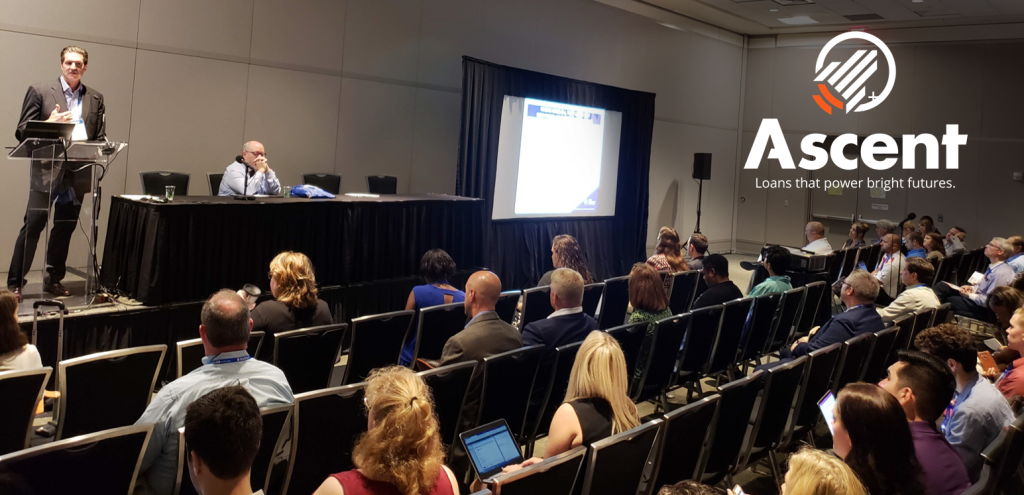 Solutions to Help Your Students Get FundingThe Ascent program is guided by a focus on transparency, financial education and student outcomes, working with students and families to view college and evaluate their financial aid options as an investment, not an expenditure. Further, Ascent is the only student loan provider that incorporates financial education into the application process and requires all students and cosigners to complete a financial literacy module before approving loans.
Tips to save
Ways to earn
Your Ultimate Guide to College Funding
Discover interactive tools, expert insights, and real-world strategies to help you pay for college with confidence.