New lower rates on graduate loans, starting at
1.99%
APR*
Check My Rates

With Grad PLUS loans being phased out, graduate students and schools are facing new choices and considerations. While this transition brings some uncertainty, it also opens the door for schools to find new ways to guide and support students as they plan for their educational future.
One practical way to help students through these changes is by creating a preferred lender list. This school-approved resource gives students and families a helpful starting point for comparing loan options, making the process less stressful and more transparent, all while staying compliant.
In this guide, we’ll walk you through what a preferred lender list is, how it works, and how your institution can choose and evaluate lenders while staying transparent and compliant.
Whether you’re starting fresh or updating your process, this checklist will help make the process clear, fair, and student focused.
In simple terms, a preferred lender list is an arrangement between a lender and school where a school recommends the education loan products of a lender.
These lists are governed by federal regulations that require schools to act in the best interests of borrowers, using objective and transparent criteria, and to maintain an impartial process that ensures students have diverse, unbiased options.
If you work in financial aid, you know that finding the right loan can be confusing and stressful for students and families.
Here’s of few reasons why schools are using preferred lender lists to support this process:
In short, a preferred lender list empowers students and families to make confident, informed choices about financing education.
Let’s explore how your school can build a preferred lender list that’s both effective and compliant, making the process straightforward for your team and supportive for your students.
Before your school begins choosing lenders, it’s important to decide what matters most to your students and your school.
There are several elements to consider, such as:
Look at the full financial impact for students, including APR ranges, origination fees, and rate caps.
For instance, as November 2025, Ascent offers fixed APRs ranging from 2.89% to 17.99% and variable APRs from 4.24% to 17.99%1 and no fees. 2
Comparing these costs helps ensure students aren’t surprised by hidden fees or unfavorable terms.
Evaluate what repayment plans are available, such as deferment, forbearance, and income-based alternatives. Flexible repayment options can make a big difference for students facing financial uncertainty after graduation.
Consider how likely students are to be approved for loans and how quickly they can access funds.
Consider whether lenders offer a pathway to financial independence through co-signer release, and review what’s required to qualify. This feature is especially valuable for students who initially rely on family support to secure a loan but want the option to take full responsibility for their financial future as their circumstances and credit history grow.
Look for lenders who prioritize protecting students’ personal and financial information, using strong security practices and technology. It’s also important to consider the lender’s history as a loan servicer—choose partners with a proven record of reliability, responsiveness, and ethical practices. This helps ensure students receive consistent support and peace of mind throughout their borrowing experience.
As your school goes through this process, be sure to document both your selection criteria and the rationale behind your choices. Careful documentation not only supports transparency and compliance, but also provides a clear record for audits, annual reviews, and any questions from students or regulators.
Platforms like FASTChoice and ELM are widely used by colleges and universities to manage preferred lender lists. These tools help schools organize, present, and update lender options in a transparent and compliant way, making it easier for students to compare loans and make informed choices. They also streamline the process for financial aid offices, ensuring all necessary disclosures and consumer information are provided.
Evaluate potential lenders using your selection criteria and document the process to ensure transparency and compliance. Many institutions begin with a list of three to five lenders so as not to overwhelm the students while still providing a few effective choices.
Some schools develop separate lists for different student groups (undergraduate, graduate business, bar study, international, etc.), which can be more work but helps tailor support to specific needs. The goal is to provide a starting point for students who might otherwise be confused or frustrated by the process.
During your selection process, be sure to follow a Code of Conduct that meets federal requirements for preferred lender arrangements. The NASFAA Code of Conduct is a trusted template that closely aligns with these legal standards and can help your institution stay compliant and transparent.
It’s essential for institutions to communicate openly with students about their loan options. Make sure students know they’re in control: they can choose any lender that fits their needs, whether or not that lender appears on your preferred list.
If a student selects a lender not on the list, reassure them that their loan certification will be processed just as quickly and with the same care.
By being transparent about these choices, your institution helps students feel confident and supported throughout the process, while also maintaining compliance with federal regulations.
When developing a preferred lender list, it’s crucial to train your financial aid staff so they can explain loan options clearly and effectively without steering students toward any particular lender. Staff should understand that every student’s choice must be respected, and that loan certifications for all lenders, whether on the preferred list or not, must be processed with equal timeliness and without prejudice.
Regular training ensures staff are up to date on compliance requirements, disclosure language, and the importance of maintaining a neutral, supportive approach. This not only fulfills legal obligations, but also builds trust with students and families, reinforcing your institution’s commitment to transparency and fairness.
Building a preferred lender list is not a one-and-done task but is instead an ongoing commitment to your students’ best interest. An annual review helps ensure your preferred lender list continues to reflect your students’ needs and today’s lending environment.
For compliance and transparency, maintain thorough documentation in an audit binder of your review. Here’s what to include:
By following these steps, you’ll build trust, stay compliant, and make sure your preferred lender list truly serves your students year after year.
A preferred lender list is just one tool among many that schools can use to empower students and families on their financial journey. Every institution has its own unique approach, and what matters most is a commitment to transparency, student choice, and ongoing support.
At Ascent, we’re proud to partner with schools that share our commitment to empowering students through clear, transparent loan options.
Ascent is a mission-driven fintech company committed to redefining student lending through a focus on access, affordability, and lasting economic impact. Backed by institutional capital, we offer innovative loan options for college and career training programs—helping more students qualify, with or without a cosigner. But funding is just the start. From career readiness tools to financial wellness resources to over $355,000 in no-essay scholarships, everything we build is designed to turn education into real opportunity.
Learn more about how we’re working to increase student income by $10 billion by 2028 in our Impact Report.
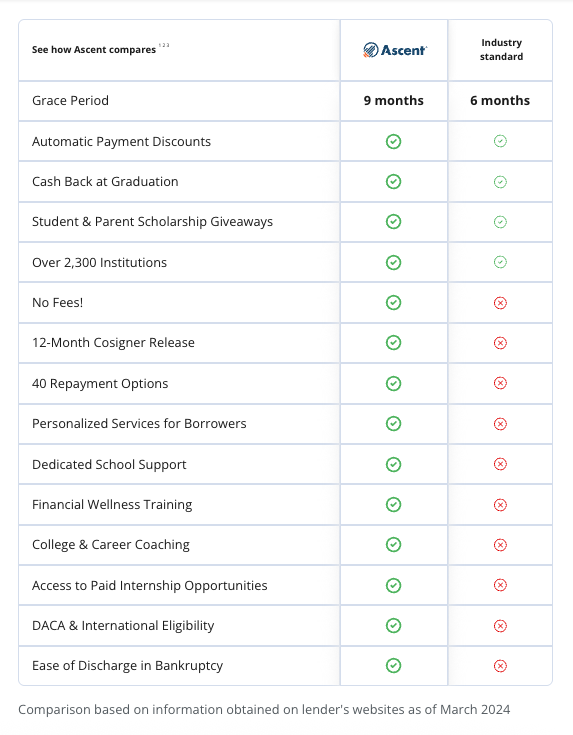
Interested in seeing how Ascent compares to other lenders? Check out our comparison chart below and discover the benefits we offer to support your students.
Checking your rate will not impact your credit score.

For students seeking their undergraduate or graduate degree from a university or college.

For students attending a coding career training school pursuing a degree in technology, professional training, or licensure training.
