-
 Ascent Named The Best Private Student Loans for Parents Award Winner by U.S. NewsU.S. News & World Report, the global authority in rankings and consumer advice, has named Ascent the winner of the Best Private Student Loans for Parents as part of the 2026 Lending Awards. “Being recognized by U.S. News & World Report as a Best Private Student Loan for Parents award winner underscores our focus on expanding access to education and driving economic mobility for student, that ultimately supports the entire family and future generations. We remain committed to delivering transparent, flexible solutions that support students and the parents and families who invest in their success,” said Ken Ruggiero, Co-Founder and CEO of Ascent Funding. The awarded lenders were determined using a comprehensive, data-driven methodology which assessed factors including rates and fees, affordability, eligibility requirements, and customer service for lenders. For more information, read the Lenders Awards methodology. “The 2026 Lending Awards recognize exceptional institutions, while also providing current and prospective borrowers with informed insights on financial institutions that can best support their personal financial needs and goals,” said Greg Garrison, consumer banking analyst at U.S. News. U.S. News publishes consumer lending advice, calculators, mortgage rate forecasts, and more to help readers make the best money-related decisions for them. Consumers can find advice about personal and student loans, and much more at Money.USNews.com. Why Ascent Stands Out Ascent offers a range of benefits designed to support families navigating the costs of higher education: Cosigner release opportunities* – Many students initially apply with a cosigner, with the option to release the cosigner later. This can be a significant benefit for the cosigner and the student, helping reduce long-term financial responsibility for the parents, and help the student borrowers establish their own strong credit. No application, origination, or disbursement fees1 – Borrowers can focus on funding their education without added costs along the way. Flexible repayment terms that fit every student – Ascent offers multiple repayment plans with fixed and variable interest rates, giving students the freedom to choose what works for them. Undergraduate students can start payments up to 9 months after graduation, while graduate and professional students have extended grace periods tailored to their programs (up to 36 months for medical, 12 months for dental). AscentUP and internship program2 – Wrap-around support services and career-building opportunities designed to help students succeed in school, and prepare for the workforce, including access to exclusive paid internship opportunities. Support for multiple programs – From traditional undergraduate and graduate degrees to career and trade school programs, Ascent offers options that meet diverse educational paths. 1% cash back graduation reward* – Eligible borrowers who meet terms and conditions can earn a reward when completing their program. DACA eligibility – Eligible DACA students may apply for an Ascent loan, expanding access for students who may have fewer private loan options. How Winners Are Selected U.S. News evaluates lenders through a combination of quantitative metrics and editorial review, analyzing multiple key areas: Interest rates and fees – Lenders are assessed on cost competitiveness, including any hidden or upfront charges. Repayment flexibility – Options that allow borrowers to adjust schedules or choose terms that fit their budget are prioritized. Cosigner support and release policies – For parents or students with limited credit history, these options can be a deciding factor. Hardship programs – Availability of deferment, forbearance, or other protections when financial challenges arise. Accessibility – Including eligibility for non-U.S. citizens, borrowers with shorter credit histories, and students in nontraditional programs. Only lenders that balance affordability, transparency, and borrower support are recognized as winners. Being named a Best Private Student Loans for Parents signals that Ascent excels in these areas, helping families make informed financial decisions. About U.S. News & World Report U.S. News & World Report is the global leader for journalism that empowers consumers, citizens, business leaders and policy officials to make confident decisions in all aspects of their lives and communities. A multifaceted media company, U.S. News provides unbiased rankings, independent reporting and analysis, and consumer advice to millions of people on USNews.com each month. A pillar in Washington for more than 90 years, U.S. News is the trusted home for in-depth and exclusive insights on education, health, politics, the economy, personal finance, travel, automobiles, real estate, careers and consumer products and services. About Ascent Ascent is a leading provider of innovative financial products and wrap-around student support services that enable more students to access education and achieve academic and economic success. Everything Ascent offers is designed by leading industry professionals and with advanced technology and innovation to increase every student’s ability to plan, pay, and succeed. Ascent’s rare Outcomes-Based Loan provides funding to credit-invisible borrowers who generally do not benefit from traditional credit. Ascent products also include: Cosigned Loans, Solo Loans, Career Loans, Parent Loans, Graduate Loans, Access Loans, Enterprise Loans and Impact Loans. * For more information, including eligibility requirements, terms, and conditions, please visit https://www.ascentfunding.com/ascentbenefitsterms 1Only Ascent college loans are eligible for no fees. Ascent career training loans are subject to a one-time origination fee of 5.0% of the loan amount. All Ascent loans are eligible for no application, disbursement, late, NSF or early payment fees. 2 Ascent applicants and borrowers that agree to the AscentUP Terms of Service and Privacy Policy, as well as students associated with an Ascent parent loan application, have access to the AscentUP platform. Please note: Ascent Funding, LLC products are made available through Bank of Lake Mills or DR Bank, each Member FDIC. Subject to credit approval. Please borrow responsibly by maximizing scholarships and free financial aid, comparing federal and private student loans, and choosing the loan that best fits your needs.
 -
 What Does the End of Grad PLUS Loans Mean for Higher Education?For nearly twenty years, the Grad PLUS loan program has been a major pillar of federal financial aid for graduate and professional students. These loans allowed students to borrow beyond traditional federal limits and cover their full cost of attendance, including tuition, housing, books, and living expenses. For many, Grad PLUS was the bridge that made graduate school financially possible. However, starting July 2026, new Grad PLUS loans will no longer be available under the One Big Beautiful Bill (OBBB) Act. This pivotal change raises a central question: What will the end of Grad PLUS loans mean for the future of graduate education? While the full impact remains to be seen, one word comes to mind: opportunity. Opportunity to innovate, rethink graduate funding, and build smarter, more sustainable solutions for students and institutions alike. What’s Changing: New Federal Limits Under the new law, federal borrowing for graduate students will be capped: Graduate (Academic) Programs: $20,500 annual limit, $100,000 lifetime maximum Professional Programs (Law, Medicine, etc.): $50,000 annual limit, $200,000 lifetime maximum. Borrower Category Pre-OBBBA Limit New OBBBA Limit Undergraduate Stafford (Dependent) $5,500 - $7,500 per year; $31,000 aggregate Unchanged Undergraduate Stafford (Independent) $9,500 - $12,500 per year; $57,500 aggregate Unchanged Parent PLUS (Parents of Undergrad) Full Cost of Attendance $20,000 per year; $65,000 aggregate per student Graduate Stafford (Masters/PhD/MBA) $20,500 per year; $138,500 aggregate $20,500 per year; $100,000 aggregate Graduate Professional Stafford (MD/JD/DDS) $20,500 per year; $138,500 aggregate $50,000 per year; $200,000 aggregate Graduate Grad PLUS Full Cost of Attendance Eliminated All Federal Loans Combined No lifetime cap $257,500 lifetime cap Previously, Grad PLUS loans allowed students to borrow beyond federal limits, filling gaps left by Direct Unsubsidized Loans. Once the program is phased out, students will need to explore other options, such as private loans, scholarships, or institutional aid, to fund their education. Financial aid offices will be crucial partners in helping students navigate these choices and stay on track with their goals. A Brief Look Back: Grad PLUS and Its Impact Grad PLUS loans weren’t just widely used; they shaped graduate education. While only 16% of graduate students rely on the program, Grad PLUS accounted for 32% of all federal graduate lending, showing just how central it became in helping students pursue advanced degrees. These loans were especially common in high-cost programs, with nearly a quarter of students in programs costing $25,000 to $70,000 using Grad PLUS, and that share rising to 30% for programs above $70,000, according to a 2024 report from the Georgetown University Center on Education and the Workforce. Beyond helping students, Grad PLUS also influenced institutions. The availability of additional federal funds allowed schools to expand programs, support student opportunities, and invest in resources. However, research suggests that tuition increases sometimes offset the benefits of increased federal lending. Today, according to recent federal data, about 1.8 million borrowers hold Graduate PLUS loans totaling approximately $119.2 billion in debt, a scale that demonstrates the program’s significance and the magnitude of this transition. What’s Next: A New Era in Graduate Funding With Grad PLUS loans being phased out, graduate education is entering a new era, one that calls for creativity, collaboration, and thoughtful planning. For Students For students, this shift requires the exploration of a broader mix of funding options. Scholarships, grants, and institutional aid will play an increasingly central role in covering costs, while private loans can provide flexible solutions to bridge any gaps. Engaging early with financial aid offices can help students build a comprehensive plan, minimize uncertainty, and feel more confident about their financial path through graduate school. Thoughtful planning now can reduce stress later and ensure students can focus on their studies and career goals without unexpected financial obstacles. For Institutions The end of Grad PLUS loans is prompting schools to rethink how graduate programs are funded. Hybrid approaches that combine scholarships, grants, and external funding can help students cover high-cost programs without relying on a single source of support. Institutions are also exploring ways to make aid more flexible and targeted, from directing resources where they’re most needed to offering modular programs or tuition schedules that let students progress at their own pace. Partnerships with private lenders can further support students, offering customized loan programs, streamlined processes, and flexible repayment options. Some lenders provide resources beyond financing, such as career readiness tools, coaching, and internship opportunities, to help students graduate on time and launch successful careers. By combining these strategies, schools can create funding systems that are clear, manageable, and tailored to student needs, helping students navigate the post-Grad PLUS world with confidence. For Private Lenders As federal aid changes, private lenders can play a key role in supporting the graduate funding landscape post-Grad PLUS. Thoughtful partnerships open the door to solutions like customized loan programs, flexible repayment options, and streamlined processes that reduce administrative hurdles. Many lenders also provide additional support, offering resources including financial wellness tools, career readiness programs, and internship opportunities to help students successfully complete their programs and transition into their careers. When considering private student loans, it’s important to choose a lender that’s transparent about rates and fees, offers flexible repayment options, and provides responsive support throughout your borrowing journey. Look for lenders who prioritize student needs, allow for cosigner release, and offer benefits like autopay discounts or hardship protections. Avoid companies that aren’t upfront about terms or make unrealistic promises, and always research reviews to ensure you’re partnering with a trustworthy lender who will support your goals from enrollment to repayment. Check out our Guide to Choosing the Best Private Lender here, for more information. Final Thoughts The end of Grad PLUS is a moment for all stakeholders to think strategically, plan proactively, and embrace flexible solutions. With careful planning, collaboration, and thoughtful use of available resources, the post-Grad PLUS world can be a time of smarter, more sustainable funding that helps students pursue their education and institutions maintain vibrant, accessible programs with student success at their forefront. About Ascent Ascent is a mission-driven fintech company committed to redefining student lending through a focus on access, affordability, and lasting economic impact. Backed by institutional capital, we offer innovative loan options for college and career training programs—helping more students qualify, with or without a cosigner. But funding is just the start. From career readiness tools to financial wellness resources to over $330,000 in no-essay scholarships, everything we build is designed to turn education into real opportunity.
 -
 Private Loan Trends for Graduate Students in 2025-2026With Grad PLUS loans ending for new borrowers in July 2026, the private loan market for grad students has shifted fast. Lenders are competing harder for your business, rates vary widely based on your credit, and you've got more options than ever if you know where to look.
 -
 How to Build a Preferred Lender List: A Checklist for SchoolsWith Grad PLUS loans being phased out, graduate students and schools are facing new choices and considerations. While this transition brings some uncertainty, it also opens the door for schools to find new ways to guide and support students as they plan for their educational future.
 -
 How Schools Can Rethink Graduate Funding Models After Grad PLUSGraduate funding is changing fast, and schools have an opportunity to rethink how they support students. With the end of Grad PLUS loans under the One Big Beautiful Bill (OBBB) Act, institutions will need to explore new ways to help students cover the cost of high-cost programs like law, medicine, and business. These shifts open space for innovation, helping schools expand access and showcase the value of their programs.
 -
What the Elimination of Grad PLUS Loans Means for Graduate Schools and How to PrepareThe elimination of Grad PLUS loans will fundamentally reshape how graduate students finance their education, challenging both access and affordability. Financial aid offices must proactively adapt policies, train staff, and guide, students to navigate a more complex funding system.
-
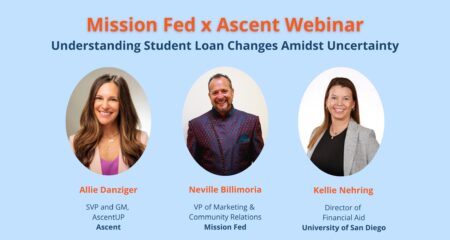 Navigating Change: Key Takeaways from the “Understanding Student Loan Changes Amidst Uncertainty” WebinarWhether you're currently in school, preparing to start, or managing your loan repayment, Ascent provides practical tools and insights to help you make informed financial decisions with confidence. Paying for college can be confusing, especially with all the recent changes to financial aid and student loans. To help make things a little clearer, we partnered with Mission Federal and the University of San Diego to host “Understanding Student Loan Changes Amidst Uncertainty,” a webinar designed for students and families. Ascent’s SVP and GM of AscentUP, Allie Danziger, Mission Fed's VP of Marketing and Community Relations, Neville Billimoria, and University of San Diego’s Director of Financial Aid, Kellie Nehring, shared helpful advice on FAFSA updates, scholarships, student loans, and how to plan for different college paths, whether that’s a four-year university, a community college, or something in between. If you missed the webinar, no worries! You can watch it here but we’ve also summarized the learnings below. Changes to Federal Loan Policy Big shifts are on the horizon—new federal policy changes are set to reshape repayment, forgiveness, and loan eligibility in ways that every student and family should know about. Starting July 1, 2026, federal loan regulations will undergo major updates that will directly impact how students and parents pay for college, beginning with the 2026–2027 academic year. Graduate students will no longer be able to borrow Grad PLUS Loans, a change that could make financing advanced degrees more challenging. For undergraduates, Parent PLUS Loans will still be available, but borrowing will be capped at $20,000 per year—posing funding gaps for families at higher-cost schools while having less effect at more affordable institutions. The good news? If you’re starting school this Fall and plan to use Grad PLUS or Parent PLUS Loans, your borrowing won’t be affected for the upcoming academic year. Still, these upcoming changes are prompting schools to explore creative solutions, from expanding institutional loan options to connecting families with private lenders. For students and parents alike, understanding these shifts early is key to preparing for the future of college financing. Parent PLUS Loans have unique repayment rules that families should understand before borrowing. Eligibility requires a credit check, and repayment begins just 60 days after the second disbursement, often during the spring semester of a student’s first year. These payments cannot be deferred until six months after graduation, meaning parents may need to start making payments while their student is still in school. International students aren’t eligible for federal aid, but they may still qualify for other financial aid programs and resources. Guidance for Navigating Student Loans As you plan for the road ahead, it’s important to understand the key details of student loans to stay informed and make confident financial decisions. Completing the Free Application for Federal Student Aid (FAFSA) each year is the first and most important step in determining your eligibility for federal financial aid. Depending on your situation, you may also need to fill out an institutional or state application to maximize your options. For many students, federal loans will play a key role: subsidized loans are need-based and don’t accrue interest while you’re in school, as long as your Student Aid Index is lower than your school’s cost of attendance. On the other hand, unsubsidized loans begin accruing interest right away, though repayment is deferred until six months after graduation or withdrawal. Once repayment starts, it’s critical to stay on track—missing payments, even during forbearance, can create lasting challenges. Remember, you’ll be repaying the loan servicer that manages your account, so building good habits now will set you up for success after graduation. The good news is that repayment plans can be tailored to your income, giving you some flexibility as you begin your career. Federal student loan interest rates typically shift by about 5–10% each year and reset every July 1st for the upcoming academic year. In contrast, private lenders adjust rates which can make them more competitive depending on the market. Ascent offers low rates and multiple benefits that help students plan, pay, and succeed in college. Our borrowers also receive access to our AscentUP program which provides tools, resources, and coaching, as well as access to paid internship opportunities, to support students on professional development, building confidence, developing new skills, and jumpstart dream careers. More Ways to Pay Beyond student loans, there are several ways to help make college more affordable. Campus jobs offer flexible hours and valuable experience, often available through the financial aid office, athletics department, or housing office. If you qualify, federal work-study can provide an added chance to earn money while gaining valuable experience. The key is to explore these options early at the schools you’re considering, so you can combine resources and create a strategy that makes paying for college feel more manageable. When it comes to paying for college, scholarships are the ultimate win— it’s free money you never have to pay back. There are scholarships out there for nearly everything—academics, athletics, leadership, volunteering, unique hobbies, and even your favorite ice cream flavor. The more you apply for, the more chances you have to stack up real savings. For students 14+, Ascent offers no-essay scholarships! Check out the latest opportunities and enter to win here! As you navigate paying for college, remember that you don’t have to do it alone—your school’s financial aid team is there to support you. Whether it’s asking about scholarships, staying on top of deadlines, appealing for additional aid, or finding out who to contact about repayment options, reaching out early can make a huge difference. Building a relationship with the financial aid office not only helps you avoid frustration and discouragement but also ensures you have a trusted resource to turn to whenever questions come up. Don’t hesitate to ask plenty of questions, seek advice, and lean on the broader network of support around you. By gathering input from multiple sources and staying connected, you’ll be better equipped to make confident, informed decisions about your financial journey!
 -
 Big Beautiful Bill: How New Student Loan Changes Impact Graduate StudentsThe recent passage of the "Big Beautiful Bill" (OBBBA) is transforming how graduate students fund their education. With Grad PLUS loans being eliminated and federal repayment plans overhauled, both students and schools face critical challenges. These comprehensive reforms have created uncertainty among graduate students and financial aid officers alike, who are left to navigate potential funding gaps and the impact these policy changes may have on enrollment. Because of the significant repercussions the Big Beautiful Bill will have on student loans—and the students and schools that rely on them to finance higher education—staying informed is critical. Graduate students and financial aid officers should understand how the Big Beautiful Bill’s impact on student loans may alter borrowing limits and repayment strategies and what alternative options are available for financing higher education. Key Takeaways The Big Beautiful Bill eliminates Grad PLUS loans for new borrowers after July 1, 2026, requiring graduate students to seek alternative funding options. Federal borrowing caps for graduate and Parent PLUS loans have significantly decreased, potentially causing funding shortfalls. Economic hardship and unemployment deferments are going away, limiting borrowers’ repayment flexibility. Pell Grant eligibility expansion indirectly impacts graduate funding dynamics at many institutions. Increased 529 plan withdrawal limits offer additional flexibility for funding education costs. Ascent offers private graduate student loans to help graduate students shore up funding gaps and help schools secure financial support for their students in the wake of these unprecedented changes. Key Changes in the “Big Beautiful Bill” Affecting Student Loans The Big Beautiful Bill’s extensive range of reforms is slated to completely shift federal student loan policies and impact a wide range of people, including: New and current borrowers Parents relying on federal loans Schools navigating financial aid programs These latest changes to student loans are part of the Trump administration’s broader education reforms, which student borrowers, parents, and financial aid officers should monitor closely. The End of Grad PLUS Loans One of the most impactful Big Beautiful Bill student loan changes is the termination of the federal Grad PLUS loan program. Grad PLUS loans, which will no longer be available to new borrowers starting July 1, 2026, allowed graduate students to borrow up to the total cost of attendance, minus any other financial aid received. Critics typically argued that these loans contributed significantly to rising student debt by encouraging excessive borrowing. In addition, they were accused of placing financial strain on students post-graduation. To address these concerns, the bill replaces Grad PLUS loans with increased borrowing limits for Direct Unsubsidized Loans, albeit with lower overall limits. While the shift aims to control debt accumulation, it leaves many graduate students searching for alternative funding sources. New Borrowing Caps Under the Big Beautiful Bill college loan adjustments, borrowing limits for graduate students and Parent PLUS loans have decreased significantly. Graduate students now face stricter annual and aggregate caps, limiting their access to federal funds. Similarly, Parent PLUS loans, which helped parents bridge funding gaps for their dependent students, also face new limitations. The caps on the various loans are as follows: $20,500 per year with a lifetime grad school cap of $100,000 for graduate students $50,000 per year with a lifetime cap of $200,000 for professional graduate students (e.g., medical or law school) $20,000 a year and $65,000 per child for parent PLUS borrowers Changes to Pell Grant Eligibility In contrast to cuts to other funding sources, the Big Beautiful Bill has expanded Pell Grant eligibility, increasing the number of undergraduate students eligible for this form of aid. The expansion of Pell Grants could indirectly affect graduate funding as institutions redistribute financial aid budgets or priorities. Schools may, for example, shift resources toward undergraduate students who now qualify for the expanded grants. In practice, students who receive full scholarships from colleges or universities will no longer be eligible for additional funding via Pell Grants. Contrast that with students in workforce training programs, whose eligibility has increased. Where these grants could previously only pay for courses of less than 600 hours or 15 weeks, that eligibility has expanded. Student Loan Repayment Plan Changes Among the most notable student loan repayment plan changes under the bill is the removal of specific repayment plans, including the popular SAVE plan. Other casualties include Pay As You Earn (PAYE), Income-Based Repayment (IBR), and Income-Contingent Repayment (ICR) plans: SAVE (Saving on a Valuable Education): Caps payments at 5–10% of discretionary income and forgives remaining balance after 10–25 years. It replaced REPAYE and offers the lowest monthly payments for most borrowers. IBR (Income-Based Repayment): Payments are 10–15% of discretionary income, with forgiveness after 20–25 years. Borrowers must demonstrate partial financial hardship. PAYE (Pay As You Earn): Requires a partial financial hardship; caps payments at 10% of discretionary income, with forgiveness after 20 years. Only available to newer borrowers. ICR (Income-Contingent Repayment): Payments are the lesser of 20% of discretionary income or a fixed 12-year repayment, adjusted for income. Forgiveness occurs after 25 years. Available to all Direct Loan borrowers. While eliminating these plans may simplify available federal repayment options, it reduces flexibility for borrowers. Graduate students, for example, should prepare for stricter repayment terms and limited choices moving forward. Don’t panic, though. The phase-outs for these plans are somewhat slower, and current borrowers have until July 1, 2028, to switch to a new plan. Those 7.7 million Americans enrolled in the Biden-era SAVE plan will see interest on those loans resume on August 1, 2025. Removal of Economic Hardship Deferment Another critical aspect of the Big Beautiful Bill’s student loan changes is its elimination of deferment options for unemployment and economic hardship. Previously, borrowers experiencing financial difficulty could temporarily pause their federal loan payments. With these protections removed, borrowers must carefully plan to avoid financial distress during repayment periods. Increased Withdrawal Limits on 529 Plans Finally, the bill introduces higher withdrawal limits for 529 college savings plans. Families and students can now withdraw larger amounts each year without penalties, making 529 plans more flexible for offsetting education costs in the face of reduced federal aid. The law doubles the annual tax‑free withdrawal limit from $10,000 to $20,000 per beneficiary for K–12 qualified expenses, starting in tax year 2026. What These Changes Mean for Graduate Borrowers The student loan changes introduced by the Big Beautiful Bill present significant challenges to graduate students, specifically due to the loss of Grad PLUS loans. Students who use them took out nearly $32,000 last year, according to an analysis from Bloomberg. And because many of those students come from low-income backgrounds and minority communities, it would hit students with limited options the most. These were key funding sources that covered comprehensive education costs. With reduced federal borrowing options, grad students must prioritize financial literacy and budgeting skills to manage their education expenses, especially with changes to student loan repayment plans. Students must now emphasize evaluating their chosen degree programs' return on investment (ROI). Paying close attention to school selection, tuition costs, and future earning potential will help them ensure manageable debt levels. Tools like Ascent’s College Degree ROI Calculator can help students assess the potential return on college investment based on school and major. As federal funding tightens, grad students with strong credit histories will likely explore competitive private lending options to bridge funding gaps. Graduate school programs for a master’s degree can cost anywhere between $44,640 and $71,140, depending on the program and whether the school is public or private. These costs are even higher for medical and law school. And that’s just tuition; books, fees, and other cost of living expenses elevate the numbers even higher. Graduate school scholarships and grants can help pay for school, but most won’t cover the full costs. That’s a significant disparity that leads to graduate students taking out hundreds of thousands of dollars in loans over their graduate career. In this more restrictive funding environment, proactive financial planning and informed decision-making are critical. Students and families should leverage available resources and guidance to better navigate these challenging times. What This Means for Schools and Financial Aid Offices These developments also have big impacts on financial aid offices for universities with graduate programs. Because federal funding sources like Grad PLUS loans are being eliminated and borrowing limits decreased, graduate schools are expected to face increased pressure to help their students bridge substantial funding gaps. To effectively manage these changes, financial aid offices will need to cultivate strong relationships with credible private lenders to ensure students maintain reliable access to essential funds. Ascent provides valuable resources for schools, offering flexible graduate loan solutions, career readiness training, and enhanced financial education. When schools partner with reputable private lenders like Ascent, they can mitigate these funding shortfalls to ensure their students remain financially supported through graduation. Ascent is Here to Support Graduate Students Amid Federal Changes With such significant shifts in federal student loan policies, graduate programs and their students are facing increasing uncertainty about how they'll bridge new funding gaps. At Ascent, we’ve spent years working closely with schools and students to navigate complex financial landscapes. Our expertise allows us to offer flexible, customized private lending solutions specifically tailored to graduate education. By partnering with Ascent, schools can confidently: Boost enrollment numbers by providing accessible graduate student loans that attract qualified students who might otherwise choose not to attend due to affordability concerns. Support underserved student populations who risk being unfunded in the wake of federal loan eliminations and lowered borrowing limits. Maintain financial stability and avoid disruptions caused by recent federal loan changes—allowing institutions to better plan, budget, and support their graduate cohorts without interruption. Ascent’s commitment to enabling student success extends beyond funding alone. Students gain access to robust financial literacy resources, personalized career support through AscentUP, scholarship opportunities, and tools designed to strengthen students’ financial wellness throughout their graduate experience, and beyond. Together, graduate schools and students can rely on Ascent to navigate these unprecedented times with stability, confidence, and clarity. Contact us to learn more about our private graduate student loans and support offerings for grad students and schools. FAQs How does the Big Beautiful Bill impact graduate student loans? The Big Beautiful Bill eliminates Grad PLUS loans, reduces federal borrowing caps, ends key deferment options, and revises repayment plans. These changes significantly impact graduate students’ funding strategies and could create hardship for those with significant financial needs. What are my options since Grad PLUS loans have been eliminated? Graduate students can now use increased Direct Unsubsidized Loans (with lower limits) or seek scholarships to help pay for school. You may want to consider private lenders like Ascent, which offer competitive graduate loan options. What to do if my student loan deferment has been removed? If your deferment options have been removed, you can explore income-driven repayment plans, refinancing, or alternative private loans to help manage your payments more effectively. How has the Big Beautiful Bill changed borrowing limits for student loans? Federal borrowing limits for graduate and Parent PLUS loans have significantly decreased. This has created funding gaps that students must fill through alternative financial strategies or private lending options. How can Ascent assist graduate students with receiving funding? Ascent offers graduate students flexible private loan options with competitive interest rates, but that’s not all. We also provide financial literacy resources and career support through the AscentUP program to ensure students remain financially supported.
 -
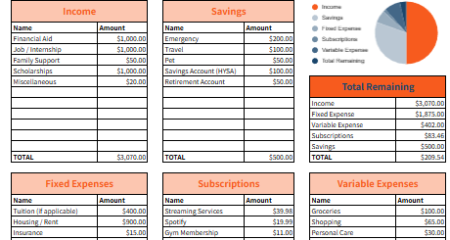 Smart Money Moves: The Ultimate Guide to Budgeting for College StudentsCollege is an exciting time to explore, grow, and gain independence—including getting comfortable with money. Budgeting might sound intimidating, but it’s really just a way to make sure your money supports the life you want to live. With the right strategy and tools, any student can manage money effectively, reduce stress, and set themselves up for future financial success. Why Budgeting is Crucial for College Students Budgeting gives you control over your money, even when it feels like you don’t have much. It helps you cover essentials, avoid debt, and still enjoy life on and off campus. Whether you’re managing a part-time income or student loans, a budget keeps you organized, prepared for surprises, and builds good habits for life after college. Step 1: Understand Your Finances – Creating a Realistic Budget Before you can build a budget that works, you need to understand where your money is coming from and where it’s going. Taking the time to get clear on your income, expenses, and savings goals is the foundation of smart money management. Track Your Income Sources: Before you can plan how to spend or save, it’s important to know how much money you have coming in. Identifying all your income sources will give you a clear starting point for your budget. Financial aid (grants, scholarships, loans) Job income Family support or allowance Know Your Expenses: Prioritize Needs vs. Wants Once you understand your income, the next step is to track your spending. Breaking your expenses into needs and wants can help you make smarter decisions about where your money goes. Fixed Expenses (Needs): Tuition, rent, utilities, insurance, credit cards, bills Variable Expenses (Wants): Food, entertainment, supplies, clothing, personal care Savings: Fund Your Future Saving might not feel urgent right now, but it’s one of the most powerful habits you can start. Even small contributions help you build a financial safety net and encourage long-term habits that will support your goals well beyond college. Savings Accounts: Emergency Fund, travel expenses, pet care High Yield Savings Account: Have higher interest rates and enable faster growth of your savings Retirement Plans (401k, Roth IRA): Tax-advantaged savings plans to help grow savings over time for retirement expenses Use a Budgeting Method Choosing a budgeting method gives structure to your financial plan and helps you stay consistent with your spending, savings, and goals. 50/30/20 Rule: 50% needs, 30% wants, 20% savings/debt repayment This rule helps individuals manage their finances by prioritizing essential expenses, discretionary spending, and long-term financial goals. 50% Needs: Essential expenses you must pay to live and work 30% Wants: Non-essential but enhance quality of life 20% Savings: Strengthening your financial future Envelope Method: Physical or digital envelopes for each category Determine budget categories Set monthly budget for each Withdraw cash and fill envelopes Spend only from those envelopes Step 2: Save Where You Can Once you’ve built a basic budget, the next step is finding ways to stretch your dollars further. The good news? As a college student, there are tons of easy ways to save without sacrificing fun or convenience. From student discounts to smart spending habits, a few small changes can make a big difference. Here’s how to make the most of what you have. Student discounts: Show student ID at restaurants, shopping stores, movie theaters, etc. Apps to get student discounts: UNiDAYS, Student Beans Textbooks: Rent, buy used, library copies Food: Cook at home, use meal plans wisely, avoid daily coffee shop habits, check supermarket ads for deals Transportation: Use public transit, bike, or carpool Most colleges provide free transportation passes Entertainment: Attend free campus events, share streaming accounts Step 3: Prepare for the Unexpected Even the best budgets can be thrown off by surprise expenses. Whether it’s a last-minute trip home, a medical bill, or an extra textbook you didn’t plan for, life happens. That’s why it’s important to build a financial cushion that helps you handle the unexpected without stress—or debt. Here’s how to stay prepared and protect your budget. Build an Emergency Fund: Aim for a $500 goal to start Plan for Irregular Expenses: Books, holidays, trips, birthdays, medical expenses Step 4: Use Tools to Stay on Track Creating a budget is a great start—but staying on track takes a little help. Thankfully, there are plenty of simple tools that can keep you organized and consistent, even on your busiest days. Whether you prefer apps, spreadsheets, or calendar reminders, the right tools can make managing your money quicker, easier, and less stressful. Let’s look at a few that can help you stay in control. Spreadsheets: Custom Google Sheets or Excel Download Ascent’s Student Budgeting Sheet here! Banking Tools: Auto alerts for low balance, spending summaries Calendar Reminders: For bill due dates and budget check-ins Block specific date/time on your calendar to sort your finances Common Budgeting Mistakes to Avoid Even with the best intentions, it’s easy to slip up. Being aware of common budgeting mistakes can help you stay on track and avoid unnecessary stress. Here are a few pitfalls to watch out for: Underestimating daily spending: Every purchase adds up! Not reviewing your budget monthly: Adjust for changes Overlooking one-time costs: Move-in costs, graduation fees, etc. Relying on your credit cards: Make sure you have the funds to pay them back Building Healthy Financial Habits Good budgeting isn’t just about numbers—it’s about building habits that support your goals over time. With a few consistent practices, managing your money can become second nature. Here’s how to turn smart choices into lasting habits: Track every dollar: Even small purchases add up Set time aside time to review your account weekly Set your goals: avoid overdrafts, reduce credit card use Stick to your budget for 3 months? Treat yourself (responsibly)! Final Thoughts Budgeting is an essential skill that can make your college experience less stressful and more empowering. It’s not about getting everything right the first time—it’s about starting small, staying flexible, and learning from your experiences. With a little effort and consistency, you’ll build habits that not only help you thrive in college but also set you up for long-term financial success.
 -
 How Graduate Students Can Adjust to Grad Plus Loan NewsStudent loans are a hot topic these days, and for good reason. There have been massive shake ups in education under the Trump administration, from the proposed dissolution of the U.S. Department of Education to sweeping changes to how student loans could be administered and managed in the future. The potential impact of these proposed changes is not limited to undergrads and future college students and their families. With the cost of a master's degree averaging between $44,000 to $71,000, many graduate students also rely on federal student aid, such as Grad PLUS loans, to fund their continuing education. If you’re a grad student, you're probably wondering how these changes might impact your future and your ability to pay for graduate school. Let's walk through the potential changes and explore some alternative financial aid options, should Grad PLUS loans become unavailable. Key Takeaways Grad PLUS loans are a type of federal loan offered by the U.S. Department of Education that can cover up to the full cost of attending graduate school. Republican lawmakers have proposed changes to the federal student loan programs that administer graduate loans, including reduced caps on unsubsidized loans and eliminating Grad PLUS loans altogether. If these proposed changes become law, current graduate students will likely be grandfathered in, but future graduate students may need to seek alternative sources of financial aid. Scholarships, fellowships, need-based grants, graduate assistantships, work-study programs, federal unsubsidized loans, and private student loans are alternative funding options graduate students can consider. What Are Grad PLUS Loans? Grad PLUS loans are a type of Direct PLUS loan specifically for eligible graduate and professional students. These credit-based federal loans are offered by the U.S. Department of Education and allow students to borrow up to the full cost of attendance (graduate tuition, fees, and living expenses) minus any other financial aid received. They come with a fixed interest rate and borrower protections, and they’re a popular option because federal unsubsidized loans often don’t cover the full cost of advanced degrees. According to recent federal data, Grad PLUS loans account for a significant portion of graduate student debt. As many as 1.8 million borrowers hold these loans, totaling up to $117.2 billion. This has caught the attention of some policymakers, who are starting to take a closer look at these loans. The high borrowing limits and growing debt load have sparked increased scrutiny of Grad PLUS loans, especially as discussions around the student loan crisis and reforms have intensified. Policymakers are raising the possibility of reform—or even elimination—as ways to reduce the overall burden of graduate-level debt. Will the Grad PLUS Loan Program be Cut? Discussions around eliminating the Grad PLUS loan program have gained traction on Capitol Hill, especially among Republican lawmakers who want to rein in federal spending on graduate education. These lawmakers argue that unlimited borrowing under the program inflates the cost of graduate degrees and places an undue debt burden on students. They’ve introduced bills such as the College Cost Reduction Act of 2024, which proposed eliminating Direct PLUS loans. While it didn’t pass, similar themes in legislation have been introduced in 2025. The Graduate Opportunity and Affordable Loans Act, introduced by Alabama Senator Tommy Tuberville in January 2025, proposes to eliminate the ability of graduate and professional students to receive Direct PLUS loans and sets the aggregate limit on unsubsidized loans to $65,000 for a graduate student. While the bill was referred to the Committee on Health, Education, Labor, and Pensions, it has yet to proceed. Even though neither bill targeting Grad PLUS loans has passed, they each signal lawmakers’ appetite for reforming graduate lending. That means potential changes to how students finance advanced degrees. What Grad PLUS Loan News Means for Borrowers As policymakers debate the future of federal student aid, Grad PLUS loans are undeniably on the chopping block. For current and prospective graduate students, that adds another layer of uncertainty to an already stressful financial climate. Rising tuition costs and fewer affordable borrowing options could leave many students scrambling to cover expenses. Finding student loans for graduate school, including from private lenders, will become more necessary for students who’ve exhausted free financial aid options. Current Grad PLUS Borrowers Students already enrolled or recent graduates with active Grad PLUS loans probably won’t see major changes, at least in the short term. If Congress eliminates the program, existing borrowers will likely be “grandfathered” in, meaning they can keep their current loans and repayment terms as they are. The uncertainty around the Grad PLUS loan 2024-2025 cycle could complicate financial planning for those midway through multi-year programs. If you’re in either of these groups, pay close attention to Grad PLUS loan news developments and start researching backup funding strategies in case future borrowing under Grad PLUS is capped or phased out. Future Grad PLUS Borrowers Future graduate students might be at bigger risk of losing out on Grad PLUS funding. If this federal loan program is eliminated, students may need to rely more heavily on private loans to finance their education. While private loans are just as effective at funding advanced degrees and may offer additional benefits like access to career readiness tools, they may also come with tighter credit requirements, variable interest rates, and other considerations—so it is important to compare your options. This shift from federal to private loans could disproportionately impact students with limited or poor credit histories. As a result, some may delay graduate studies, choose lower-cost institutions, or seek employer-sponsored education benefits. Others may turn to part-time enrollment or work full-time when studying, lengthening the time needed to complete a degree. If you’re thinking about attending grad school, now is the time to start preparing: Compare graduate program costs and consider how you might pay for your desired program if Grad PLUS loans go away. Research and apply for graduate scholarships, fellowships, and other grants. To do so, you’ll need to complete the Free Application for Federal Student Aid (FAFSA) every year. Apply for graduate assistantships or federal work-study programs. Availability of these programs may impact your school choice. Look into employer education benefits to help cover the cost of graduate school. Take steps to build a strong credit profile, research private loan terms, and prepare to borrow if you still need to cover costs. Ascent Is Here to Help We know that paying for grad school is an important concern for all students, and that Grad PLUS loans have been a vital resource. Even if they go away, however, there are still options. Try to be selective about your desired program, pursue all your options for free financial aid, and take your time comparing lenders for private student loans. Ascent can help you find the right loan terms and interest rate to support your graduate education, but we’re here for you beyond borrowing. Our resources for students and families offer guidance about paying for school, better budgeting, career-readiness, and more. Amid ongoing student loan changes, Ascent remains committed to empowering student success and financial wellness. FAQs What alternative loan options are available if the Grad PLUS ends? If Grad PLUS loans are phased out, future graduate students should first explore financial aid that doesn’t need to be repaid such as scholarships, fellowships, grants, graduate assistantships, work-study programs, and employer tuition reimbursement programs. If there are any gaps in funding, graduate students should consider federal unsubsidized loans and private student loans. Can private student loans cover the full cost of grad school? In many cases, private student loans can cover the full cost of attending graduate school, from tuition and fees to living expenses. Private loans have unique eligibility and loan limits determined by the lender, and they usually depend on your credit history or income. That makes planning and comparing loans from different providers a necessity. Will Grad PLUS loans be forgiven? Grad PLUS loans may be eligible for forgiveness under existing federal programs like the Public Service Loan Forgiveness (PSLF) or Income-Driven Repayment (IDR) plan forgiveness, provided you meet the necessary qualifications. However, there’s no separate forgiveness initiative specifically for Grad PLUS loans at this time.
 -
 Navigating Student Financial Aid in Changing Times: What Students and Parents Should KnowUpdate: On 3/20/25, President Donald Trump signed an executive order calling for the dismantling of the U.S. Department of Education (ED). He said during a White House event on 3/21/25 that student loans will be handled by the Small Business Administration. Read the latest news coverage here. What’s Happening with the Department of Education Every year, more than $120 billion in federal student aid moves through the U.S. Department of Education (ED) to help nearly 10 million students and their families pay for college. And while the system has had its share of administrative headaches in the past few years, it has built reliable pathways connecting students to grants, loans, and work-study jobs at thousands of schools across the nation. As you may have heard, the Trump administration is reportedly preparing an executive order that would attempt to downsize or potentially eliminate the ED, a department that manages roughly $1.7 trillion in federal student loans. This proposal is more than a policy adjustment—it would be a massive shift that could impact everything from how students apply for financial aid to the protections borrowers have. As of publication on March 13, 2025, the Trump administration initiated mass layoffs at the ED, reducing its workforce by nearly 50%. The headlines keep coming, and sifting through noise can be overwhelming when trying to grasp how it might impact your financial future. But, if you're one of the millions of students or borrowers counting on federal aid to fund your education, the truth is that these changes could directly affect your education plans and how you pay for your degree, so it’s important to stay informed. What This Could Mean For Your Education Funding If the Trump administration succeeds in dismantling the ED, what does this mean for you as a student or borrower? You've probably gotten used to filling out the Free Application for Federal Student Aid (FAFSA) a certain way, knowing who to call with questions, and understanding when your aid will arrive. With the proposed changes, financial aid could be moved to a different agency or even to state governments. And as we saw in 2024 following the troubled rollout of the FAFSA Simplification Act, changes to established processes can send ripples through the student loan ecosystem, delaying access to critical financial aid. Shift Toward Private Lenders One proposal getting a lot of attention would shift student lending from the federal government to private lenders, essentially privatizing the student loan market. If private lenders take a bigger role in financial aid, one result could be a surge of loan options for students and their families, including more flexibility in loan options and terms or specialized loans for certain majors. But there’s a trade-off. Private lenders typically have stricter credit requirements than federal programs, which means credit score and income could matter more. Given many undergraduates are just beginning to shape their career paths and may have little to no credit history or income, they may need to apply with a cosigner in order to qualify. Increase in Interest Rates & Variability If federal lending moves entirely to the private sector, borrowers might also be concerned that interest rates will increase and be more varied across different lenders and loan types. While federal loans offer the same fixed rate to everyone, private lenders adjust their rates based on a borrower’s credit profile. And, interest rates are already climbing across the board. In fact, 10-year Treasury yields (which influence all types of lending rates) have hit their highest point since 2007, which means even existing variable-rate private loans could get more expensive as the market shifts. Just like buying a house, timing matters, and the market is heating up. It will be more important than ever to choose the right private lender based not only on interest rates, but the terms and benefits they provide, such as automatic payment discounts, cash back at graduation, or access to skills training and career coaching (which we provide all borrowers through AscentUP). Fewer Paths to Loan Forgiveness For those of you already juggling federal loan repayment, you know the drill—just when you figure out the system, it changes again. The SAVE plan provides for lower monthly payments, faster paths to forgiveness, and protection from ballooning interest, but is temporarily unavailable and on shaky ground. All borrowers currently enrolled in the SAVE plan have been automatically placed into an interest-free forbearance and the time spent does not provide credit toward Public Service Loan Forgiveness (PSLF). If the SAVE plan is blocked permanently, then borrowers could face higher monthly payments, longer loan terms, and uncertainty about loan forgiveness. If you've been working toward Public Service Loan Forgiveness (PSLF), know that there is a possibility the PSLF program could be scaled back or eliminated. There is a chance that current borrowers could be grandfathered in—but you'll want to stay on top of announcements. While Ascent’s private education loans function independently from federal student loan programs, when major policy shifts occur, these changes can disrupt the entire infrastructure and potentially reshape some or all of the options available to students and their families. When a key player changes the rules of the game—all the players are impacted and have choices to make. What You Can Do We've all dealt with uncertainty before, and while it's never comfortable, you will get through it. Here are some steps you can take to help prepare for potential changes in policy: Get your paperwork in order: Organize your records of the federal aid you've received, such as award letters and loan statements, in one place. Know your numbers: Make sure you understand your current loan terms, interest rates, and repayment timeline. Knowing where your current loans stand will help you adapt if there is a change in policy. Understand how interest rates work: If there are major changes in the market, knowing how interest rates can impact your loan balance could become even more important. Here’s how to calculate your student loan interest: Find your daily interest rate (take your annual rate and divide by 365) Calculate daily interest accrual (multiply your loan balance by that daily rate) Figure monthly payments (multiply daily accrual by days in your billing cycle) Stay informed about policy changes: Follow trusted sources for updates and bookmark reliable financial aid websites like https://studentaid.gov/. Don't panic: Remember, most policy shifts roll out gradually. The changes we're discussing would likely phase in between now and October 2025, with full implementation expected by July 1, 2026. There is time to adapt and adjust your financial plans, if necessary. Explore your funding options: Understand the alternative funding options that might be available to you beyond federal student loans, including private student loans, grants, scholarships, and work-study programs. Ascent is Here to Help Whatever happens with the Department of Education, Ascent is committed to helping students and their families access and fund higher education responsibly. The landscape may change, but our priority—your educational and financial success—will not. We're in this together.
Tips to save
Ways to earn
Your Ultimate Guide to College Funding
Discover interactive tools, expert insights, and real-world strategies to help you pay for college with confidence.