-
 Ascent Recognized as One of Southern California's Best Places to WorkWe’re proud to share that Ascent has been recognized as one of Southern California’s Best Places to Work by Best Companies Group, an independent organization that honors companies creating strong workplace experiences for their teams. Best Places to Work SoCal is a research-driven program from Best Companies Group that reviews participating companies’ practices, programs, and benefits, then gathers employee feedback about their workplace experience. Companies that meet the program’s criteria are named among the Best Places to Work SoCal. For Ascent, this recognition reflects more than our benefits or programs. It reflects the people who make our work meaningful every day. At Ascent, we’re focused on building a workplace where people feel supported, trusted, and able to grow. Our mission is to help students access education and move toward academic and economic success, and we know that work starts with our own team. When employees feel valued and connected to the work they do, they’re better equipped to make a meaningful impact. Our team is curious, collaborative, and open to new ideas. Leaders encourage learning, create space for feedback, and support career growth across the company. We believe great ideas can come from anywhere, and we work to make sure employees feel heard, included, and empowered to contribute. Supporting employees means supporting the whole person. Ascent offers flexible and hybrid work options, generous PTO and leave policies, paid parental leave, wellness support, continuing education opportunities, and a 401(k) match. These benefits are designed to help team members care for themselves, grow professionally, and build sustainable careers. Recognition is also part of how we show appreciation. Through programs like Cosmic Kudos, professional development opportunities, and company-wide celebrations, Ascent makes time to acknowledge the work happening across the team. It’s one way we help create a culture where people support each other, celebrate progress, and take pride in the impact they’re making. “We’re proud to have built a workplace where employees feel trusted, supported, and genuinely connected to the work they do,” said Emily Skoubo, Director of Human Resources at Ascent. “This recognition reflects the collaborative culture our team has created together and our continued focus on providing an environment where people can grow, contribute, and feel valued.” At its core, Ascent’s culture is people-first and purpose-driven. Team members support one another, celebrate wins together, and stay connected to a shared goal: helping students and families plan for, pay for, and succeed in school. That mix of mission, collaboration, and opportunity is what makes Ascent a great place to work. We’re grateful to every employee who helps shape that culture every day and proud of what we’ve built together. As Ascent continues to grow, we’ll keep investing in our people, strengthening our culture, and creating opportunities for employees to do meaningful work while building rewarding careers. Because when our people succeed, the students and families we serve benefit too.
 -
 A Guide to How to Pay for Your Kid’s CollegePlanning for college is an exciting milestone for both students and their families—from choosing the right school, to deciding on a major. But while this journey is filled with anticipation, it's also common for parents to feel overwhelmed by one major concern: the cost. So, how can families afford college without breaking the bank? There are plenty of options available to help parents and students approach paying for college in a way that is financially smart–and sustainable. Let’s explore how factors like college selection, financial aid eligibility, and personal savings strategies can play a role in reducing your student’s out-of-pocket educational expenses. Key Takeaways Saving money early through savings accounts, CDs, or 529 Savings Plans can help pay for your child’s education. Support your child in completing the Free Application for Federal Student Aid (FAFSA) to determine if they’re eligible for need-based scholarships and grants to help pay for college. Picking an affordable school can help reduce college costs, but you’ll need to balance your child’s educational priorities with your budget. Federal and private student loans can shore up any gaps in college funding, but it’s important to understand rates, terms, and repayment options. Each one has different benefits. Start Saving Early Saving for college early is one of the biggest ways to help pay for your kids’ college education. Starting the right kind of savings or investment account for your kids can make a big difference when considering how to pay for college. Compound interest is a powerful tool, and the more money you can invest earlier in your child’s life, the more those funds will grow over time. High-yield savings accounts and certificates of deposit (CDs) are excellent long- and short-term tools for growing your money, but they’re not the only ones. One of the most popular options for college savings, the 529 Savings Plan, makes investing in your children’s college education simple. How to Open a 529 Savings Plan A 529 Savings Plan is a tax-advantaged investment account designed to help families save for future education expenses. Each state sponsors a plan, and the money you contribute grows tax-deferred. Withdrawals from a 529 plan are tax-free if used for qualified expenses, including: Tuition Fees Books Approved room and board costs You can start a 529 Savings Plan by following this process: Compare plans: While many people choose their home state’s plan, you’re not required to stick with it. Shop around for low fees and strong investment options. Open an account: Visit the plan’s official website or use your financial advisor to open the account online. Name a beneficiary: This is typically your child, but you can change it later if needed. Set up contributions: You can make one-time deposits or schedule automatic transfers to grow the savings steadily over time. Sharing account information with family members simplifies the process of letting them contribute, too. Remember, even small contributions can add up. The earlier you begin saving, the more time your money has to grow. Don’t Skip the FAFSA While a 529 savings plan can set the stage for parents paying for college, it’s important to tap into every available financial aid source, starting with the FAFSA. The FAFSA isn’t just a resource for low-income families. It’s the gateway to federal grants, work-study programs, student loans, and many state and institutional scholarships. Submitting it early can increase your student’s chances of receiving the maximum financial aid and avoid overpaying for college. The application typically opens in October each year, so mark your calendars. While the FAFSA isn’t a complicated form, it does require a lot of information. There are tons of resources available on studentaid.gov to guide you and your child through the application process. In addition, many schools offer support through their financial aid offices or virtual workshops. Pursue Scholarships and Grants First Speaking of financial aid, scholarships are a great resource to help parents pay for college. Free money in the form of scholarships and grants doesn’t have to be paid back and can significantly reduce your student’s college expenses each year. Help your student seek out and apply for as many scholarships and grants as possible. To improve their chances of qualifying for scholarships, encourage your student to build a robust resume with strong academic performance or extracurricular activities. Colleges often award money to high achievers to attract top talent, but they aren’t the only providers of scholarships. Various civic and fraternal organizations, professional associations, and affinity groups award money, too. Use a scholarship search tool to see what’s out there for your student. Grants and scholarships are one of many different ways to pay for college. Leveraging them to lower your overall costs can help reduce reliance on other forms of aid that do need to be repaid. Learn About Student Loans If free financial aid and savings still leave a gap, parents paying for college often turn to student loans to help cover the remaining costs. Not all loans are created equal, though. Understanding your options is important to help avoid long-term financial strain. Some of the most common student loan types include: Federal Direct Subsidized and Unsubsidized Loans: Taken out by the student, these loans tend to offer the lowest interest rates and flexible repayment options. Subsidized student loans offer the advantage of not accruing interest while the student is in school. Parent PLUS Loans: Another type of federal loan, Parent PLUS loans are student loans for parents (biological and adoptive) of dependent undergraduate students. These loans typically have higher interest rates than student loans and require a credit check. Private Student Loans: If federal loans aren’t an option, lenders like Ascent offer a wide range of private loans with (or without) a creditworthy cosigner, typically a parent. Some lenders also offer parent student loans designed specifically for parents or guardians looking to take out a loan on their student’s behalf. When researching private lenders and loan types, don’t forget to consider other loan benefits, like ACH payment discounts and access to coaching and internships. Before signing the dotted line for any student loan, it is important to compare loan terms, interest rates, and repayment options. Resources like loan calculators and financial aid counselors can help parents understand the long-term impact of each borrowing decision. Encourage the Right School Choice Where your student goes to school—and what they plan to study—is just as important as how you pay for it. Consider using a student loan or degree ROI calculator to help your student understand the impact of what they’re borrowing and how their career goals intersect. Ascent’s Bright Futures Engine is an excellent tool to help you and your student anticipate how their planned major, chosen school, and financial aid can impact the expected ROI of their degree. If your student wants to attend a certain school and major in elementary education, they can input the school and major to see their: Estimated yearly costs for that school Expected average first-year salary Bright Futures Engine index, which is a number that translates to the anticipated ROI of attending that school for said major. The higher the score, the higher the expected return on investment. The Bright Futures Engine doesn’t take into account financial aid amounts on its own, but you can input your expected financial aid to help increase the Bright Futures Engine index. Input multiple schools and majors to help you determine which options are worth your investment. Ultimately, the school choice depends on what kind of experience your child wants. Each institution has academic and social pros and cons, and you’ll have to weigh them against the financial considerations to make the right choice. Learn More with Ascent Learning how to pay for your kid’s college looks different for each family. The goal isn’t to cover every cost (although that may be possible). Instead, it’s to help your child graduate with as little debt as possible while keeping your finances healthy. That’s why Ascent offers resources for parents and families to help budget, plan for college, and even borrow money for school through cosigned student loans. Explore our full lineup of student resources and learn how Ascent can help, no matter your student’s path. FAQs How do most parents pay for kids’ college? Most parents pay for college using a combination of savings plans, income, financial aid, and student loans. Scholarships and grants are another popular way to fund education, as are gifts from friends and family. Early planning reduces the need for borrowing and can make costs more manageable over time. Is paying for a child’s college tax-deductible? Tuition payments aren’t generally tax-deductible, but there are some tax credits available. A 529 Savings Plan is a tax-advantaged way to help pay for college, and the student loan interest deduction can help eligible borrowers reduce their tax burden after college. When should we start filling out FAFSA? You should submit the FAFSA as soon as it opens, usually on October 1 each year. Applying early increases your chances of receiving more financial aid, especially for need-based and first-come, first-served programs. What expenses should we expect beyond my child’s tuition cost? Tuition is the lion’s share of what students have to pay for, but it’s not the only expense. Expect to budget for room and board, books and supplies, transportation, activity fees, and other personal expenses. These can add thousands to the total cost of attending school, so factor them in when planning for your child’s education.
 -
 How to Avoid Common FAFSA ErrorsDoes the thought of completing the Free Application for Federal Student Aid (FAFSA) give you a headache? You’re not alone. Millions of students complete this federal form each year, navigating deadlines, account creation, and document requirements along the way. It’s easy to feel overwhelmed, but skipping the FAFSA or making a mistake on the form could cause you to miss out on financial aid. Familiarizing yourself with the ins and outs of the FAFSA application process—and submitting your application early—can ensure you maximize the aid you are eligible for. This guide explores some of the common FAFSA errors and tips to help you avoid mistakes or delays in the application process. Key Takeaways Skipping the FAFSA entirely could cause you to miss out on valuable financial aid. Any student can fill out the FAFSA, regardless of income, so fill it out even if you don’t think you qualify. Complete the FAFSA as early as possible to avoid missing critical school- and state-specific deadlines. This also increases your chances of securing first-come, first-serve aid. FAFSA errors can delay your application status or impact the amount of aid you qualify for. Make sure your information is accurate and double-check your application details carefully before submitting. You can correct information on the FAFSA after your form has been processed if you make a mistake, or if your financial circumstances change. 1. Skipping the FAFSA Entirely Unsurprisingly, one of the costliest FAFSA errors is not filling it out at all. Many students or families assume they won’t qualify for financial aid due to income or other factors, but that’s a big mistake. Each year, billions of dollars in federal aid go unclaimed, including over $4 billion in Pell Grants alone. Even if you don’t qualify for need-based financial aid, the FAFSA is often a requirement for scholarships, work-study programs, and low-interest student loans. Don’t miss out. Confirm your FAFSA eligibility and apply, even if you don’t know how much aid you might qualify for. 2. Completing the Wrong Year It’s easy to fill out the wrong year’s FAFSA by mistake, especially when multiple versions are available online. Double-check that you’re completing the form for the correct academic year. The FAFSA typically opens on October 1 each year, although it has been delayed in the past. 3. Missing the FAFSA Deadline Missing the FAFSA deadline is an easy way to miss out on financial aid. The federal deadline typically falls on June 30 of the academic year, but states and schools often have significantly earlier cutoffs. In addition, corrections or updates must be submitted by 11:59 CT on September 12. Check with your state and school’s financial aid office for the specific deadlines relevant to your circumstances. 4. Failing to File Early While it may seem there’s plenty of time to meet these deadlines, failing to file the FAFSA early can cost you. Waiting to apply can lead you to miss out on first-come, first-served aid, such as work-study opportunities, state grants, or institutional scholarships. Not only does filing early give you the best chance of maximizing your financial aid opportunities, filing the FAFSA early can give you more time to compare the aid packages offered by different colleges. It can also provide extra time to pursue supplemental forms of financial aid, like private student loans, if needed. 5. Using the Wrong Tax Information One of the more technical—but critical—FAFSA errors is entering the wrong tax details on the form. Your dependency status will determine whose tax information is needed on the form, regardless of who will be paying the tuition. If you are a dependent, this tax information will likely come from your parents. Verify whose information is required to avoid this common FAFSA error. The FAFSA requires tax data from two years before the start of the academic year. For example, if you’re applying for financial aid for the 2025-2026 school year, you’ll need to provide tax information from 2023. Using figures from the wrong year could delay processing or, even worse, reduce aid eligibility. Some of the required details include: Filing status Income Tax Paid Adjusted Gross Income (AGI) Income Earned from Work Tax-Exempt Interest Education Credits Using the IRS Data Retrieval Tool (DRT) is one of the easiest and most accurate ways to input your tax information, and eligible users can also securely import their tax data directly from the IRS DRT into the FAFSA. 6. Misunderstanding Dependency Status Unfortunately, many students assume that being financially independent means independent status for the FAFSA, but that’s not always the case. The FAFSA uses specific criteria to determine whether you’re dependent or independent, including: Age Marital status Military service Legal guardianship Most undergraduate students are classified as dependent and must report their parents’ financial information. If you believe you should be considered independent, consult the FAFSA dependency guidelines or contact your school’s financial aid office for clarification. 7. Entering the Wrong Personal Data In addition to knowing whose tax information to use, you’ll want to double-check the accuracy of basic details like Social Security number, date of birth, and even the legal names of all required parties. Even small errors, like using nicknames instead of legal ones, can lead to avoidable headaches. 8. Delaying While Deciding on a School You may think you need to put off the FAFSA until you make a final decision about which school to attend, but you don’t actually have to wait. If you're undecided, you should still submit the FAFSA early and list all the schools you’re considering. You can include up to 20 schools on the form, and it’s easy to remove or add schools later through your FAFSA account. Take your time in selecting the right school, but don’t delay your access to financial aid. After all, your chosen school can’t offer a full financial aid package without your FAFSA on file. 9. Thinking There Are Age Restrictions Another common FAFSA error is thinking the application is only for traditional full-time students. Access to financial aid isn’t just limited to these students, although they’re the most common recipients. Non-traditional students like those working full-time and attending school part-time or those returning to school after an extended break can complete it, too. No matter your reason or timeline for attending college, completing the FAFSA can help open a wide range of financial aid options for you. 10. Not Knowing How to Make Changes FAFSA processing time can vary based on whether you file with an email address and sign with a Federal Student Aid (FSA) ID or a physical signature page, but you will eventually receive a FAFSA Submission Summary with key details. Read this report closely to ensure the information is accurate. If not, you can make any necessary changes through the FAFSA website. You typically have until October to correct any FAFSA errors or make changes, so don’t delay. In some cases, special financial circumstances will warrant changes after you submit your application. These circumstances can include reduced income from a pay cut, loss of employment, or newly incurred medical expenses. These situations can greatly impact your eligibility for financial aid, so make your school aware of them immediately. Learn More with Ascent Filing your FAFSA is just the start of your education and financial aid journey. And while paying for college is a pressing concern for many students and families, there are several forms of financial aid that can help make college more affordable. If grants and scholarships don’t cover the full cost, undergraduate loans—including private student loans from Ascent—can provide the extra support you need to pursue your education. Ascent is committed to providing students and families with resources needed to achieve their education goals. Learn more about how to better budget, plan for college, and fund educational expenses with our student resources hub. FAQs What should I do if my FAFSA has an error? If you notice an error after submitting the FAFSA, don’t panic. You can correct most mistakes by logging into FAFSA.gov and clicking “Make FAFSA Corrections.” Review your Student Aid Report (SAR) for issues and update it as soon as possible to avoid delays in aid processing. What happens if you make a mistake on the FAFSA? FAFSA mistakes can delay your application, reduce aid, or even render a person ineligible for some programs. Errors like incorrect income details or Social Security numbers must be corrected immediately. Most issues can be fixed online, but you can also contact your school’s financial aid office for help. What should you do if you submit a FAFSA application and realize there’s a mistake? Log in to your FAFSA account, correct it, and resubmit the form in a timely manner. If the mistake involves a signature, parent information, or dependency status, follow the additional instructions provided. How do I know if I did my FAFSA correctly? After submission, you’ll receive a confirmation email and Student Aid Report. Review it to ensure all information is accurate and complete. If anything looks off, update it immediately. You can also contact your school’s financial aid office to confirm receipt and resolve any issues.
 -
 Expected Changes to Student Loans in 2025Big shifts are already underway for student loans in 2025. President Trump is back in office, and his administration has already rolled out several new executive orders that could significantly change how student loans work—from who manages them to how you pay them back. Some of these 2025 student loan updates are already in motion, while others are still taking shape. Whether you have student loans or plan to borrow in the future, this is the time to stay informed and prepare for what might be ahead. Key Takeaways Student loan management may move from the Department of Education to the Department of the Treasury or Small Business Administration, which could change how federal loans are serviced. Federal loan repayment and forgiveness programs may change. You might see fewer options or changes to programs like Public Service Loan Forgiveness (PSLF). Certain tax breaks for student loan borrowers may end in 2025, like tax-free loan forgiveness and the student loan interest deduction. Lawmakers are considering other tax changes that could impact borrowers, like removing the nonprofit status of hospitals, which could affect PSLF eligibility for workers. Changes to the Department of Education On March 20, President Trump signed an executive order to begin phasing out the Department of Education (ED) and reassigning key programs, such as student loans and special education services, to different departments. According to the administration, the goal is to give states more control and cut back on federal involvement. This could result in some of the biggest student loan changes in 2025. These changes won’t happen overnight, of course, but some have already started. Two areas are changing the most: who manages your loans and how repayment might work. Changing Who Manages Student Loans As part of this overhaul, President Trump proposed to move student loan oversight from the Department of Education to the Small Business Administration (SBA). Transitioning oversight to the Treasury Department is another possibility. The timeline for this transition is uncertain. While President Trump stated this would happen immediately, Congress will need to act in support of the proposed changes. If you have existing federal loans, the terms and conditions won’t change, but you could see changes in customer service, repayment plan options, or paperwork if loan oversight moves to another government agency. If you have private student loans, everything will stay the same, because these changes don’t affect private lenders. Impact on Repayment and Forgiveness The administration also wants to make changes to income-driven repayment (IDR) plans, which allow you to pay back federal student loans based on your income. It all started with a court order blocking the SAVE Plan, a Biden administration program, from going into effect. The Trump administration then removed all IDR applications from the ED website. As of March 26, the applications for Income-Based Repayment, Income-Contingent Repayment, and Pay As You Earn plans are back up, and servicers are expected to begin processing them again soon. But the future of SAVE Plans remains uncertain. While eligibility requirements for student loans and IDR plans haven’t changed, your repayment and forgiveness options may have. Many borrowers on IDR plans have been placed in forbearance, with no confirmation of how long it could last—and for some, the time spent in forbearance doesn’t count toward their Public Service Loan Forgiveness (PSLF) timeline. As far as PSLF goes, the program still exists, but lawmakers may change the definition of “public service”—and therefore which jobs qualify for forgiveness. The bottom line is that there is still a lot of uncertainty regarding 2025 student loan repayment changes under IDR and PSLF. If you’re enrolled in these programs, download your Federal Student Aid (FSA) information to keep tabs on your loan details, and ensure your contact information is up-to-date with your loan servicer so you’ll receive any important communications. Changes to Taxes and Student Loans It’s not just ED programs making student loan repayment changes in 2025. While President Trump is leading the changes in the executive branch, lawmakers in Congress are considering tax reforms that could directly impact borrowers. Here’s what's being considered. Taxing Student Loan Forgiveness and Discharge Student loan forgiveness or discharge means you don’t have to pay back some or all of your federal loans. In general, forgiven or discharged debt is taxable. Under the American Rescue Plan Act of 2021, certain student loans forgiven between January 1, 2021 and December 31, 2025, are exempt. But those tax protections are set to end after 2025 unless Congress steps in. If this exemption expires, it means that loans forgiven after December 31, 2025, will be taxable. For example, if the government forgives $30,000 in loans, that amount will be added to your taxable income. Lawmakers haven’t made a final decision, but time is running out to keep the tax break in place. Student Loan Interest Tax Deductions Currently, you can deduct up to $2,500 in student loan interest each year when you file your taxes. This deduction lowers your taxable income and can help reduce your overall tax bill, and borrowers across the country rely on it. As lawmakers debate how to offset other planned tax cuts, a leaked memo from the U.S. House Budget Committee indicated the Student Loan Interest Tax Deduction may be on the chopping block. If you claim this deduction, keep an eye on what Congress decides this year. Eliminating the Nonprofit Status of Hospitals According to the same memo, lawmakers are also considering changing the tax-exempt status of nonprofit hospitals. Eliminating their nonprofit status would mean they would have to pay taxes like for-profit businesses. This may sound unrelated to student loans, but it could impact healthcare workers working toward Public Service Loan Forgiveness (PSLF). PSLF allows borrowers to qualify for federal loan forgiveness after 10 years of making payments while working at nonprofit or government jobs. If hospitals lose their nonprofit status, employees there might no longer qualify for PSLF. This suggested change is not set in stone. If it were officially proposed, it could be one of the biggest student loan changes in 2025 because of the number of nurses, doctors, and other hospital staff working toward PSLF. Taxing Scholarships and Fellowships Right now, students don’t pay taxes on scholarships and fellowships that go toward tuition and other qualified school expenses. That tax break makes it easier for graduate students and low-income students to afford higher education. Making these funds taxable income is another suggestion mentioned in the leaked House Budget Committee document. If this happens, students would need to report their scholarship or fellowship money when filing taxes. While it’s still under debate, students and schools across the country are watching this issue closely. What It All Means for You With nearly 43 million student loan borrowers in the U.S., it’s no surprise that student loan changes in 2025 are a hot topic. Some changes are already in motion, while others are still in the early stages of debate. The best thing you can do to prepare for possible changes is to stay informed about your loan details and official news. Here are a few ways to stay ready: Log into your loan servicer account regularly. Watch for updates and make sure your contact info is correct. Sign up for alerts from the FSA. They’ll communicate any changes in oversight. Follow reliable news sources. Stick to outlets that cover student loan policy clearly and factually. Keep records. Save emails, letters, or statements from your loan servicer, especially if you’re working toward forgiveness. Current students and those paying back loans are facing confusion and uncertainty in 2025. Whether you have federal or private student loans, contacting your loan servicer or a financial advisor is a good place to start if you have questions. FAQs What are the major student loan policy changes coming in 2025? First, the federal government plans to move student loan management from the Department of Education to the Small Business Administration or Treasury Department. This could affect how you apply for loans, repay them, or contact customer service. There may also be changes to federal loan repayment plans, loan forgiveness, and tax rules, although they’re not yet final. Will there be any new student loan forgiveness programs in 2025? So far, no new forgiveness programs have been approved this year. Lawmakers are still debating whether to change current programs like Public Service Loan Forgiveness (PSLF) or income-driven repayment forgiveness. However, these changes are more likely to result in fewer options for students, not more. Should I refinance my student loans before the 2025 changes take effect? It depends. Most of the potential 2025 student loan changes are still uncertain. Borrowers on income-driven repayment plans or working toward Public Service Loan Forgiveness might want to wait and see how it all shakes out. However, borrowers with good credit scores might be able to get a better interest rate by refinancing to a private loan, lowering their monthly payments and paying less over the life of the loan. Refinancing to a private loan could also provide stability in a time of uncertainty, as policy changes to federal student loans would not impact your private loan terms. Will the student loan changes in 2025 impact private student loan interest rates? The 2025 policy changes apply to federal loans, not private ones. Your private loan interest rate depends on your lender and the current market, not federal rules. That said, if the overall economy shifts because of these changes, lenders could adjust their rates too—but not directly because of the student loan policies. Will closing the Department of Education make private student loans a better option? Closing the Department of Education probably won’t affect the appeal of federal loans. However, other actions might. For example, if Congress makes changes to federal student loan forgiveness or eligibility, it could make private loans more appealing. Nothing is final, and students should keep an eye on any changes.
 -
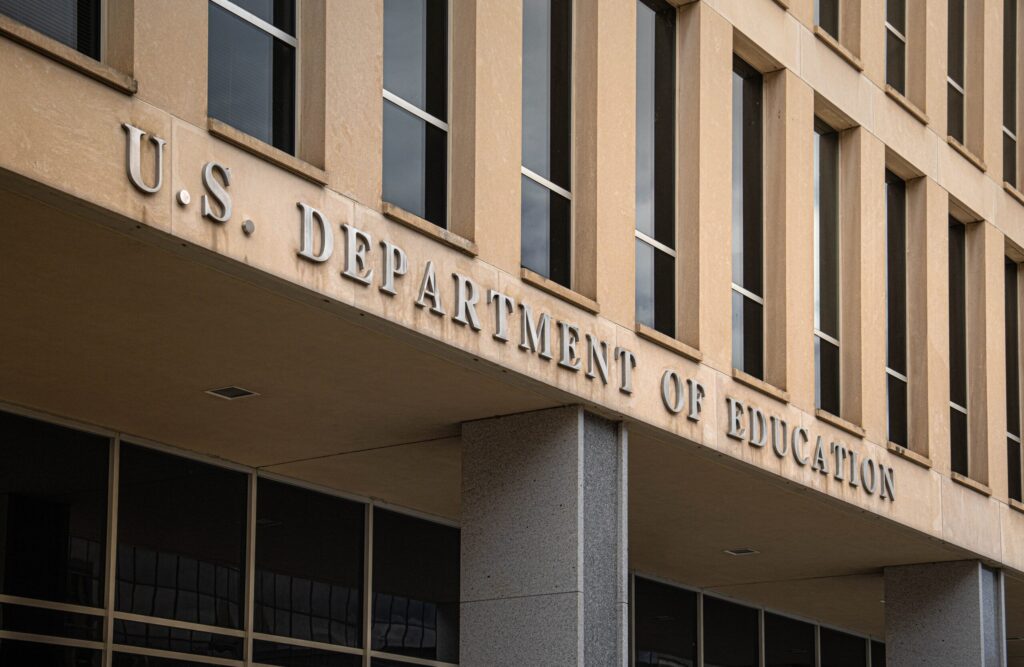 The Impact on Student Loans If the Department of Education (ED) Shuts DownIn recent weeks, President Donald Trump has renewed his efforts to dismantle and defund the U.S. Department of Education (ED), picking up the argument against what he and his administration view as federal overreach and wasteful spending. While the legality of this push to eliminate the ED is still being considered, it’s raised questions among families, educators, and others. What happens if the Department of Education closes entirely? How does this impact federal student loans, existing repayment plans, and future aid access? Will it affect those with private student loans? Here, we’ll explore how potential disruptions to the ED could affect existing student loans and financial aid for current and prospective college students. Key Takeaways President Trump cannot completely shut down the Department of Education without congressional approval, and it’s unknown if that will occur. The Trump administration has significantly reduced ED headcount, slashed funding, and refocused department goals. Student loans will continue to exist, but oversight of them may shift to the Department of the Treasury or Small Business Administration. Students should still file the Free Application for Federal Student Aid (FAFSA) as soon as possible to help find financial aid, including Pell Grants and other funding. Private student loans are not likely to be impacted by these changes. Can the Trump Administration Shut Down the Department of Education? Technically, no. At least not without assistance from Congress. As a cabinet-level agency, only Congress can abolish the ED. But an outright shutdown of the agency differs from significant defunding and restructuring, which is what the Trump administration (through the Department of Government Efficiency (DOGE) and new education secretary Linda McMahon) is currently doing. At President Trump’s direction, about half of the ED’s staff has been fired, its education-research arm has been heavily scaled back, and the focus of its civil rights division has been substantially reduced. That’s significant disruption for an organization that oversees the performance of American students, conducts important research into educational trends, and helps administer vital financial aid programs to students, such as Pell Grants and federally subsidized loans. Eliminating (or significantly shrinking) the Department of Education has long been a policy priority for Republican lawmakers, especially during the Trump administrations. These sweeping personnel and budget cuts are among the initial steps in a contested effort. What Will Happen to Student Loans If the Department Shuts Down? According to recent reports, President Trump proclaimed that oversight and management of the federal student loan portfolio—nearly $1.7 trillion in loans for nearly 43 million borrowers—will shift from the ED office of Federal Student Aid (FSA) to the Small Business Administration (SBA). There’s also the potential that those loans may end up in the hands of the Treasury Department, although some Republicans oppose that move—or have at least expressed hesitation. What does that mean for borrowers who already have loans? Well, first: You still have loans, and they still need to be paid. But some federal loans are already in a state of limbo. Until recently, nearly 8 million federal borrowers have not been making payments because a judge has frozen their Biden-era repayment plans. Income-driven repayment (IDR) plans—which base monthly student loan payment amounts on income and family size—were also briefly paused, but as of March 26, FSA announced those applications are now open. Some income-driven plans can be as low as $0 and are usually a percentage of your discretionary income, so it’s worth staying informed about them if you find yourself having difficulties paying. In addition, there is uncertainty about the SBA’s capacity to manage these loans; the agency recently announced plans to cut its workforce by more than 40%. The timeline for this transition is also in doubt. While President Trump insisted the SBA restructure would happen immediately, the FSA’s role as loan administrator is protected by law. This means Congress must act to enact the changes, but it remains to be seen if congressional support for the sweeping reorganization is there. Would FAFSA Still Exist If the Department of Education Doesn’t? Current borrowers are not the only ones concerned about the ED’s future. Future students and their families want answers, too, especially regarding FAFSA—the application for student aid that more than 9.9 million students fill out each year. Completing the FAFSA helps identify grants and federal loan opportunities available to help meet the increasing costs of college. In the face of an ED shutdown, what would happen to it? Even if the ED is eliminated, many experts don’t think there’s an immediate risk of losing FAFSA access. The 2024-2025 FAFSA delays underscored the form's importance and led to significant problems for students and colleges. Eliminating the form would pose substantial logistical challenges and could lead to widespread issues. As it currently stands, there are no plans to end the FAFSA form completely. While that doesn’t mean there’s an immediate risk to FAFSA going away in 2025, student loan borrowers and prospective college students need to stay abreast of major changes to how the form is handled. Some experts even think that shifting FAFSA oversight from the ED to the Treasury Department might not make much difference. No matter what happens, it’s important to continue filing the FAFSA form each year. Not doing so could put you at risk of missing out on important financial aid that can make college more affordable. Would Private Student Loans Be Affected by a Department of Education Shutdown? Unlike federally backed loans, private student loans and their borrowers won’t see significant changes due to disruptions in ED operations. The ED doesn’t oversee these loans, which means your loan servicing, payment schedules, and terms won’t change. The predictability of private loan servicing compared to federal loans could be a benefit to students and families who want to avoid confusion, especially for those shopping for cosigned student loans. Cosigned loans impact the student borrower’s credit as well as that of the person who helps them secure the loan. A more predictable loan servicing agreement reduces the risk of damage to both signers’ credit scores should a payment lapse due to miscommunication or other issues. How You Can Prepare The best way to prepare for significant policy changes is to have your records in order and stay calm. Download your FSA information to track your outstanding loan balances, payment amounts, and interest rates. Verify that your loan servicer’s emails are whitelisted and that your address and contact information are correct. Remember, policy shifts take time, and you will have opportunities to prepare. No matter what happens if the Department of Education closes, keeping detailed documentation can help protect you from miscommunication or disputes. If you’re considering student loans for the first time, knowing how to navigate the financial aid system can help reduce the risk of confusion regarding your loans and college costs. Follow Ascent or check out our blog for more up-to-date developments on how the changing financial aid landscape might impact your future. FAQs Would an ED shutdown impact federal student loan rates or variable private loan rates? Yes, in theory. If ED shuts down, the federal government may hand off student loans to private lenders or other state-run systems, such as the Treasury Department or SBA. These may offer different rate provisions or income-driven repayment options. Variable private loan rates, tied to market benchmarks, might shift depending on how the lending landscape changes. Would college become more expensive if the Department of Education closed? It’s possible. College expenses are increasing regardless of what happens to the Department of Education. Still, the agency plays a key role in distributing financial aid like Pell Grants and subsidized loans. Without it, states and private institutions could set their own financial aid policies, potentially widening the affordability gap. Oversight of for-profit schools could also weaken without consumer protections, which has historically proven problematic for students. For-profit schools typically aren’t subject to the same accreditation of other universities, which can put students at financial risk as they pursue degrees that may not get them the jobs they want.
 -
 What is a Cosigner for a Student Loan?A cosigner is someone who takes legal responsibility for a loan in addition to the primary borrower. Learn more about student loan cosigners.
 -
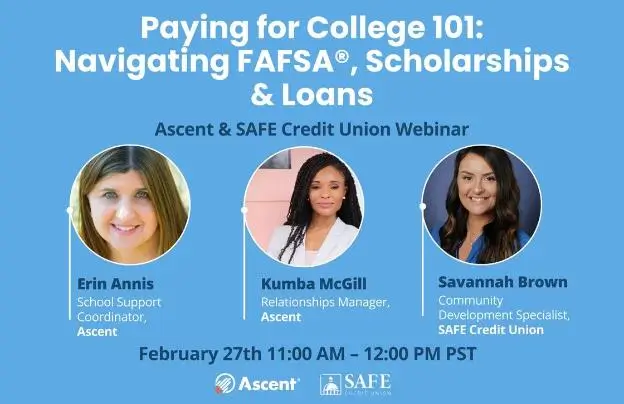 Major Takeaways from Ascent & SAFE Credit Union Webinar: Paying for College 101Major Takeaways from Ascent & SAFE Credit Union Webinar: Paying for College 101: Navigating FAFSA®, Scholarships & Loans With tuition costs on the rise, securing financial aid is key to making higher education more affordable and reducing financial stress. Understanding your options—grants, scholarships, work-study programs, and student loans—can help you navigate the process with confidence. We partnered with SAFE Credit Union to host a webinar, “Paying for College 101: Navigating FAFSA®, Scholarships & Loans.” We gathered expert panelists from Ascent including Erin Annis, School Support Coordinator, and Kumba McGill, Relationships Manager, to speak with the Event Host, Savannah Brown, Community Development Specialist at SAFE Credit Union. The discussion focused on demystifying financial aid, offering practical tips, guiding students through the FAFSA process, and answering valuable questions. If you missed the webinar, no worries! Feel free to watch it here. Understanding your financial aid options is crucial for making informed decisions about financing your education. Our panelists thoroughly reviewed four types of financial aid: federal and state grants, scholarships, work-study programs, and student loans. FAFSA®, also known as the Free Application for Federal Student Aid, is the key to accessing federal financial aid, including grants, scholarships, work-study, and loans, with many states and colleges using it for additional aid. Submitting it early maximizes funding opportunities, making college more affordable through need-based aid and low-interest loans. Our panelists suggest that if you have these qualities, you are eligible to submit an application: Financial Needs You need money to help pay for your education High School Diploma or GED U.S. Citizen and eligible non-Citizens Enrolled or accepted in an eligible degree or certificate program To maintain your eligibility, we advise you to do the following: Maintain a +2.0 GPA Do not default on any student loans Keep your non-citizen status intact Do not get it revoked Enroll in a qualifying degree/certificate program Reach the maximum amount you can borrow from the federal government for a lifetime To get you started, our panelists guided students and parents through the process of how to complete the FAFSA application. Before beginning the process, here are some quick notes: Students should start and complete this application as soon as possible and regardless of if they think they qualify Parents will have to fill out their own sections if students are dependent Under the age of 24, not married, no children, not in the military or homeless Students and parents must use different email addresses when creating their FSA ID Pro Tip: If you're unsure about a question, use the “Hint (?)” icons for guidance on providing exactly what is needed. Next, our panelists recommend you grab a cup of coffee or tea to carry you through this hefty process: To stay prepared, you should have the following documents beside you: 2023 federal tax forms and W-2's Untaxed income Child support Verterans’ non-educated benefits Supplemented Support Income (SSI) Cash and investment balances Your top schools Up to 20 options Financial aid offers Here are the steps to completing the FAFSA application: Log into FAFSA.gov Use your FSA ID Used as your electronic signature Save this along with your password! If you submitted FAFSA last year, use same FSA ID Fill out FAFSA Sections 36 questions Enter basic demographic information Insert your college choices Choose your dependency status Questions to determine your dependency If dependent, answers all questions “No” Parents need to fill out their portion Fill out parents’ information and income IRS DRT: invite, consent, and approval are required Fill out student income IRS DRT Sign, submit, and you are all done! Included are important due dates and deadlines to consider: 2025-2026 FAFSA forms are available now! Submit them by 11:59 CT, June 30, 2025 Schools send financial aid offers estimated by mid-to-late February Look out for the following: School/ state deadlines for institution or state aid/grant School offers Institution aid First come first serve Complete the application as soon as possible! Phew! Now that we have covered the FAFSA application process, you have access to a wide range of financial aid opportunities. In addition to federal and state grants, we’ve outlined three more key sources of financial aid to help support your education: Scholarships & Grants: “Free Money,”, no payment required! Federal & State Grants Free aid based on financial needs (ex. Pell Grants, FSEOG) Scholarships Merit-based, need-based, specialized opportunities Local & national databases provide access to thousands of scholarships Private companies and organizations To date, Ascent has given away over [scholarship_awards_amount] in scholarships to students and families. Enter now for a chance to win one of our easy-to-apply, no-essay scholarships! You do not need to have an Ascent loan to enter. Here are some strategies to secure a scholarship or grant: Tailor your applications to the specific scholarship/grant Write compelling essays that draw in your readers Track deadlines – apply early! Work Study Programs: Earn While You Learn Need-Based Aid Paid towards tuition Determined by FAFSA Part-Time Employment Earn money for expenses through on-campus employment Direct Pay & Earnings Wages paid directly to students, not applied to tuition How to Apply? Job Application is required Apply for and be hired by campus departments Funding for campus jobs Departments receive funding for positions, students actively seek & secure employment to utilize the award Student Loans: Federal vs. Private Federal (FAFSA required!) Lower interest rate, flexible repayment options Subsidized loans: interest is not charged while in school Unsubsidized loans: interest is charged while in school Private Best used after exhausting all federal aid options Compare lenders: interest rates, repayment terms, benefits Paying for college may seem overwhelming, but with the right resources and knowledge, you can navigate the financial aid process with confidence. From FAFSA® and scholarships to work-study programs and student loans, there are many ways to make higher education more affordable. By applying early, exploring all funding options, and staying informed about deadlines, you can maximize your financial aid opportunities and set yourself up for success. Remember, you're not alone on this journey! Ascent and SAFE Credit Union are here to support you with valuable resources, scholarships, and guidance.
 -
 Does Cosigning a Student Loan Affect My Credit?The Credit Impact To Cosigning a Student Loan If you’re wondering how cosigning a student loan affects credit, the answer is—it depends. Cosigning a student loan could have positive impacts on your credit, negative impacts on your credit, or no impact on your credit. It depends on how the student borrower, in this case the student whose loan you are cosigning, makes payments. However, many factors can influence the impact of cosigning a student loan on your credit. Is a Cosigner Necessary for All Student Loans? Let’s start with the basics of what is a cosigner. A cosigner is someone who agrees to accept responsibility for the repayment of a loan if the student borrower fails to fulfill their financial obligation. Ultimately, the cosigner assumes the financial risk if the student borrower defaults on their loan or fails to make timely payments. Whether a cosigner is required will depend on the student borrower’s specific financial circumstances and requirements their lender may have. These qualifications generally include financial factors such as the student borrower's age, income, credit score, and other criteria. Even if a student qualifies for a loan without a cosigner, opting to apply with a cosigner can have additional benefits. Depending on the lender, adding a cosigner may help the student qualify for a larger loan and more favorable rates and terms. When is a Cosigner Necessary for Student Loans? Several factors determine whether a cosigner is necessary for college loans or graduate student loans. Some of the student’s criteria that might determine whether a cosigner is required include: Age – Some lenders may require cosigners for student loans if the student borrower is below a certain age, usually between 18 and 22 years old (depending on the state). Credit Score – Most lenders will require a cosigner if the student borrower has no credit history or a low credit score. Employment History – Many lenders will require a cosigner if the student borrower lacks sufficient employment history (this is a common scenario for aspiring college students just finishing high school). Income – Most lenders will require a cosigner if the applicant’s income does not meet the minimum requirement, which is very likely to be the case for many prospective students. Debt-to-Income Ratio – Most lenders will require a cosigner if the applicant’s debt-to-income ratio is above a certain threshold. Even though most private student loan lenders will require a cosigner, not all will, or at least, not in all circumstances. Ascent offers both loans with a cosigner and no-cosigner student loans, depending on your needs and eligibility. How Your Credit Score is Impacted When Cosigning a Student Loan The impact of cosigning a student loan on your credit score is determined by the financial circumstances and planning of the student borrower when paying back the loan. First, any potential cosigner should understand that the student loan application process often involves a hard credit check, also known as a hard inquiry. A hard inquiry is triggered when a lender reviews your credit score to help assess your creditworthiness. This activity will have little to no short-term impact on your credit score. However, too many hard inquiries over a short period can raise a flag to lenders that you are seeking to borrow beyond what you can pay back. In the long-term, determining whether cosigning a student loan will impact your credit score depends on whether the student loan payments are made. If the loan payments are made on time, and the loan is paid back by the required date, the cosigners’ credit score may even improve. Cosigning can help the student borrower and cosigner build credit if they have little or no credit history. On the other hand, if payments are late or the loan defaults, the student borrower and the cosigner will see this reflected on their credit report. In addition to negatively impacting your credit score, as a cosigner, you may be exposed to long-term financial and potential legal consequences should the lender or debt collectors attempt to collect the unpaid debt. Other than the potential impact on your credit score, there are other financial implications of cosigning a student loan. It is important to note that there is no special classification for cosigned student loan debt on your credit score—the borrowed amount will show up as debt just as if you took out the loan yourself. This means that the loan amount will be factored into your debt-to-income ratio, which can affect your creditworthiness until the loan is paid down or off completely. If you are considering cosigning, consider how this debt could impact your future financial opportunities, such as your ability to take out other loan types, like an auto or home loan. Requirements for Cosigning a Student Loan Each student loan provider may have unique requirements regarding who is eligible to cosign a student loan, which may vary by loan type. For example, a lender may have stricter requirements for cosigners of loans above a certain amount. However, there are some common requirements that a student loan cosigner usually needs to meet. U.S. Citizenship – Many U.S.-based lenders require cosigners to be U.S. citizens or permanent residents. Age Requirements – Most lenders have age requirements for cosigners; usually, you must be at least 18. Good Credit History – All lenders require that cosigners meet or exceed a minimum credit score; larger loans may require a higher credit score. Stable Income/Employment History – Lenders often require cosigners to have a verified stable income and employment history. Low Debt-to-Income Ratio – Most lenders will require student loan cosigners to have a debt-to-income ratio that does not exceed a maximum amount. Responsible Financial Management – Lenders often look at the cosigner’s overall financial responsibility, such as their history of making a timely loan or credit card payment. Meeting Requirements Over Time – Many lenders will require that the cosigner not only meet other requirements but have met them for a sustained period, for example, two years. Relationship to Student Borrower – Although this is not a common requirement, most cosigners are family, including parents and close friends. Benefits of Being a Student Loan Cosigner While inherent risks are associated with being a student loan cosigner, there are also potential benefits that may make this decision worthwhile. Some notable benefits of becoming a cosigner include: Facilitating Access to Education - By cosigning a student loan, you play a crucial role in helping someone pursue their education. Access to higher education can open doors to better career opportunities and personal growth for the student borrower. Building or Enhancing Credit History - As a cosigner, you contribute to establishing or improving the student borrower's credit history. Timely repayments can positively impact both the student borrower's and your credit scores, potentially leading to better financial opportunities in the future. Fostering Financial Responsibility - Acting as a cosigner provides an opportunity to mentor and guide the primary borrower through financial planning. By sharing the responsibility, you can impart valuable lessons about budgeting, responsible spending, and meeting financial obligations. Potential for Favorable Loan Terms - Your involvement as a cosigner may help secure more favorable loan terms, such as lower interest rates or more flexible repayment options. This can ease the financial burden on the student borrower and create a more manageable repayment plan. Risks of Being a Student Loan Cosigner There are several risks involved in being a student loan cosigner. Some of the most important things you need to be aware of and look out for include: Full Obligation to Cover the Debt – As a cosigner, you are equally responsible for repaying the full amount of the loan. If the student borrower fails to make payments or defaults, you are legally obligated to cover the debt, which can have long-term financial implications. Negative Impact on Your Credit Score – Being a student loan cosigner can negatively impact your credit. The impact can be especially massive if the student borrower misses payments or defaults. Difficulty in Removing Yourself from the Loan – Depending on the lender, it can be a difficult process to remove a cosigner from a student loan, even if the student borrower has established good credit. Potential Legal Challenges – If the student borrower defaults on the loan, the lender can take legal action against the cosigner. In some cases, this could even result in wage garnishment or legal judgments. What Is a Cosigner Release? A cosigner release is a provision included in some student loan agreements in which the cosigner may be removed from the loan responsibility after meeting specific qualifications. These terms will vary by lender but generally include an analysis of the student borrower’s payment history and qualifications as a solo borrower. The cosigner may be released from the loan once the student borrower meets these conditions and other required terms. If the lender approves the cosigner release, the cosigner is no longer obligated to repay the debt. Having the option of being released from the cosigner obligation reduces the long-term financial risk for the cosigner, as they will no longer be responsible for the financial consequences should the student borrower default on the loan. For example, Ascent borrowers can apply for cosigner release after making the first twelve consecutive, regularly scheduled payments and meeting other eligibility criteria. Learn More with Ascent From applying to college and beyond, Ascent supports students and their families with financial wellness resources and college loan options to help you achieve your financial goals. Learn more about our cosigned student loan options or contact us today for more questions about cosigning a loan from Ascent Funding. FAQ Whose credit is affected on a cosigned loan? The student borrower's and the cosigner’s credit are impacted when applying for a cosigned student loan, but they do so differently. The student borrower is primarily responsible for making timely payments and managing the loan. If the student borrower does so, their credit score will improve, as will the cosigner's. If the student borrower misses payments or defaults on the loan, their credit score will be negatively impacted, as will the cosigner's. However, the cosigner can make loan payments anytime to prevent a missed payment. Can you remove yourself as a cosigner? Whether or not you can remove yourself as a cosigner from a student loan depends largely on the terms of the specific loan and the lender. Removing yourself as a cosigner from a student loan may be difficult unless the lender offers a cosigner release option. How do I protect myself as a cosigner? You can protect yourself as a student loan cosigner in many ways. Some of the most effective and important include: Understand all terms of the loan Communicate openly and regularly with the student borrower about the loan and their financial situation. Review any cosigner release provision in the terms of the loan. Regularly monitor credit reports. Set up payment alerts. Maintain an emergency fund to cover payments. Know your rights and responsibilities as a cosigner. Encourage responsible borrowing.
 -
 The Pros and Cons of Cosigning a Student LoanWeighing the pros and cons of becoming a student loan cosigner? Learn about the benefits and potential risks of being a cosigner on a student loan from Ascent Funding.
 -
 Navigating Student Financial Aid in Changing Times: What Students and Parents Should KnowUpdate: On 3/20/25, President Donald Trump signed an executive order calling for the dismantling of the U.S. Department of Education (ED). He said during a White House event on 3/21/25 that student loans will be handled by the Small Business Administration. Read the latest news coverage here. What’s Happening with the Department of Education Every year, more than $120 billion in federal student aid moves through the U.S. Department of Education (ED) to help nearly 10 million students and their families pay for college. And while the system has had its share of administrative headaches in the past few years, it has built reliable pathways connecting students to grants, loans, and work-study jobs at thousands of schools across the nation. As you may have heard, the Trump administration is reportedly preparing an executive order that would attempt to downsize or potentially eliminate the ED, a department that manages roughly $1.7 trillion in federal student loans. This proposal is more than a policy adjustment—it would be a massive shift that could impact everything from how students apply for financial aid to the protections borrowers have. As of publication on March 13, 2025, the Trump administration initiated mass layoffs at the ED, reducing its workforce by nearly 50%. The headlines keep coming, and sifting through noise can be overwhelming when trying to grasp how it might impact your financial future. But, if you're one of the millions of students or borrowers counting on federal aid to fund your education, the truth is that these changes could directly affect your education plans and how you pay for your degree, so it’s important to stay informed. What This Could Mean For Your Education Funding If the Trump administration succeeds in dismantling the ED, what does this mean for you as a student or borrower? You've probably gotten used to filling out the Free Application for Federal Student Aid (FAFSA) a certain way, knowing who to call with questions, and understanding when your aid will arrive. With the proposed changes, financial aid could be moved to a different agency or even to state governments. And as we saw in 2024 following the troubled rollout of the FAFSA Simplification Act, changes to established processes can send ripples through the student loan ecosystem, delaying access to critical financial aid. Shift Toward Private Lenders One proposal getting a lot of attention would shift student lending from the federal government to private lenders, essentially privatizing the student loan market. If private lenders take a bigger role in financial aid, one result could be a surge of loan options for students and their families, including more flexibility in loan options and terms or specialized loans for certain majors. But there’s a trade-off. Private lenders typically have stricter credit requirements than federal programs, which means credit score and income could matter more. Given many undergraduates are just beginning to shape their career paths and may have little to no credit history or income, they may need to apply with a cosigner in order to qualify. Increase in Interest Rates & Variability If federal lending moves entirely to the private sector, borrowers might also be concerned that interest rates will increase and be more varied across different lenders and loan types. While federal loans offer the same fixed rate to everyone, private lenders adjust their rates based on a borrower’s credit profile. And, interest rates are already climbing across the board. In fact, 10-year Treasury yields (which influence all types of lending rates) have hit their highest point since 2007, which means even existing variable-rate private loans could get more expensive as the market shifts. Just like buying a house, timing matters, and the market is heating up. It will be more important than ever to choose the right private lender based not only on interest rates, but the terms and benefits they provide, such as automatic payment discounts, cash back at graduation, or access to skills training and career coaching (which we provide all borrowers through AscentUP). Fewer Paths to Loan Forgiveness For those of you already juggling federal loan repayment, you know the drill—just when you figure out the system, it changes again. The SAVE plan provides for lower monthly payments, faster paths to forgiveness, and protection from ballooning interest, but is temporarily unavailable and on shaky ground. All borrowers currently enrolled in the SAVE plan have been automatically placed into an interest-free forbearance and the time spent does not provide credit toward Public Service Loan Forgiveness (PSLF). If the SAVE plan is blocked permanently, then borrowers could face higher monthly payments, longer loan terms, and uncertainty about loan forgiveness. If you've been working toward Public Service Loan Forgiveness (PSLF), know that there is a possibility the PSLF program could be scaled back or eliminated. There is a chance that current borrowers could be grandfathered in—but you'll want to stay on top of announcements. While Ascent’s private education loans function independently from federal student loan programs, when major policy shifts occur, these changes can disrupt the entire infrastructure and potentially reshape some or all of the options available to students and their families. When a key player changes the rules of the game—all the players are impacted and have choices to make. What You Can Do We've all dealt with uncertainty before, and while it's never comfortable, you will get through it. Here are some steps you can take to help prepare for potential changes in policy: Get your paperwork in order: Organize your records of the federal aid you've received, such as award letters and loan statements, in one place. Know your numbers: Make sure you understand your current loan terms, interest rates, and repayment timeline. Knowing where your current loans stand will help you adapt if there is a change in policy. Understand how interest rates work: If there are major changes in the market, knowing how interest rates can impact your loan balance could become even more important. Here’s how to calculate your student loan interest: Find your daily interest rate (take your annual rate and divide by 365) Calculate daily interest accrual (multiply your loan balance by that daily rate) Figure monthly payments (multiply daily accrual by days in your billing cycle) Stay informed about policy changes: Follow trusted sources for updates and bookmark reliable financial aid websites like https://studentaid.gov/. Don't panic: Remember, most policy shifts roll out gradually. The changes we're discussing would likely phase in between now and October 2025, with full implementation expected by July 1, 2026. There is time to adapt and adjust your financial plans, if necessary. Explore your funding options: Understand the alternative funding options that might be available to you beyond federal student loans, including private student loans, grants, scholarships, and work-study programs. Ascent is Here to Help Whatever happens with the Department of Education, Ascent is committed to helping students and their families access and fund higher education responsibly. The landscape may change, but our priority—your educational and financial success—will not. We're in this together.
 -
 How Parents or Guardians Can Help Their Child Get a Student LoanAs a parent or guardian of a college-bound student, it’s important to ensure your child is financially prepared to cover the cost of higher education. And as Decision Day approaches, you might wonder whether your child can get a student loan on their own, or if they will need your financial support. Read on to learn if parents or guardians can apply for student loans, which student loan options are available to parents, and what to be aware of when taking out a student loan in your name. Key Takeaways Parents, guardians, or sponsors can support students by cosigning private loans or taking out loans in their name, such as federal Parent PLUS Loans. Parent PLUS loans come with fixed interest rates, income-based repayment options, and potential loan forgiveness. Private student loans vary by lender but may offer higher loan limits, lower interest rates, and cosigner release. Parent-borrowed loans may offer better terms based on credit, but also come with full repayment responsibility. Compare interest rates, terms, and protections carefully. A financial aid advisor can help guide your decision. Can a Parent or Guardian Take Out a Student Loan for Their Child? Parents or guardians can take out a student loan for their child, which can be beneficial for several reasons. One key advantage is that you may qualify for a substantially larger loan amount than your child could on their own. Creditworthiness is generally a major factor in the loan approval process, and it is not uncommon for students to have little or no credit history. In some cases, students may be unable to qualify as solo borrowers. You may also qualify for a lower interest rate on a student loan than your child could for similar reasons. Securing a lower interest rate can save your child a considerable amount over the lifetime of the loan. Additionally, depending on your qualifications, you could receive more favorable loan terms in other ways, such as more flexible repayment options. Applying for a parent student loan or a cosigned student loan are two options parents can consider, with one major difference. With a parent student loan, you (the parent), or the grandparent, guardian, or sponsor taking out the loan is solely responsible for repayment. With a cosigned student loan, on the other hand, you are accepting shared responsibility for repaying the loan if the primary borrower cannot. A parent student loan does not require the student to qualify, nor does the student carry any financial obligation to repay the loan. Opting for a cosigned student loan, however, can help your child build their credit history, if the loan is paid back on time. Types of Student Loans Available to Parents Two primary types of student loans are available to parents or guardians: federal parent PLUS loans and private student loans. Federal Parent PLUS Loans Federal parent PLUS loans, also known as Direct PLUS loans, are provided by the federal government and are designed for biological or adoptive parents. Parent PLUS loans cover the difference between the amount of federal student aid a student receives and the full cost of attendance, which is also the maximum amount of a parent PLUS loan. To apply for a parent PLUS loan, your child must fill out and submit the Free Application for Federal Student Aid (FAFSA®). Like any financial decision, taking out a parent PLUS loan should be evaluated carefully. While this loan type may provide more funding than other financial aid programs, parents should be conscious of borrowing only what they need—and can repay—to avoid long-term financial repercussions. Private Student Loans Various lenders, such as banks, credit unions, and other organizations, provide private student loans directly to parents, or as a cosigner. The application process and eligibility requirements vary by lender and loan type, as do the loan terms. Some lenders, like Ascent, also offer undergraduate student loans designed specifically for parents or guardians and cosigned student loans. Private Student Loans for Parents vs. Parent PLUS Loans There are several key differences between private student loans and federal parent PLUS loans. Advantages of parent PLUS loans include: Interest Rates: Whereas private loan rates will depend heavily on the market and the borrower’s qualifications, a parent PLUS loan offers a fixed interest rate set by the federal government. Repayment Plans: Parent PLUS loans have various repayment plans, including standard, graduated, and income-contingent options. These plans provide flexibility for those looking for a plan that most closely aligns with their financial situation. Deferment and Forbearance Options: Parent PLUS loans typically have many deferment and forbearance options, which can be a lifeline should you experience economic hardship. Loan Forgiveness Programs: Parent PLUS loans may be eligible for the Public Service Loan Forgiveness (PSLF) program, which is highly advantageous for parents with qualifying public service jobs. Key features of private student loans include: Loan Terms: Private student loans offer more variety in terms of interest rates, and repayment plans, meaning that parents choose the best terms for their financial situation. Cosigner Release Options: Some private student loans offer the option of releasing the parent cosigner from loan obligations after the student meets certain loan repayment criteria. Approval Process Timeline: Private loans typically have faster application and approval processes than federal loans. Lending Limits: Private loans may allow parents to borrow significantly higher amounts, in some cases, the full cost of attendance. It’s important to note that the amount a particular parent borrower qualifies for will vary based on creditworthiness and lender. Additional benefits: Private student loan providers often offer additional benefits including cash back rewards, automatic payment discounts, or access to coaching resources like AscentUP. Pros and Cons of Taking the Loan Out in Your Name While there are many advantages to taking out a student loan for your child in your name, there are also some disadvantages. Let’s explore the pros and cons. Benefits of Parents Taking out a Student Loan Access to More Funding: Parents typically have more established credit histories than their children, so they can often qualify for higher loan amounts. Potentially Lower Interest Rates: While the federal government sets parent PLUS loans’ fixed interest rates, parents can often qualify for lower interest rates than their children on private loans. Alleviating Immediate Debt for the Student: A loan in your name removes some of the student's immediate financial burden, allowing them to focus on their studies. Things to be Mindful of When Taking out a Student Loan Responsibility Falls on You: You are ultimately responsible for repaying the loan, regardless if your student completes their program Impact on Your Credit: Taking out a loan can impact your credit, especially if it is for a large amount. Late or missed payments can hurt your credit score, and the loan will impact your debt-to-income ratio (DTI), which can impact your ability to secure other forms of credit. Opportunity for Open Discussion around Finances with Your Child: Mixing family and finances can be tricky, and the financial obligation of the loan should be met with openness and honesty. Open communication about expectations, repayment plans, and financial responsibilities can help prevent misunderstandings. Overview of the Student Loan Application Process for Parents Every private student loan has a different application process, so you must contact each lender to discuss the process for their graduate or undergraduate loans. However, the application process for federal parent PLUS loans is similar. For parent PLUS loans, the steps look like this: Complete the FAFSA. This determines eligibility for most federal student aid programs. Log in to StudentAid.gov. After submitting the FAFSA, use your FSA ID to log in to the Federal Student Aid website. Select “Apply for a PLUS Loan.” Use the “Apply for Aid” tab and choose “Apply for a Parent PLUS Loan” for the relevant award year. Complete the parent PLUS loan application. Provide the required personal and financial information on the application form, such as income, employment, and contact information. You must undergo a credit check. Unlike other federal student loans, the Department of Education assesses your credit history to determine eligibility. Sign the Master Promissory Note (MPN). If approved, you must sign the Master Promissory Note on the studentaid.gov website. This legal document outlines the terms and conditions of the loan and documents your promise to repay it. Receive a loan decision. The Department of Education will notify you whether you’ve been approved for the loan, along with the loan amount and terms. Accept or decline the loan. You can accept the full loan amount, choose a lower amount based on your child’s specific needs, or decline the loan if you no longer need it or have found a better option. Tips on How to Determine Which Type of Student Loan Is Right for Parents Now that we’ve established that parents can take out student loans for their children, the next step is figuring out which loan type best suits their needs. Here are some tips for determining which loan is best for your financial future and your child’s education. Evaluate Your Financial Situation. Assess your income, savings, existing debts, and overall financial capacity to determine what loan repayments you can afford. Research Available Options. Understand federal and private options regarding interest rates, repayment plans, borrower protections, and other terms to determine which best aligns with your needs. Compare Interest Rates. Consider whether fixed or variable rates are more advantageous to you and the specific rates offered on specific loans. For example, if you value the predictability of a fixed rate with ample deferment and forbearance options, a parent PLUS loan might be your best bet. Compare Loan Limits to Need. Different loans have different limits, which may or may not meet your child’s needs. Understand Repayment Options. Different loans offer different repayment options, some of which may be more advantageous for your situation. Assess Your Creditworthiness. Evaluate your credit history and credit score to understand how they might impact your loan approval, interest rates, and available loan terms. Consider Cosigning. Evaluate whether it would be better to be a cosigner yourself or find another cosigner, especially one with a strong credit history. Review Available Borrower Protections. Consider whether deferment, forbearance, loan forgiveness programs, and cosigner releases are available. Seek Professional Advice. Financial aid advisors and student loan experts can provide personalized guidance based on your circumstances and needs. Contact our support team today! Learn More with Ascent Ascent is committed to helping students achieve their goals in college and beyond. That's why we offer a library of financial wellness resources and a variety of loan options to meet your financial needs. Learn more about our college loan options for parents. FAQ Do parents need to cosign student loans for their children? Parents often do not need to cosign student loans for their children if the student borrower can qualify independently. However, cosigning a loan for your child may increase the total loan amount available, reduce interest rates, and secure more favorable terms. Can my child get a student loan on their own? Whether your child can get a student loan independently depends on several factors, including their financial need, creditworthiness, credit score, and the school’s total attendance costs. The best way to determine this is to have them fill out the FAFSA, apply for federal student aid, and then apply for private student loans to address any remaining funding gaps. Application criteria will also vary by lender. How do you get private student loans for parents with bad credit? Although getting private student loans for parents with bad credit can be more difficult, there are options. Some lenders may have more flexible credit requirements or allow collateral to secure the loan. You can also investigate lenders who specialize in helping borrowers with bad credit.
Tips to save
Ways to earn
Your Ultimate Guide to College Funding
Discover interactive tools, expert insights, and real-world strategies to help you pay for college with confidence.