-
 Ascent Recognized as One of Southern California's Best Places to WorkWe’re proud to share that Ascent has been recognized as one of Southern California’s Best Places to Work by Best Companies Group, an independent organization that honors companies creating strong workplace experiences for their teams. Best Places to Work SoCal is a research-driven program from Best Companies Group that reviews participating companies’ practices, programs, and benefits, then gathers employee feedback about their workplace experience. Companies that meet the program’s criteria are named among the Best Places to Work SoCal. For Ascent, this recognition reflects more than our benefits or programs. It reflects the people who make our work meaningful every day. At Ascent, we’re focused on building a workplace where people feel supported, trusted, and able to grow. Our mission is to help students access education and move toward academic and economic success, and we know that work starts with our own team. When employees feel valued and connected to the work they do, they’re better equipped to make a meaningful impact. Our team is curious, collaborative, and open to new ideas. Leaders encourage learning, create space for feedback, and support career growth across the company. We believe great ideas can come from anywhere, and we work to make sure employees feel heard, included, and empowered to contribute. Supporting employees means supporting the whole person. Ascent offers flexible and hybrid work options, generous PTO and leave policies, paid parental leave, wellness support, continuing education opportunities, and a 401(k) match. These benefits are designed to help team members care for themselves, grow professionally, and build sustainable careers. Recognition is also part of how we show appreciation. Through programs like Cosmic Kudos, professional development opportunities, and company-wide celebrations, Ascent makes time to acknowledge the work happening across the team. It’s one way we help create a culture where people support each other, celebrate progress, and take pride in the impact they’re making. “We’re proud to have built a workplace where employees feel trusted, supported, and genuinely connected to the work they do,” said Emily Skoubo, Director of Human Resources at Ascent. “This recognition reflects the collaborative culture our team has created together and our continued focus on providing an environment where people can grow, contribute, and feel valued.” At its core, Ascent’s culture is people-first and purpose-driven. Team members support one another, celebrate wins together, and stay connected to a shared goal: helping students and families plan for, pay for, and succeed in school. That mix of mission, collaboration, and opportunity is what makes Ascent a great place to work. We’re grateful to every employee who helps shape that culture every day and proud of what we’ve built together. As Ascent continues to grow, we’ll keep investing in our people, strengthening our culture, and creating opportunities for employees to do meaningful work while building rewarding careers. Because when our people succeed, the students and families we serve benefit too.
 -
 How to Build a Preferred Lender List: A Checklist for SchoolsWith Grad PLUS loans being phased out, graduate students and schools are facing new choices and considerations. While this transition brings some uncertainty, it also opens the door for schools to find new ways to guide and support students as they plan for their educational future.
 -
 How Schools Can Rethink Graduate Funding Models After Grad PLUSGraduate funding is changing fast, and schools have an opportunity to rethink how they support students. With the end of Grad PLUS loans under the One Big Beautiful Bill (OBBB) Act, institutions will need to explore new ways to help students cover the cost of high-cost programs like law, medicine, and business. These shifts open space for innovation, helping schools expand access and showcase the value of their programs.
 -
What the Elimination of Grad PLUS Loans Means for Graduate Schools and How to PrepareThe elimination of Grad PLUS loans will fundamentally reshape how graduate students finance their education, challenging both access and affordability. Financial aid offices must proactively adapt policies, train staff, and guide, students to navigate a more complex funding system.
-
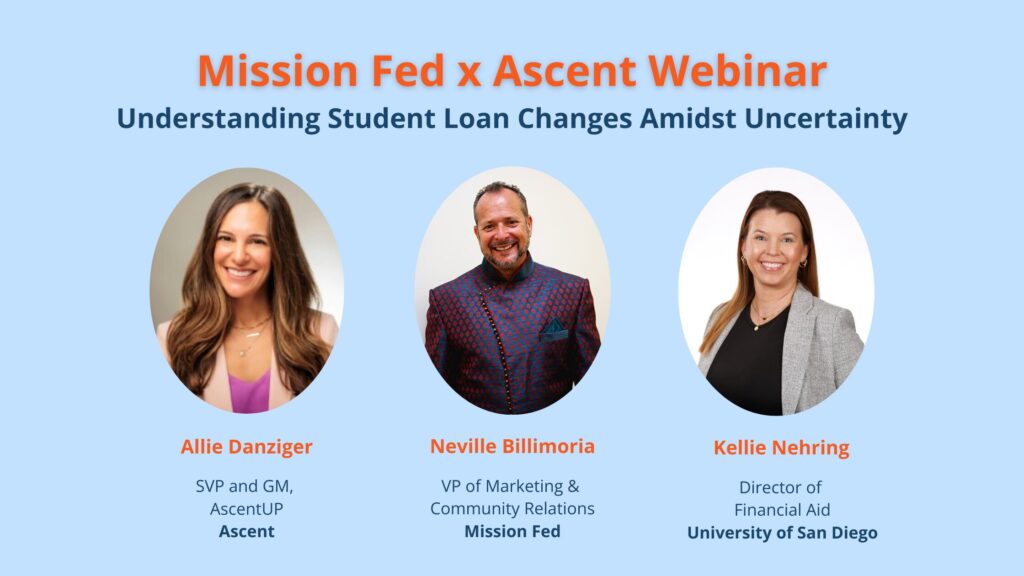 Navigating Change: Key Takeaways from the “Understanding Student Loan Changes Amidst Uncertainty” WebinarWhether you're currently in school, preparing to start, or managing your loan repayment, Ascent provides practical tools and insights to help you make informed financial decisions with confidence. Paying for college can be confusing, especially with all the recent changes to financial aid and student loans. To help make things a little clearer, we partnered with Mission Federal and the University of San Diego to host “Understanding Student Loan Changes Amidst Uncertainty,” a webinar designed for students and families. Ascent’s SVP and GM of AscentUP, Allie Danziger, Mission Fed's VP of Marketing and Community Relations, Neville Billimoria, and University of San Diego’s Director of Financial Aid, Kellie Nehring, shared helpful advice on FAFSA updates, scholarships, student loans, and how to plan for different college paths, whether that’s a four-year university, a community college, or something in between. If you missed the webinar, no worries! You can watch it here but we’ve also summarized the learnings below. Changes to Federal Loan Policy Big shifts are on the horizon—new federal policy changes are set to reshape repayment, forgiveness, and loan eligibility in ways that every student and family should know about. Starting July 1, 2026, federal loan regulations will undergo major updates that will directly impact how students and parents pay for college, beginning with the 2026–2027 academic year. Graduate students will no longer be able to borrow Grad PLUS Loans, a change that could make financing advanced degrees more challenging. For undergraduates, Parent PLUS Loans will still be available, but borrowing will be capped at $20,000 per year—posing funding gaps for families at higher-cost schools while having less effect at more affordable institutions. The good news? If you’re starting school this Fall and plan to use Grad PLUS or Parent PLUS Loans, your borrowing won’t be affected for the upcoming academic year. Still, these upcoming changes are prompting schools to explore creative solutions, from expanding institutional loan options to connecting families with private lenders. For students and parents alike, understanding these shifts early is key to preparing for the future of college financing. Parent PLUS Loans have unique repayment rules that families should understand before borrowing. Eligibility requires a credit check, and repayment begins just 60 days after the second disbursement, often during the spring semester of a student’s first year. These payments cannot be deferred until six months after graduation, meaning parents may need to start making payments while their student is still in school. International students aren’t eligible for federal aid, but they may still qualify for other financial aid programs and resources. Guidance for Navigating Student Loans As you plan for the road ahead, it’s important to understand the key details of student loans to stay informed and make confident financial decisions. Completing the Free Application for Federal Student Aid (FAFSA) each year is the first and most important step in determining your eligibility for federal financial aid. Depending on your situation, you may also need to fill out an institutional or state application to maximize your options. For many students, federal loans will play a key role: subsidized loans are need-based and don’t accrue interest while you’re in school, as long as your Student Aid Index is lower than your school’s cost of attendance. On the other hand, unsubsidized loans begin accruing interest right away, though repayment is deferred until six months after graduation or withdrawal. Once repayment starts, it’s critical to stay on track—missing payments, even during forbearance, can create lasting challenges. Remember, you’ll be repaying the loan servicer that manages your account, so building good habits now will set you up for success after graduation. The good news is that repayment plans can be tailored to your income, giving you some flexibility as you begin your career. Federal student loan interest rates typically shift by about 5–10% each year and reset every July 1st for the upcoming academic year. In contrast, private lenders adjust rates which can make them more competitive depending on the market. Ascent offers low rates and multiple benefits that help students plan, pay, and succeed in college. Our borrowers also receive access to our AscentUP program which provides tools, resources, and coaching, as well as access to paid internship opportunities, to support students on professional development, building confidence, developing new skills, and jumpstart dream careers. More Ways to Pay Beyond student loans, there are several ways to help make college more affordable. Campus jobs offer flexible hours and valuable experience, often available through the financial aid office, athletics department, or housing office. If you qualify, federal work-study can provide an added chance to earn money while gaining valuable experience. The key is to explore these options early at the schools you’re considering, so you can combine resources and create a strategy that makes paying for college feel more manageable. When it comes to paying for college, scholarships are the ultimate win— it’s free money you never have to pay back. There are scholarships out there for nearly everything—academics, athletics, leadership, volunteering, unique hobbies, and even your favorite ice cream flavor. The more you apply for, the more chances you have to stack up real savings. For students 14+, Ascent offers no-essay scholarships! Check out the latest opportunities and enter to win here! As you navigate paying for college, remember that you don’t have to do it alone—your school’s financial aid team is there to support you. Whether it’s asking about scholarships, staying on top of deadlines, appealing for additional aid, or finding out who to contact about repayment options, reaching out early can make a huge difference. Building a relationship with the financial aid office not only helps you avoid frustration and discouragement but also ensures you have a trusted resource to turn to whenever questions come up. Don’t hesitate to ask plenty of questions, seek advice, and lean on the broader network of support around you. By gathering input from multiple sources and staying connected, you’ll be better equipped to make confident, informed decisions about your financial journey!
 -
 Big Beautiful Bill: How New Student Loan Changes Impact Graduate StudentsThe recent passage of the "Big Beautiful Bill" (OBBBA) is transforming how graduate students fund their education. With Grad PLUS loans being eliminated and federal repayment plans overhauled, both students and schools face critical challenges. These comprehensive reforms have created uncertainty among graduate students and financial aid officers alike, who are left to navigate potential funding gaps and the impact these policy changes may have on enrollment. Because of the significant repercussions the Big Beautiful Bill will have on student loans—and the students and schools that rely on them to finance higher education—staying informed is critical. Graduate students and financial aid officers should understand how the Big Beautiful Bill’s impact on student loans may alter borrowing limits and repayment strategies and what alternative options are available for financing higher education. Key Takeaways The Big Beautiful Bill eliminates Grad PLUS loans for new borrowers after July 1, 2026, requiring graduate students to seek alternative funding options. Federal borrowing caps for graduate and Parent PLUS loans have significantly decreased, potentially causing funding shortfalls. Economic hardship and unemployment deferments are going away, limiting borrowers’ repayment flexibility. Pell Grant eligibility expansion indirectly impacts graduate funding dynamics at many institutions. Increased 529 plan withdrawal limits offer additional flexibility for funding education costs. Ascent offers private graduate student loans to help graduate students shore up funding gaps and help schools secure financial support for their students in the wake of these unprecedented changes. Key Changes in the “Big Beautiful Bill” Affecting Student Loans The Big Beautiful Bill’s extensive range of reforms is slated to completely shift federal student loan policies and impact a wide range of people, including: New and current borrowers Parents relying on federal loans Schools navigating financial aid programs These latest changes to student loans are part of the Trump administration’s broader education reforms, which student borrowers, parents, and financial aid officers should monitor closely. The End of Grad PLUS Loans One of the most impactful Big Beautiful Bill student loan changes is the termination of the federal Grad PLUS loan program. Grad PLUS loans, which will no longer be available to new borrowers starting July 1, 2026, allowed graduate students to borrow up to the total cost of attendance, minus any other financial aid received. Critics typically argued that these loans contributed significantly to rising student debt by encouraging excessive borrowing. In addition, they were accused of placing financial strain on students post-graduation. To address these concerns, the bill replaces Grad PLUS loans with increased borrowing limits for Direct Unsubsidized Loans, albeit with lower overall limits. While the shift aims to control debt accumulation, it leaves many graduate students searching for alternative funding sources. New Borrowing Caps Under the Big Beautiful Bill college loan adjustments, borrowing limits for graduate students and Parent PLUS loans have decreased significantly. Graduate students now face stricter annual and aggregate caps, limiting their access to federal funds. Similarly, Parent PLUS loans, which helped parents bridge funding gaps for their dependent students, also face new limitations. The caps on the various loans are as follows: $20,500 per year with a lifetime grad school cap of $100,000 for graduate students $50,000 per year with a lifetime cap of $200,000 for professional graduate students (e.g., medical or law school) $20,000 a year and $65,000 per child for parent PLUS borrowers Changes to Pell Grant Eligibility In contrast to cuts to other funding sources, the Big Beautiful Bill has expanded Pell Grant eligibility, increasing the number of undergraduate students eligible for this form of aid. The expansion of Pell Grants could indirectly affect graduate funding as institutions redistribute financial aid budgets or priorities. Schools may, for example, shift resources toward undergraduate students who now qualify for the expanded grants. In practice, students who receive full scholarships from colleges or universities will no longer be eligible for additional funding via Pell Grants. Contrast that with students in workforce training programs, whose eligibility has increased. Where these grants could previously only pay for courses of less than 600 hours or 15 weeks, that eligibility has expanded. Student Loan Repayment Plan Changes Among the most notable student loan repayment plan changes under the bill is the removal of specific repayment plans, including the popular SAVE plan. Other casualties include Pay As You Earn (PAYE), Income-Based Repayment (IBR), and Income-Contingent Repayment (ICR) plans: SAVE (Saving on a Valuable Education): Caps payments at 5–10% of discretionary income and forgives remaining balance after 10–25 years. It replaced REPAYE and offers the lowest monthly payments for most borrowers. IBR (Income-Based Repayment): Payments are 10–15% of discretionary income, with forgiveness after 20–25 years. Borrowers must demonstrate partial financial hardship. PAYE (Pay As You Earn): Requires a partial financial hardship; caps payments at 10% of discretionary income, with forgiveness after 20 years. Only available to newer borrowers. ICR (Income-Contingent Repayment): Payments are the lesser of 20% of discretionary income or a fixed 12-year repayment, adjusted for income. Forgiveness occurs after 25 years. Available to all Direct Loan borrowers. While eliminating these plans may simplify available federal repayment options, it reduces flexibility for borrowers. Graduate students, for example, should prepare for stricter repayment terms and limited choices moving forward. Don’t panic, though. The phase-outs for these plans are somewhat slower, and current borrowers have until July 1, 2028, to switch to a new plan. Those 7.7 million Americans enrolled in the Biden-era SAVE plan will see interest on those loans resume on August 1, 2025. Removal of Economic Hardship Deferment Another critical aspect of the Big Beautiful Bill’s student loan changes is its elimination of deferment options for unemployment and economic hardship. Previously, borrowers experiencing financial difficulty could temporarily pause their federal loan payments. With these protections removed, borrowers must carefully plan to avoid financial distress during repayment periods. Increased Withdrawal Limits on 529 Plans Finally, the bill introduces higher withdrawal limits for 529 college savings plans. Families and students can now withdraw larger amounts each year without penalties, making 529 plans more flexible for offsetting education costs in the face of reduced federal aid. The law doubles the annual tax‑free withdrawal limit from $10,000 to $20,000 per beneficiary for K–12 qualified expenses, starting in tax year 2026. What These Changes Mean for Graduate Borrowers The student loan changes introduced by the Big Beautiful Bill present significant challenges to graduate students, specifically due to the loss of Grad PLUS loans. Students who use them took out nearly $32,000 last year, according to an analysis from Bloomberg. And because many of those students come from low-income backgrounds and minority communities, it would hit students with limited options the most. These were key funding sources that covered comprehensive education costs. With reduced federal borrowing options, grad students must prioritize financial literacy and budgeting skills to manage their education expenses, especially with changes to student loan repayment plans. Students must now emphasize evaluating their chosen degree programs' return on investment (ROI). Paying close attention to school selection, tuition costs, and future earning potential will help them ensure manageable debt levels. Tools like Ascent’s College Degree ROI Calculator can help students assess the potential return on college investment based on school and major. As federal funding tightens, grad students with strong credit histories will likely explore competitive private lending options to bridge funding gaps. Graduate school programs for a master’s degree can cost anywhere between $44,640 and $71,140, depending on the program and whether the school is public or private. These costs are even higher for medical and law school. And that’s just tuition; books, fees, and other cost of living expenses elevate the numbers even higher. Graduate school scholarships and grants can help pay for school, but most won’t cover the full costs. That’s a significant disparity that leads to graduate students taking out hundreds of thousands of dollars in loans over their graduate career. In this more restrictive funding environment, proactive financial planning and informed decision-making are critical. Students and families should leverage available resources and guidance to better navigate these challenging times. What This Means for Schools and Financial Aid Offices These developments also have big impacts on financial aid offices for universities with graduate programs. Because federal funding sources like Grad PLUS loans are being eliminated and borrowing limits decreased, graduate schools are expected to face increased pressure to help their students bridge substantial funding gaps. To effectively manage these changes, financial aid offices will need to cultivate strong relationships with credible private lenders to ensure students maintain reliable access to essential funds. Ascent provides valuable resources for schools, offering flexible graduate loan solutions, career readiness training, and enhanced financial education. When schools partner with reputable private lenders like Ascent, they can mitigate these funding shortfalls to ensure their students remain financially supported through graduation. Ascent is Here to Support Graduate Students Amid Federal Changes With such significant shifts in federal student loan policies, graduate programs and their students are facing increasing uncertainty about how they'll bridge new funding gaps. At Ascent, we’ve spent years working closely with schools and students to navigate complex financial landscapes. Our expertise allows us to offer flexible, customized private lending solutions specifically tailored to graduate education. By partnering with Ascent, schools can confidently: Boost enrollment numbers by providing accessible graduate student loans that attract qualified students who might otherwise choose not to attend due to affordability concerns. Support underserved student populations who risk being unfunded in the wake of federal loan eliminations and lowered borrowing limits. Maintain financial stability and avoid disruptions caused by recent federal loan changes—allowing institutions to better plan, budget, and support their graduate cohorts without interruption. Ascent’s commitment to enabling student success extends beyond funding alone. Students gain access to robust financial literacy resources, personalized career support through AscentUP, scholarship opportunities, and tools designed to strengthen students’ financial wellness throughout their graduate experience, and beyond. Together, graduate schools and students can rely on Ascent to navigate these unprecedented times with stability, confidence, and clarity. Contact us to learn more about our private graduate student loans and support offerings for grad students and schools. FAQs How does the Big Beautiful Bill impact graduate student loans? The Big Beautiful Bill eliminates Grad PLUS loans, reduces federal borrowing caps, ends key deferment options, and revises repayment plans. These changes significantly impact graduate students’ funding strategies and could create hardship for those with significant financial needs. What are my options since Grad PLUS loans have been eliminated? Graduate students can now use increased Direct Unsubsidized Loans (with lower limits) or seek scholarships to help pay for school. You may want to consider private lenders like Ascent, which offer competitive graduate loan options. What to do if my student loan deferment has been removed? If your deferment options have been removed, you can explore income-driven repayment plans, refinancing, or alternative private loans to help manage your payments more effectively. How has the Big Beautiful Bill changed borrowing limits for student loans? Federal borrowing limits for graduate and Parent PLUS loans have significantly decreased. This has created funding gaps that students must fill through alternative financial strategies or private lending options. How can Ascent assist graduate students with receiving funding? Ascent offers graduate students flexible private loan options with competitive interest rates, but that’s not all. We also provide financial literacy resources and career support through the AscentUP program to ensure students remain financially supported.
 -
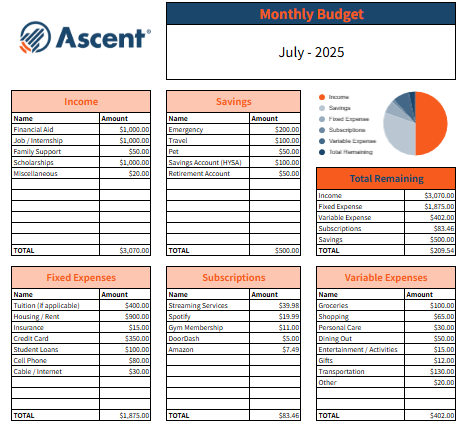 Smart Money Moves: The Ultimate Guide to Budgeting for College StudentsCollege is an exciting time to explore, grow, and gain independence—including getting comfortable with money. Budgeting might sound intimidating, but it’s really just a way to make sure your money supports the life you want to live. With the right strategy and tools, any student can manage money effectively, reduce stress, and set themselves up for future financial success. Why Budgeting is Crucial for College Students Budgeting gives you control over your money, even when it feels like you don’t have much. It helps you cover essentials, avoid debt, and still enjoy life on and off campus. Whether you’re managing a part-time income or student loans, a budget keeps you organized, prepared for surprises, and builds good habits for life after college. Step 1: Understand Your Finances – Creating a Realistic Budget Before you can build a budget that works, you need to understand where your money is coming from and where it’s going. Taking the time to get clear on your income, expenses, and savings goals is the foundation of smart money management. Track Your Income Sources: Before you can plan how to spend or save, it’s important to know how much money you have coming in. Identifying all your income sources will give you a clear starting point for your budget. Financial aid (grants, scholarships, loans) Job income Family support or allowance Know Your Expenses: Prioritize Needs vs. Wants Once you understand your income, the next step is to track your spending. Breaking your expenses into needs and wants can help you make smarter decisions about where your money goes. Fixed Expenses (Needs): Tuition, rent, utilities, insurance, credit cards, bills Variable Expenses (Wants): Food, entertainment, supplies, clothing, personal care Savings: Fund Your Future Saving might not feel urgent right now, but it’s one of the most powerful habits you can start. Even small contributions help you build a financial safety net and encourage long-term habits that will support your goals well beyond college. Savings Accounts: Emergency Fund, travel expenses, pet care High Yield Savings Account: Have higher interest rates and enable faster growth of your savings Retirement Plans (401k, Roth IRA): Tax-advantaged savings plans to help grow savings over time for retirement expenses Use a Budgeting Method Choosing a budgeting method gives structure to your financial plan and helps you stay consistent with your spending, savings, and goals. 50/30/20 Rule: 50% needs, 30% wants, 20% savings/debt repayment This rule helps individuals manage their finances by prioritizing essential expenses, discretionary spending, and long-term financial goals. 50% Needs: Essential expenses you must pay to live and work 30% Wants: Non-essential but enhance quality of life 20% Savings: Strengthening your financial future Envelope Method: Physical or digital envelopes for each category Determine budget categories Set monthly budget for each Withdraw cash and fill envelopes Spend only from those envelopes Step 2: Save Where You Can Once you’ve built a basic budget, the next step is finding ways to stretch your dollars further. The good news? As a college student, there are tons of easy ways to save without sacrificing fun or convenience. From student discounts to smart spending habits, a few small changes can make a big difference. Here’s how to make the most of what you have. Student discounts: Show student ID at restaurants, shopping stores, movie theaters, etc. Apps to get student discounts: UNiDAYS, Student Beans Textbooks: Rent, buy used, library copies Food: Cook at home, use meal plans wisely, avoid daily coffee shop habits, check supermarket ads for deals Transportation: Use public transit, bike, or carpool Most colleges provide free transportation passes Entertainment: Attend free campus events, share streaming accounts Step 3: Prepare for the Unexpected Even the best budgets can be thrown off by surprise expenses. Whether it’s a last-minute trip home, a medical bill, or an extra textbook you didn’t plan for, life happens. That’s why it’s important to build a financial cushion that helps you handle the unexpected without stress—or debt. Here’s how to stay prepared and protect your budget. Build an Emergency Fund: Aim for a $500 goal to start Plan for Irregular Expenses: Books, holidays, trips, birthdays, medical expenses Step 4: Use Tools to Stay on Track Creating a budget is a great start—but staying on track takes a little help. Thankfully, there are plenty of simple tools that can keep you organized and consistent, even on your busiest days. Whether you prefer apps, spreadsheets, or calendar reminders, the right tools can make managing your money quicker, easier, and less stressful. Let’s look at a few that can help you stay in control. Spreadsheets: Custom Google Sheets or Excel Download Ascent’s Student Budgeting Sheet here! Banking Tools: Auto alerts for low balance, spending summaries Calendar Reminders: For bill due dates and budget check-ins Block specific date/time on your calendar to sort your finances Common Budgeting Mistakes to Avoid Even with the best intentions, it’s easy to slip up. Being aware of common budgeting mistakes can help you stay on track and avoid unnecessary stress. Here are a few pitfalls to watch out for: Underestimating daily spending: Every purchase adds up! Not reviewing your budget monthly: Adjust for changes Overlooking one-time costs: Move-in costs, graduation fees, etc. Relying on your credit cards: Make sure you have the funds to pay them back Building Healthy Financial Habits Good budgeting isn’t just about numbers—it’s about building habits that support your goals over time. With a few consistent practices, managing your money can become second nature. Here’s how to turn smart choices into lasting habits: Track every dollar: Even small purchases add up Set time aside time to review your account weekly Set your goals: avoid overdrafts, reduce credit card use Stick to your budget for 3 months? Treat yourself (responsibly)! Final Thoughts Budgeting is an essential skill that can make your college experience less stressful and more empowering. It’s not about getting everything right the first time—it’s about starting small, staying flexible, and learning from your experiences. With a little effort and consistency, you’ll build habits that not only help you thrive in college but also set you up for long-term financial success.
 -
 A Student’s Guide to Smart Summer Spending & SavingIt’s finally summer! Whether you're kicking off your mornings with a run, gaming with friends, or soaking up the sun poolside, this is your time to unwind. While the season is all about fun and freedom, it’s also a great opportunity to be mindful of your money. The choices you make now—both in spending and saving—can set you up for a smoother, more stress-free school year. Save this Summer Open a Savings Account Even small deposits from a paycheck or birthday card can add up fast. Credit unions often offer student-friendly savings accounts that help you set goals, earn interest, and build smart financial habits. You can even automate your deposits—just set it and forget it! SAFE Credit Union has some great savings account options—from traditional savings to high-dividend savings accounts—so you can start your savings journey now. Apply for Scholarships Applying for scholarships is a wonderful way to save money this summer! Ascent Funding offers a $1,000 scholarship giveaway every month; no essay required! Budget Around Plans but Leave Room for Spontaneity Create a simple monthly budget based on your known expenses—like back-to-school shopping, beach days, or a friend’s birthday. Then, add a “spontaneous spending” cap. Whether it’s $30 or $100, this lets you enjoy last-minute BBQs or froyo runs without wondering where your money went. Use SAFE Credit Union’s financial guides or your favorite app to stay on track. Apply the 24-Hour Rule Thinking about that $65 pair of sunglasses or a $90 concert outfit? Wait 24 hours. Still want it tomorrow? Go for it. For bigger purchases, wait 48–72 hours. It gives you time to check your budget and see if it’s really worth it. Use Student Discounts Student status = Savings. Apps like UNiDAYS and Student Beans offer deals on clothes, tech, food, and gym memberships. Always ask: “Do you offer student discounts?” You’d be surprised how often the answer is yes! Try a No-Spend Challenge Pick a weekend—or even just a day— where you only spend on necessities. It’s a fun, low-pressure way to reset your habits, be more intentional, and boost savings. Go on a Staycation You don’t need a passport to have fun. Explore your city like a tourist—check out local concerts, free museum days, night markets, or hiking trails. You’ll save hundreds on travel while still making memories. Smart Summer Splurges Invest in Timeless Summer Staples Choose breathable, durable fabrics like cotton and linen. Stick to neutral colors and classic styles that won’t go out of fashion. Think cost-per-wear for long-term savings. Prioritize Health: Buy the Sunscreen Sunscreen isn’t optional—it’s both self-care and long-term financial protection. A $10 bottle now is less than future medical costs. Pro tip: Buy in bulk or check for student discounts at local stores. Final Thoughts There are infinite ways to spend and save responsibly. It’s an easy way to stay in control of your money this summer, and come fall, you’ll be glad you did! About the Author Kristina Nguyen is a community college student studying Business Administration with an emphasis in Marketing. As President of the Business Club and Transfer Club at her school, she helps students navigate the transfer process, connect with industry professionals, and access scholarship resources. After graduating from high school at 16, Kristina entered community college unsure of what to expect and unaware of the many opportunities available. Now, as she prepares for her own transfer to a four-year university, she’s passionate about helping other students feel confident in their journey and realizes there’s no shame in taking an alternative route to their goals.
 -
 How Graduate Students Can Adjust to Grad Plus Loan NewsStudent loans are a hot topic these days, and for good reason. There have been massive shake ups in education under the Trump administration, from the proposed dissolution of the U.S. Department of Education to sweeping changes to how student loans could be administered and managed in the future. The potential impact of these proposed changes is not limited to undergrads and future college students and their families. With the cost of a master's degree averaging between $44,000 to $71,000, many graduate students also rely on federal student aid, such as Grad PLUS loans, to fund their continuing education. If you’re a grad student, you're probably wondering how these changes might impact your future and your ability to pay for graduate school. Let's walk through the potential changes and explore some alternative financial aid options, should Grad PLUS loans become unavailable. Key Takeaways Grad PLUS loans are a type of federal loan offered by the U.S. Department of Education that can cover up to the full cost of attending graduate school. Republican lawmakers have proposed changes to the federal student loan programs that administer graduate loans, including reduced caps on unsubsidized loans and eliminating Grad PLUS loans altogether. If these proposed changes become law, current graduate students will likely be grandfathered in, but future graduate students may need to seek alternative sources of financial aid. Scholarships, fellowships, need-based grants, graduate assistantships, work-study programs, federal unsubsidized loans, and private student loans are alternative funding options graduate students can consider. What Are Grad PLUS Loans? Grad PLUS loans are a type of Direct PLUS loan specifically for eligible graduate and professional students. These credit-based federal loans are offered by the U.S. Department of Education and allow students to borrow up to the full cost of attendance (graduate tuition, fees, and living expenses) minus any other financial aid received. They come with a fixed interest rate and borrower protections, and they’re a popular option because federal unsubsidized loans often don’t cover the full cost of advanced degrees. According to recent federal data, Grad PLUS loans account for a significant portion of graduate student debt. As many as 1.8 million borrowers hold these loans, totaling up to $117.2 billion. This has caught the attention of some policymakers, who are starting to take a closer look at these loans. The high borrowing limits and growing debt load have sparked increased scrutiny of Grad PLUS loans, especially as discussions around the student loan crisis and reforms have intensified. Policymakers are raising the possibility of reform—or even elimination—as ways to reduce the overall burden of graduate-level debt. Will the Grad PLUS Loan Program be Cut? Discussions around eliminating the Grad PLUS loan program have gained traction on Capitol Hill, especially among Republican lawmakers who want to rein in federal spending on graduate education. These lawmakers argue that unlimited borrowing under the program inflates the cost of graduate degrees and places an undue debt burden on students. They’ve introduced bills such as the College Cost Reduction Act of 2024, which proposed eliminating Direct PLUS loans. While it didn’t pass, similar themes in legislation have been introduced in 2025. The Graduate Opportunity and Affordable Loans Act, introduced by Alabama Senator Tommy Tuberville in January 2025, proposes to eliminate the ability of graduate and professional students to receive Direct PLUS loans and sets the aggregate limit on unsubsidized loans to $65,000 for a graduate student. While the bill was referred to the Committee on Health, Education, Labor, and Pensions, it has yet to proceed. Even though neither bill targeting Grad PLUS loans has passed, they each signal lawmakers’ appetite for reforming graduate lending. That means potential changes to how students finance advanced degrees. What Grad PLUS Loan News Means for Borrowers As policymakers debate the future of federal student aid, Grad PLUS loans are undeniably on the chopping block. For current and prospective graduate students, that adds another layer of uncertainty to an already stressful financial climate. Rising tuition costs and fewer affordable borrowing options could leave many students scrambling to cover expenses. Finding student loans for graduate school, including from private lenders, will become more necessary for students who’ve exhausted free financial aid options. Current Grad PLUS Borrowers Students already enrolled or recent graduates with active Grad PLUS loans probably won’t see major changes, at least in the short term. If Congress eliminates the program, existing borrowers will likely be “grandfathered” in, meaning they can keep their current loans and repayment terms as they are. The uncertainty around the Grad PLUS loan 2024-2025 cycle could complicate financial planning for those midway through multi-year programs. If you’re in either of these groups, pay close attention to Grad PLUS loan news developments and start researching backup funding strategies in case future borrowing under Grad PLUS is capped or phased out. Future Grad PLUS Borrowers Future graduate students might be at bigger risk of losing out on Grad PLUS funding. If this federal loan program is eliminated, students may need to rely more heavily on private loans to finance their education. While private loans are just as effective at funding advanced degrees and may offer additional benefits like access to career readiness tools, they may also come with tighter credit requirements, variable interest rates, and other considerations—so it is important to compare your options. This shift from federal to private loans could disproportionately impact students with limited or poor credit histories. As a result, some may delay graduate studies, choose lower-cost institutions, or seek employer-sponsored education benefits. Others may turn to part-time enrollment or work full-time when studying, lengthening the time needed to complete a degree. If you’re thinking about attending grad school, now is the time to start preparing: Compare graduate program costs and consider how you might pay for your desired program if Grad PLUS loans go away. Research and apply for graduate scholarships, fellowships, and other grants. To do so, you’ll need to complete the Free Application for Federal Student Aid (FAFSA) every year. Apply for graduate assistantships or federal work-study programs. Availability of these programs may impact your school choice. Look into employer education benefits to help cover the cost of graduate school. Take steps to build a strong credit profile, research private loan terms, and prepare to borrow if you still need to cover costs. Ascent Is Here to Help We know that paying for grad school is an important concern for all students, and that Grad PLUS loans have been a vital resource. Even if they go away, however, there are still options. Try to be selective about your desired program, pursue all your options for free financial aid, and take your time comparing lenders for private student loans. Ascent can help you find the right loan terms and interest rate to support your graduate education, but we’re here for you beyond borrowing. Our resources for students and families offer guidance about paying for school, better budgeting, career-readiness, and more. Amid ongoing student loan changes, Ascent remains committed to empowering student success and financial wellness. FAQs What alternative loan options are available if the Grad PLUS ends? If Grad PLUS loans are phased out, future graduate students should first explore financial aid that doesn’t need to be repaid such as scholarships, fellowships, grants, graduate assistantships, work-study programs, and employer tuition reimbursement programs. If there are any gaps in funding, graduate students should consider federal unsubsidized loans and private student loans. Can private student loans cover the full cost of grad school? In many cases, private student loans can cover the full cost of attending graduate school, from tuition and fees to living expenses. Private loans have unique eligibility and loan limits determined by the lender, and they usually depend on your credit history or income. That makes planning and comparing loans from different providers a necessity. Will Grad PLUS loans be forgiven? Grad PLUS loans may be eligible for forgiveness under existing federal programs like the Public Service Loan Forgiveness (PSLF) or Income-Driven Repayment (IDR) plan forgiveness, provided you meet the necessary qualifications. However, there’s no separate forgiveness initiative specifically for Grad PLUS loans at this time.
 -
 SAVE Payment Plan Blocked: What This Means for BorrowersStudent loan borrowers have a lot on their minds–and for good reason. Executive orders threatening the possible elimination of the Department of Education and a variety of other student loan changes introduce new disruptions to an already stressful situation. The 8th U.S. Circuit Court of Appeals’ recent decision to block the Biden administration’s SAVE Plan introduced even more uncertainty. Many borrowers on the Saving on Valuable Education (SAVE) Plan now find themselves in limbo, not paying on their loans or accruing interest, but not progressing toward loan forgiveness. Students, borrowers, and their families need to understand how recent decisions and actions by courts and Congress can impact their loans and repayment plans. Key Takeaways The 8th U.S. Circuit Court of Appeals upheld an injunction blocking the Biden administration’s Saving on Valuable Education (SAVE) Plan in February 2025, halting its implementation. The Biden administration created the SAVE Plan in 2023 as an income-driven repayment plan to streamline loan payments and forgiveness for many borrowers. As a result of the court’s decision, SAVE Plan enrollees currently have their loans in forbearance, with no payments due or interest accrued. On March 26, 2025, the U.S. Department of Education reopened applications for Income-Based Repayment (IBR), PAYE, and ICR plans. Ascent provides tools to help students understand the benefits and drawbacks of student loans, including how the cost of education can impact their chosen degree’s return on investment. Understanding the SAVE Plan and Court Actions The SAVE Plan is an income-driven repayment (IDR) program introduced by the Biden administration in 2023. It replaced the Obama-era program, which was formerly known as Revised Pay As You Earn (REPAYE). The goal of this plan was to lower monthly student loan payments and offer borrowers a faster path to forgiveness that considered their income and family size more heavily than previous plans. However, in February 2025, a federal court injunction prevented the U.S. Department of Education from implementing the SAVE Plan and parts of other IDR plans. As a result, IDR and online consolidation applications became temporarily unavailable. The legal challenges to the SAVE Plan have been ongoing, with the following key dates: August 2023: The SAVE Plan officially launched, replacing the REPAYE Plan. Borrowers could enroll to access lower monthly payments and interest protections. October 2023: Major elements of the SAVE Plan took effect, including an increased income exemption and a stoppage of unpaid interest growth for qualified borrowers. March 2024: Multiple Republican-led states challenged the SAVE Plan, arguing overreach of executive authority. July 2024: A preliminary injunction via a federal court blocked full implementation in July 2024. August 2024: The Supreme Court declined to fast-track an appeal, meaning the SAVE Plan remained blocked while litigation continued. February 2025: The 8th U.S. Circuit Court of Appeals upheld the injunction, citing concerns over the Education Department’s authority and potential financial impacts on states. The online IDR application is available again (as of March 26, 2025). Borrowers can still apply for Income-Based Repayment (IBR), Pay As You Earn (PAYE), and Income-Contingent Repayment (ICR) plans. Loan consolidation is also available. What Happens to Borrowers Enrolled in the SAVE Plan? Borrowers on the SAVE Plan are directly impacted by these legal battles. Currently, SAVE Plan participants are placed into administrative forbearance; they’re not legally required to make monthly payments, and the interest on their loans won’t accrue. For those on a tight budget, that can be helpful. That said, forbearance isn’t forgiveness, and months spent in forbearance don’t count toward loan forgiveness programs like the Public Service Loan Forgiveness (PSLF) or traditional income-driven repayment forgiveness. The U.S. Department of Education expects this pause to continue until at least December 2025, unless court rulings change the situation. If you’re a borrower in forbearance, stay up to date on the status of your loans. Ensure your loan servicer has your up-to-date contact information, and check in with studentaid.gov for the latest student loan news. How Are Loan Forgiveness Options Affected? The SAVE Plan block greatly impacts loan forgiveness paths, including PSLF. Because enrolled borrowers are now in administrative forbearance, the months they spend without making payments don’t count toward the 120 qualifying payments for PSLF or the 20 to 25 years necessary for IDR forgiveness. That pause could delay borrowers’ progress unless future policy changes address the gap. SAVE Plan borrowers may want to explore alternative IDR plans like PAYE or IBR to stay on track toward PSLF or IDR forgiveness. Alternatively, if you’ve already completed 120 months of qualifying employment, the PSLF Buyback program lets you “buy back” certain months spent in forbearance, helping you stay on track toward loan forgiveness. Knowing what other repayment options are available can make a world of difference when managing student debt. What Will Happen to Other Income-Driven Repayment Plans? Given the news about the SAVE Plan, many borrowers might have concerns about other income-driven repayment options. As previously noted, the U.S. Department of Education has reopened applications for certain IDR plans, including IBR, PAYE, and ICR, as of March 26, 2025. Borrowers can now apply for or recertify these student loan repayment plans through the online application. However, the broader political climate around student loan reform suggests changes might be on the horizon. Future administrations or legislative actions could aim to retool or modernize IDR plans, especially if the SAVE Plan remains permanently blocked. Borrowers can prepare for any future changes by making proactive decisions: Stay enrolled in current IDR plans and continue making qualifying payments. Monitor official updates from the Department of Education for any policy changes. Explore alternatives if you’re nearing forgiveness milestones or need to adjust your payment strategy. Consult your loan servicer when uncertain about your plan’s status or your next steps. The biggest takeaway for any student loan borrower is to keep up with student loan news over the coming months, especially as the state of repayment and forgiveness programs continues to change. Considerations for Future Borrowers While following student loan news is important for current borrowers, it’s just as critical for future borrowers, students, and parents to stay up to date. Future college students should think carefully about how they will finance their education. The uncertainty of programs like the SAVE Plan and potential reforms to other IDR plans highlights why incoming students should prioritize grants, scholarships, and other financial aid whenever possible and consider the return on investment of their chosen degree. Completing the Free Application for Federal Student Aid (FAFSA) is a key step to financing education, even in the face of changes to federal loan programs. The FAFSA gauges loan eligibility and is often the only way to qualify for need-based Pell Grants, work-study jobs, and campus aid. Complete the FAFSA as early as possible to avoid missing out on potential aid opportunities. And before you take out student loans, use tools like our College Degree ROI Calculator to help estimate the average annual cost of a degree against the first-year salaries in your chosen field. Ascent Is Here to Help Understanding student loan repayment can help you avoid financial headaches, but it’s easy to feel overwhelmed by ongoing changes and shifting policy updates. Ascent is here to help. In addition to our variety of private student loans, we have a library of student success resources to support students and their families in college—and beyond. Plus, when you’re ready to jump-start your dream career, our AscentUP program can provide professional development training and coaching to help you build confidence and develop the skills you need for your next chapter. Check out our blog for more resources and information surrounding education, student loans, and financial wellness today. FAQs What happens now that the SAVE plan is blocked? Borrowers currently enrolled in the SAVE Plan have been placed in administrative forbearance. During this time, monthly payments are not required, and interest does not accrue. Borrowers should keep in mind that months spent in forbearance don’t count toward forgiveness programs, which might prolong the process of paying off your loans or having them forgiven. Why was the SAVE plan blocked? The SAVE Plan faced many legal challenges from Republican-led states, which argued that the Department of Education exceeded its authority in creating the program without congressional approval. On February 18, 2025, the 8th U.S. Circuit Court of Appeals upheld a preliminary injunction against the SAVE Plan, agreeing with the states that the plan's provisions—particularly those related to loan forgiveness—went beyond the Department of Education's statutory authority. Is there any chance the SAVE plan will be reinstated? Given the current political climate and other actions taken by the Trump administration, it’s unlikely that the SAVE Plan will be reinstated anytime soon. Can I still apply for income-driven repayment (IDR) plans like PAYE or IBR? Yes, you can still apply for certain income-driven repayment (IDR) plans like Income-Based Repayment (IBR), Pay As You Earn (PAYE), and Income-Contingent Repayment (ICR). Following a temporary suspension due to a court injunction in February 2025, the U.S. Department of Education reopened applications for these plans on March 26, 2025. Can private loans offer similar terms to what SAVE would’ve provided? Most private student loans do not offer the same payment structures or forgiveness options as federal programs like SAVE. That said, some private lenders offer forbearance or income-based options. Carefully compare terms before you refinance or choose a private student loan provider.
 -
 Learn to Save Smart with Student DiscountsBalancing the costs of being a student can get complicated and expensive. Whether you’re worried about textbooks, rent, meals, or any other expenses, student discounts can help lighten the load. In this blog, we’ll shine light on some great discounts that companies offer for students like you. Remember, while saving money is a win, it’s still smart to stick to your budget—don’t overspend just because it’s a good deal! Technology As a college student, having access to technology is essential, but thisit can also get really costly. Let’s explore some discounts tech companies offer to students to help ease the cost. Apple Apple offers exclusive discounts not only for college students but also for parents, faculty, and staff. Enjoy special pricing on Macs, iPads, and select accessories. Microsoft Microsoft offers discounts for students and teachers. They offer discounts on their Surface laptops and access to Microsoft Teams, Word, Excel, PowerPoint, and more for free. With your student email, it is available until you graduate. Dell You can create a free Dell Rewards account with your email and get savings after getting verified as a college student. Their rewards system allows you to get cash back to put towards your future Dell.com purchases. HP HP’s online education store offers up to 40% as part of their membership benefits. This includes discounts on laptops, desktops, accessories and printers. Streaming Spotify It’s always nice to have some music, a podcast, or an audio book to get you through the day as a student. Spotify offers 50% off their premium monthly subscription for students. All you have to do is verify your college student enrollment with the SheerID verification form. You can also bundle this subscription with Hulu for even more savings! HBO Max Looking for a movie or show to watch between your study breaks and free time? Max offers students a 50% off discount for their streaming services. Apple Music Apple Music has got you covered with music, radio stations, and a discount too. Whether you are earning your associate, bachelor’s or postgraduate degree, you can get a special rate made just for students. Going out Piada One reason you should keep your student ID on you: Piada’s student special! You can get any sized entree and a large fountain drink for just $9, every day from 2-5pm, and all day on Wednesdays. Cinemark & AMC Looking to catch the latest blockbuster? Take a break from studying and check out nearby Cinemark theatre to see if they offer student discounts! You can enjoy special pricing with your student ID. Other theaters like AMC also provide student discounts, so don’t forget to ask about those deals too! Museum Discounts Whether you are traveling, or considering being a tourist in your own college town,, always call or check local museum websites for student deals. Some offer free hours or discounted prices with your student ID! Bank of America also offers free admission at participating museums to cardholders during the first weekend of every month . Ascent We offer great benefits to help students earn cash and savings too! Get a discount on your student loan when you enroll in automatic payments. When you sign up, you can save money with the 0.25%-1.00%* autopay discount. Not only are you getting the discount, but you won’t have to worry about missing any payments! Plus, it takes as little as $1 per month to qualify. Ascent student graduates get 1% of their total loan amount back in cash with our graduation reward**. We are proud of your accomplishment and want to celebrate you! Refer a friend and earn big! Recommend your friends to Ascent and you can earn an Amazon.com Gift Card for each friend you refer ***. The more you refer, the more you can earn. The more friends you refer, the more you can earn—everyone wins. Additional Sources There are also other resources like Student Beans and UNiDAYS where they give students access to more exclusive offers. After you've signed up and verified your student status, you unlock access to discounts for travel, food, clothing, and more! Conclusion Don’t miss out on any student discounts and benefits, a little can go a long way. Saving on technology, entertainment, and dining out can help you save extra money to put away for your expenses during your time in school. Take advantage of your student ID, make smart financial decisions, and be on the lookout for ways you can save for the future and set yourself up for success. * The final ACH discount approved depends on the borrower’s credit history, verifiable cost of attendance, and is subject to credit approval and verification of application information. Automatic Payment Discount of 0.25% is for credit-based loans and a 1.00% discount is for outcomes-based loans when you enroll in automatic payments. For more information, see repayment examples or review the Ascent Student Loans Terms and Conditions. ** Ascent’s 1% Cash Back Graduation Reward is for eligible college students only and subject to terms and conditions. Eligible students must request the graduation reward from Ascent. Aggregate cash back limit of $500. Learn more at AscentFunding.com/CashBack. *** Refer a Friend program is subject to terms and conditions, click here for official rules and eligibility. Restrictions apply, see amazon.com/gc-legal Ascent Written, Native Advertising Disclosure Ascent Funding, LLC (“Ascent”) sponsors these blog posts and creates informational content that is of interest to prospective borrowers and our applicants. The information included in this blog post could include technical or other inaccuracies or typographical errors. It is solely your responsibility to evaluate the accuracy, completeness and usefulness of all opinions, advice, services, merchandise and other information provided herein. ASCENT IS NOT RESPONSIBLE FOR, AND EXPRESSLY DISCLAIMS ALL LIABILITY FOR, DAMAGES OF ANY KIND ARISING OUT OF USE, REFERENCE TO, OR RELIANCE ON ANY INFORMATION CONTAINED WITHIN THESE BLOG POSTS (INCLUDING THIRD-PARTY SITES). ASCENT OFFERS LINKS TO THIRD PARTY WEBSITES AND ARTICLES SOLELY FOR INFORMATIONAL PURPOSES. WHEN YOU CLICK ON THESE LINKS YOU WILL LEAVE THE ASCENT WEBSITE AND WILL BE REDIRECTED TO ANOTHER SITE. THESE SITES ARE NOT UNDER THE DIRECTION OR CONTROL OF ASCENT. WE ARE NOT AN AGENT FOR THESE THIRD PARTIES NOR DO WE ENDORSE OR GUARANTEE THEIR PRODUCTS OR THEIR WEBSITE CONTENT. ASCENT MAKES NO REPRESENTATIONS REGARDING THE SUITABILITY OR ACCURACY OF THE CONTENT IN SUCH SITES AND WE ARE NOT RESPONSIBLE FOR ANY OF THE CONTENT OF LINKED THIRD PARTY WEBSITES. As current and former students, we provide free resources to help you throughout your education, which may include links to third-party websites (where security and privacy policies may differ from Ascent’s). For our full disclaimer, please click here.
Tips to save
Ways to earn
Your Ultimate Guide to College Funding
Discover interactive tools, expert insights, and real-world strategies to help you pay for college with confidence.