-
 Ascent Recognized as One of Southern California's Best Places to WorkWe’re proud to share that Ascent has been recognized as one of Southern California’s Best Places to Work by Best Companies Group, an independent organization that honors companies creating strong workplace experiences for their teams. Best Places to Work SoCal is a research-driven program from Best Companies Group that reviews participating companies’ practices, programs, and benefits, then gathers employee feedback about their workplace experience. Companies that meet the program’s criteria are named among the Best Places to Work SoCal. For Ascent, this recognition reflects more than our benefits or programs. It reflects the people who make our work meaningful every day. At Ascent, we’re focused on building a workplace where people feel supported, trusted, and able to grow. Our mission is to help students access education and move toward academic and economic success, and we know that work starts with our own team. When employees feel valued and connected to the work they do, they’re better equipped to make a meaningful impact. Our team is curious, collaborative, and open to new ideas. Leaders encourage learning, create space for feedback, and support career growth across the company. We believe great ideas can come from anywhere, and we work to make sure employees feel heard, included, and empowered to contribute. Supporting employees means supporting the whole person. Ascent offers flexible and hybrid work options, generous PTO and leave policies, paid parental leave, wellness support, continuing education opportunities, and a 401(k) match. These benefits are designed to help team members care for themselves, grow professionally, and build sustainable careers. Recognition is also part of how we show appreciation. Through programs like Cosmic Kudos, professional development opportunities, and company-wide celebrations, Ascent makes time to acknowledge the work happening across the team. It’s one way we help create a culture where people support each other, celebrate progress, and take pride in the impact they’re making. “We’re proud to have built a workplace where employees feel trusted, supported, and genuinely connected to the work they do,” said Emily Skoubo, Director of Human Resources at Ascent. “This recognition reflects the collaborative culture our team has created together and our continued focus on providing an environment where people can grow, contribute, and feel valued.” At its core, Ascent’s culture is people-first and purpose-driven. Team members support one another, celebrate wins together, and stay connected to a shared goal: helping students and families plan for, pay for, and succeed in school. That mix of mission, collaboration, and opportunity is what makes Ascent a great place to work. We’re grateful to every employee who helps shape that culture every day and proud of what we’ve built together. As Ascent continues to grow, we’ll keep investing in our people, strengthening our culture, and creating opportunities for employees to do meaningful work while building rewarding careers. Because when our people succeed, the students and families we serve benefit too.
 -
 Navigating Education Evolution: An Ask Me Anything session with Ascent’s CEO Ken RuggieroEducation is always evolving, and keeping track of the changes can be overwhelming. From critical FAFSA updates to new Department of Education regulations, staying informed has become increasingly complex. Recognizing these challenges, we're taking a proactive approach to support you. On April 10th, we hosted an exclusive Ask Me Anything (AMA) session with our CEO, Ken Ruggiero, creating a direct line of communication between you and our leadership. The session revealed widespread uncertainty about the impact of recent changes on financial aid processes and next steps. Your concerns are our priority, which is why this AMA was designed to provide clear, authoritative answers to your most pressing questions. Couldn't make it to the live session? We've got you covered. We've carefully compiled the most significant questions and comprehensive answers in this detailed recap. Our goal is to transform uncertainty into understanding, empowering you to navigate these changes with confidence. When you say, "dismantle the U.S. Department of Education," what do you mean? There's been growing discussion about potential changes to the U.S. Department of Education, including the possible transfer of federal student loans to the Small Business Administration (SBA). While nothing has officially changed yet, President Trump issued an executive order on March 20, 2025, to begin dismantling the Department of Education. Following this, he announced that the SBA will take over the administration of the student loan portfolio. That said, there may be some challenges to making these changes a reality. Since much of the federal student loan system is governed by law, it’s not clear how these would be implemented without approval from Congress. We know this news can be confusing and stressful, especially if you’re relying on federal aid right now. But rest assured, your current loans and aid are unaffected for the time being. While these changes may impact future borrowers, we’ll be here to keep you updated and support you through any changes that come your way. Will my payments still be deferred until I finish school? If you chose in-school deferment when you took out your loan from Ascent, your payments will remain deferred as long as you’re enrolled at least half-time. This means you won’t need to make monthly payments until after you graduate or drop below half-time status, depending on your loan terms. It's also important to note that a change in the administrator of the federal student loan program should not affect your eligibility to defer payments while you're in school. However, making early payments during deferment can still reduce your total loan cost and help you get ahead with repayment. I want to know if there will still be funding for students that are going to school outside of private lenders? I thought FAFSA helps us avoid interest on loans. Great question! You’re not alone in wondering this. Yes, federal student aid through FAFSA is still currently available. Nothing has changed how students apply for, or receive, federal grants, work-study, or subsidized loans. While there have been recent discussions about potential shifts in how federal education is managed, no changes to FAFSA or federal aid have been approved at this time. If you’re planning for school, it’s still a good idea to complete your FAFSA application as soon as possible and explore all options- federal and private loans- as well as scholarships to make the best financial decision for your situation. Will FAFSA payments be altered or canceled altogether because of the DOE getting cut? As of today, we haven’t heard anything about FAFSA payments being altered or canceled due to changes with the Department of Education. While there have been some changes within the DOE, they’ve assured that essential programs like FAFSA are still up and running. You can continue applying for financial aid as usual, and we’ll keep you updated if anything changes. Why is FAFSA taking so long this year? FAFSA is taking longer this year due to a major redesign for the 2024–2025 academic year, aimed at simplifying the process. However, technical issues and reduced staffing at the Department of Education have caused delays in processing and sending information to colleges. We know it’s a stressful time, especially when you're waiting on financial details to make decisions, but these delays are part of the transition to the new system. Can I still submit my FAFSA if I haven’t yet? Yes, you can still submit your FAFSA! The federal deadline to submit the FAFSA for the 2024-2025 academic year is June 30, 2025. However, some states and schools have earlier deadlines for their own aid programs. Just keep in mind that some funding might be limited the longer you wait, so try to submit it as soon as you can to maximize your chances of getting the most aid available. How is FASFA and other forms of aid like TAP, going to be affected? And how can people go about paying for their education? We know how important financial aid is, and we want to reassure you that FAFSA and programs like TAP are still available to help you pay for school. There’s been a lot of talk about changes, but for now, nothing has affected these programs, so you can still count on them to support you. With the income-based repayment plan no longer available, how much will students expect to pay monthly in repayments and what advice can you share about how to do this with a small income? Good news – the application process for income-driven repayment (IDR) plans, including SAVE, PAYE, ICR, and IBR, is now open again after a brief pause. This means borrowers can apply for these plans and potentially reduce their monthly payments based on income, providing valuable relief if finances are tight. However, while the application process is back up and running, several provisions of these plans remain on pause. For more details, visit: https://studentaid.gov/announcements-events/idr-court-actions. If you’re working on a smaller income, we recommend looking into one of these plans. Along with that, taking a look at budgeting strategies can help you make the most out of your funds. Don’t forget to check out any forgiveness programs that might be available to you, as well. They could really make a difference in the long run. For further assistance, student borrowers should reach out to their loan servicers or visit the Federal Student Aid website for the most up-to-date guidance and resources. Can you provide general info on a Parent Plus Loan? A Parent Plus Loan is a federal loan that lets parents help cover the cost of their child’s college education. It can cover up to the full cost of attendance, minus any other aid, and has a fixed interest rate of 9.08% for the 2024-2025 school year. This process includes a simple credit check, and while payments usually start after the loan is disbursed, parents can request to defer payments while their student is in school. Thank you for this opportunity. As a prospective international student, what are my chances of getting funding, considering these new changes? Thank you. Ascent offers loans to international students with creditworthy U.S. cosigner. While recent changes to the Department of Education may impact federal loan processes, Ascent’s eligibility for international students remain simple: you’ll need a U.S. cosigner and be enrolled at least half-time. To stay informed about loan options and eligibility criteria, we welcome international students to visit our International Student Loans page. How can I reduce my payments to something actually manageable? Making your loan more manageable is all about staying proactive! You can set up automatic payments to keep things simple and avoid any late fees. If you’re able, try to pay a little extra each month – even small payments can help reduce your balance faster. And remember, the Ascent team is always here to help! To explore more options for making your loan payments more manageable, you can contact Ascent’s customer service team. How can I push for the Department of Education to stop changes?!! It’s understandable to want your voice heard, especially when it comes to something as important as education and student loans. There are lots of ways to get involved – reaching out to your reps, joining advocacy groups, or signing petitions can all help. Here are a few petitions you can sign: Link & Link Find the best way that works for you to get involved. Your voice counts! Why does Ascent care? At Ascent, we’re committed to helping students achieve their goals, and we know education is an important investment in your future. Our goal isn’t just about providing loans – it’s to empower you with clear, accessible options so you can make the best financial choices for your future. Your success means a lot to us, both while you’re in school and beyond.
 -
 What Is the Minimum Credit Score Needed for Student Loans?As with all loan types, your credit score significantly impacts your eligibility for private student loans. Your credit score may also affect critical aspects of the loan, such as the total loan amount, interest rate, lender options, and repayment terms. But what is the necessary credit score for student loans? Read more to find out. Federal Student Loans vs Private Student Loans Credit Scores In most cases, your credit score can impact your approval for a loan, your interest rates and loan terms, and whether you need a cosigner. The credit score requirements of federal student loans and private student loans differ significantly, as do their benefits. Credit Requirements and Benefits of Federal Student Loans Federal loans, including Direct Subsidized Loans and Direct Unsubsidized Loans, do not have strict credit score requirements. Instead, federal loan eligibility is based primarily on financial need and enrollment status. Additionally, federal student loans do not require a cosigner. There are many benefits of federal student loans. Direct Subsidized Loans offer interest subsidies (meaning the government pays the interest on the loan) while the borrower is in school or during grace or deferment periods. Federal loans offer income-driven repayment plans that adjust monthly payments based on the borrower’s income. Public Service Loan Forgiveness is available for borrowers who have made the equivalent of 120 qualifying payments and work in public service jobs, such as working for government agencies or nonprofits. Federal loan borrowers facing financial challenges may also qualify for deferment or forbearance programs to reduce or postpone payments. Federal Loans have fixed interest rates that remain for the life of the loan, and these rates may be lower than those from private lenders. Federal student loans also have predictable, standard repayment plans, but many borrowers have the option of graduated or extended repayment plans. Credit Requirements and Benefits of Private Student Loans The credit score requirements of private student loans vary tremendously between providers, but most loan products require a certain credit score. Your credit score and history can impact the terms of your private loans, which is why private student loans often require cosigners. This is especially true for borrowers with low credit scores or minimal credit history. Private student loans may offer many benefits and include customizable features. They can have fixed interest rates, variable interest rates, or rates that change over time based on market conditions. Private lenders often provide greater flexibility in choosing repayment terms, allowing borrowers to customize repayment plans based on their situation. For example, Ascent has up to 40 repayment options–more than any other student loan–ranging from 5 to 20-year terms, depending on your program and the loan options. Additional benefits like zero fees, cash back at graduation, and automatic payment discounts are other common perks to look out for when evaluating lenders. Some private lenders (including Ascent) also offer cosigner release options, which will relieve cosigners from responsibility for the loan if the primary borrower meets certain criteria. Remember that loan terms, rates, and benefits will vary significantly between lenders and borrower qualifications, so it is important to do your research and find the best fit for your needs. Often, students may apply for a combination of federal and private student loans in order to cover the full cost of tuition expenses. Understanding Credit Score for Private Student Loans While every lender requires different credit score requirements for specific loans and terms, understanding the general credit ranges can help predict the type of loan and loan terms you will get based on your credit score. For example, FICO® scores are based on the credit score ranges below: Poor Credit: 300 to 579 Fair Credit: 580 to 669 Good Credit: 670 to 739 Very Good Credit: 740 to 799 Excellent Credit: 800 to 850  As with any type of credit-based loan, a higher credit score is generally a sign that the borrower may be more credit worthy, and therefore more likely to pay the loan back on time. This could have an impact on your eligibility or the loan terms you are offered. But, fear not,–there are options for aspiring borrowers with low credit scores or no credit history at all. If you are unable to qualify for a loan on your own, you can consider applying for a student loan with a cosigner. While many lenders do have a minimum credit score, these requirements will often vary based on the loan product, credit history, and whether you are applying with or without a cosigner. In many cases, the only way to find out how your credit score will impact your eligibility or interest rate is to apply. How to Find Out Your Credit Score for Student Loan Applications There are several ways to determine your credit score. The easiest option for many individuals is to obtain their credit score from major credit reporting agencies, including Equifax, Experian, or TransUnion. You are also entitled to one free credit report each year from AnnualCreditReport.com. Checking your credit report annually is a great way to keep track of your credit score and does not count as a hard inquiry against your credit profile. Some credit monitoring agencies also provide ongoing access to your credit score, and many banks and financial institutions also offer free access to credit scores through their online platforms. Some credit card statements also include your credit score. Many lenders will also allow you to check your rate without affecting your credit score in just minutes. This can be helpful if you are looking to get an idea of your prequalified rates or compare rates across different private lenders. Tips to Improve Your Credit Score for Student Loans Luckily, there are many ways to improve your credit score for student loans. Some of the most important strategies you can use include: Make timely payments on all your bills, credit cards, and loans. Reduce your credit card balances to keep your credit utilization rate (the ratio of your credit card balances to your credit limits) below 30% Check credit reports and dispute any errors. Only open new credit accounts after you have completed the student loan application process. Diversify your credit mix using various types of credit, including credit cards, installment loans, and retail accounts. Establish a good credit history if you have limited credit history. For example, opening a low interest credit card is a strategy that many college students use to start building credit early on. Getting Student Loans Without a Cosigner A cosigner agrees to share the obligation to repay the loan if the primary borrower is unable or unwilling to do so. Getting student loans without a cosigner can be challenging, especially if you have limited credit history or low credit scores. However, there are some strategies that you can use that will make it more likely. Build a positive credit history. Investigate multiple loan providers, both private and federal. Apply to lenders that consider other factors besides credit scores. Demonstrate stable income or employment. Apply for scholarships and grants. Even if you can qualify for a student loan without a cosigner, applying with a cosigner may help you qualify for a larger loan, lower interest rates, or better loan terms. Although cosigned loans are most common for students with poor credit or little credit history, there are options available for prospective students who do not have or want a cosigner. For example, Ascent offers credit-based and outcomes-based loans without a cosigner for eligible students. In addition to credit-friendly programs, some lenders may offer secured loans, where the borrower provides collateral, such as a savings account or real estate, to secure the loan. Secured loans can be a great option for students with low or no credit and are figuring out how to pay for college. If you do plan to apply with a cosigner, visit our blog for more tips on how to find a cosigner for your student loan. Learn More with Ascent Navigating the student loan application process can be challenging, and Ascent is committed to providing students and families with the financial resources needed to pursue their dreams. From financial wellness resources to our flexible college loans and undergraduate student loans, we are here to help students and their families make informed decisions about their future in college, and beyond. Credit Score for Private Student Loan FAQ Is it Hard to Get Approved for a Student Loan? The difficulty to get approved for a student loan depends on many factors. Borrowers with a high credit score and good credit history may find it easy to get approved for a low-interest rate loan with favorable terms. On the other hand, borrowers with poor credit scores or little credit history may struggle to get approved for a student loan, particularly if they do not qualify for federal student aid. Luckily, Ascent makes the application process as simple and easy as possible. What Disqualifies You from Getting a Student Loan? Different lenders will disqualify you from getting a student loan for different reasons. The good news is even if one disqualifies you, another may not. Some common reasons for disqualification may include: Defaulting on existing or previous student loans Exceeding borrowing limits Failure to meet satisfactory academic progress (SAP) requirements Conviction of drug offenses Filing for bankruptcy Failure to register for the Selective Service (the draft) Not being enrolled in an eligible program Outstanding refund owed on a federal grant Does Bad Credit Affect Getting Student Loans? Bad credit can have a tremendous impact your student loan application. Many lenders will not lend to you at all, and those that will lend to you, will often only do so if you agree to relatively unfavorable terms or to have a cosigner. Bad credit may decrease the total loan amount you are approved to borrow, and increase your interest rate.
 -
 How to Calculate Student Loan Interest: A Step-by-Step GuideUnderstanding how student loan interest works and how it's calculated can help you manage your debt more effectively–and potentially save you money. Staying informed and making smart decisions about your student loans can help you invest in your education without sacrificing your financial future. Key Takeaways Student loan interest is calculated daily and added to your balance monthly. Interest typically begins accruing upon disbursement. Calculate your student loan interest by finding the daily interest rate (annual interest rate divided by days in the year). Next, multiply your daily interest rate by your outstanding loan balance to determine how much interest accrues each day. Then multiply your daily interest accrual by the number of days in your billing cycle to determine your monthly interest charges. Capitalization occurs when unpaid interest is added to your principal balance. This makes your total debt bigger, so you’ll pay interest on a higher amount going forward. This typically happens after a deferment or grace period. There are two main types of interest rates: fixed and variable. Fixed rates remain the same, offering predictable payments. Variable rates fluctuate with the market, potentially affecting your monthly payment and total repayment amount. Understanding Student Loan Interest When you take out a student loan, you're not just borrowing the amount you need for school; you’re also agreeing to pay interest, a cost calculated as a percentage of the principal amount. Interest is essentially the price you pay for the opportunity to borrow the money. Understanding how interest is calculated on student loans is crucial for managing your debt and planning your financial future. Interest on student loans is typically calculated daily and added to your loan balance monthly. The amount of interest you owe depends on your loan's interest rate, the amount of your loan, the time it takes to repay it, and other loan terms. Generally, the longer you take to repay your loan, the more interest you'll pay. Types of Student Loan Interest The primary types of student loan interest are fixed and variable. Let’s take a deeper look at the two and how they differ. Fixed Interest Rate Loans Fixed interest rate loans have an interest rate that remains the same for the life of the loan. This means your monthly payments will be predictable, and you'll know exactly how much you'll pay over the loan term. Federal student loans typically have fixed interest rates, not based on credit score or financial history, but are set by law. Variable Interest Rate Loans Unlike fixed-interest rate loans, variable interest rates fluctuate over time to mirror market conditions. Variable interest rates are typically tied to a financial index and can rise or fall based on the current market interest rates. While variable rates are sometimes lower than fixed rates, they're also less predictable. If rates increase significantly, so could your monthly payment and total loan cost. Differentiating Principal and Interest Payments When you make a payment on your student loan, it's applied to both the principal and the interest. Initially, a large portion of your payment goes toward the interest. Over time, as the principal balance decreases, more of your payments are applied to the principal. Understanding this concept can help you make informed decisions about how to calculate interest on student loans and how extra payments or a different repayment plan might affect your total cost. Steps on How to Calculate Student Loan Interest Let’s start by breaking down the equation for calculating student loans. Interest = Principal Balance x Daily Interest Rate x Time Principal Balance: The initial amount borrowed on your student loan. Daily Interest Rate: Your annual interest rate is divided by the number of days in the year. Time: The number of days you want to calculate the interest. You can calculate the amount of interest that accrues on your loan by plugging these values into the equation. Continue reading for the steps on how to calculate student loans: 1. Find Your Daily Interest Rate The first step in calculating your student loan interest is to find your daily interest rate. This is your annual interest rate divided by the number of days in the year. For example, if your annual interest rate is 5%, your daily interest rate would be approximately 0.0137%. 2. Determine Daily Interest Accrual Charge Next, you'll need to determine how much interest accrues each day. You do this by multiplying your outstanding loan balance by your daily interest rate. For instance, if your loan balance is $20,000 and your daily interest rate is 0.0137%, you would accrue about $2.74 in interest per day. 3. Multiply by Days in Billing Cycle to Find Monthly Payment Finally, to find out how much interest you'll be charged in a month, multiply your daily interest accrual by the number of days in your billing cycle. Continuing with the previous example, if your billing cycle is 30 days, you would accrue about $82.20 in interest for that month. Tools and Resources for Calculating Student Loan Interest From college degree ROI calculators to federal loan simulators, there are plenty of tools and resources available to help you understand how to calculate student loan interest. These tools can provide a detailed explanation of your loan, including how much of your payments are towards interest versus the principal and how extra payments or a different repayment plan might affect your total cost. In addition to online calculators, your loan provider should give you detailed loan statements that break down your payments into principal and interest. Your provider should give you a clear picture of how your payments are applied and how much of your loan balance is still outstanding. If you’re unsure how to read your loan statement or have questions about your interest rate, don’t hesitate to reach out to your lender for assistance. What is Capitalization of Interest? When calculating your student loan interest, it's also important to understand the concept of capitalization. Capitalization is when any unpaid interest on your student loan is added to the principal balance. This can happen at certain times, like when your loan enters repayment or after a period of deferment or forbearance. When interest is capitalized, it increases the principal balance of your loan, which means you'll be paying interest on a larger amount. This can increase the total cost of your loan and make your monthly payments higher. This information can help you plan your payments and potentially save money in the long run. When Student Loan Interest Starts Interest on student loans typically starts accruing as soon as the loan is disbursed. This means that your loan could accumulate interest even while you’re still in school. However, with some types of loans, like subsidized federal loans, the government will pay the interest while you're in school, during the six-month grace period after you leave school, and during any periods of deferment. That’s why it is important to understand the difference between subsidized vs. unsubsidized loans. For unsubsidized loans, the interest starts accruing when the loan is disbursed. If you choose not to pay the interest while you're in school or during your grace period, it will be capitalized, or added to your principal balance, when you start repayment. The Importance of Understanding Student Loan Terms Understanding how student loan interest works is just one part of managing your student loans effectively. It's also important to know the terms of your loan agreement, including your repayment schedule, the consequences of missing a payment, and what options you have if you're struggling to make your payments. For example, many student loans offer deferment or forbearance options, which allow you to temporarily stop making payments or reduce your payment amount if you're facing financial hardship. However, interest may continue to accrue during these periods, which can increase the total cost of your loan. Learn More with Ascent At Ascent, we're committed to helping students and families navigate the world of college loans and make informed financial decisions. We offer a range of financial wellness resources to help you understand your loan options and manage your student loan debt effectively. Whether you're just starting your college journey or seeking graduate student loans to help you further your education, we're here to help you reach your academic and financial goals. FAQ How do you reduce the total interest paid on student loans? You can use several strategies to reduce the total interest paid on your student loans. One of the most effective ways is making a payment more than the minimum monthly amount. Paying above the minimum can help you reduce your principal balance faster, which means you'll be charged less interest over the life of the loan. Another strategy is to refinance your student loans. Refinancing involves taking out a new loan with a lower interest rate to pay off your existing loans. Refinancing can reduce your monthly payment and the total amount of interest you pay. However, refinancing isn't right for everyone, and it's important to consider the pros and cons before deciding. What happens if you don't make student loan payments? You could face serious consequences if you don’t make your student loan payments. Your loan could become delinquent, and if you continue to miss payments, it could go into default. This can damage your credit score, making it harder for you to get credit cards, auto loans, or mortgages in the future. In addition, if you default on federal student loans, the government can collect the debt, including garnishing your wages or withholding your tax refund. If you're struggling to make your student loan payments, it's important to reach out to your lender as soon as possible. They may be able to work with you to find a solution, such as changing your repayment plan, applying for deferment, or forbearance. Do student loans have interest? Yes, student loans do have interest. The interest rate can vary depending on the type of loan and the lender. By law, federal student loans have fixed interest rates, while private student loans can have either fixed or variable rates. The interest on your student loans can significantly affect the total cost of the loan, so it's important to understand how to calculate interest on student loans and consider the interest rate when choosing a loan.
 -
 Ascent is Providing Access to Paid Internships and Free Career Training for Its BorrowersAscentUP and Riipen Partner to Launch Paid Internship Program, Exclusive to Ascent Borrowers SAN DIEGO, May 2, 2024 – Ascent is proud to unveil the AscentUP Internship Program, in partnership with AscentUP and Riipen to offer its borrowers exclusive access to paid remote internships, as well as invaluable professional development training and one-on-one career coaching. Funding for the inaugural cohort was provided, in part, by a grant from Goal Beyond, a 501c3 non-profit organization with a shared mission to empower learners with practical experience and the robust skills essential for thriving in today's dynamic workforce. The AscentUP Internship Program is designed to bridge the education-to-employment skills gap and equip students and recent graduates with the skills, confidence and experience necessary to succeed in today’s competitive job market. While internships have been proven to be extremely beneficial in securing experience and future employment, the top reason for not having an internship is difficulty in obtaining one (Gallup, 2023). Through a comprehensive curriculum consisting of custom-developed career readiness micro-courses and personalized coaching sessions, followed by a connection to project-based internships, participants will gain enhanced resume credentials, access to paid internships and increased employability prospects. "Cultivating career pathways and driving durable economic mobility for our borrowers has always been at the core of our mission,” said Co-Founder and CEO of Ascent, Ken Ruggiero. “By partnering with Riipen to launch the AscentUP Internship Program, we're not just offering internships; we're opening doors to invaluable opportunities that can shape their futures. The first internship is often the most elusive yet crucial step in launching a successful career and we believe that by providing this access, we're not only helping individuals gain immediate skills and experiences, but also laying down a foundation for long-term financial success." The AscentUP Internship Program addresses the following areas: Professional development opportunities: Participants receive training, coaching, and hands-on experience to cultivate essential skills and confidence for future career endeavors. Access to vetted talent: Employers gain access to a pool of skilled individuals actively seeking practical experience, reducing recruitment costs and bringing fresh perspectives from emerging talent, driving business innovation and growth. “This program aligns perfectly with Riipen's mission of empowering students with real-world work based learning experiences and augments this with proven career readiness training from AscentUP, said CEO of Riipen, Dana Stephenson. “Through this collaboration, students will gain access to the tools and skills they need to excel in today's competitive job market, setting them up for success in internships and projects available on the Riipen marketplace. We believe that this partnership will not only bridge the gap between education and employment but also pave the way for students to thrive in their future careers." In this partnership, AscentUP will pilot the integration of its training platform with Riipen’s experiential learning marketplace, with a focus on tracking participant outcomes and income generation. By combining career readiness coaching with experiential learning, the program aims to achieve higher outcomes for our borrowers and help Ascent reach its goal of increasing income for its borrowers by $10 billion in the next five years. About Ascent: Ascent is the leading provider of innovative financial products and student support services that enable more students to access education and achieve academic and economic success. Everything Ascent offers is designed with the best-in-class teams and technology to increase every student's ability to plan, pay, and succeed. For more information, visit www.ascentfunding.com. About AscentUP: AscentUP is dedicated to bridging the education-to-employment gap and empowering students to achieve their full potential in the workforce. Through comprehensive training, coaching, and experiential learning opportunities, AscentUP aims to equip students with the skills and confidence needed for career success. For more information, visit AscentUP.com. About Riipen: Riipen is a leading experiential learning platform that connects students with real-world projects from industry partners. By facilitating meaningful collaborations between students and employers, Riipen aims to bridge the gap between education and employment while driving innovation in the workforce. For more information, visit Riipen.com About Goal Beyond: Goal Beyond is a non-profit organization, founded in 2021 and based in San Diego, CA, with a mission to create the ecosystem enabling all learners to access a quality education and employers to source talent in a rapidly evolving labor market. Our strategy focuses on four core themes to empower learners along the entire continuum of their academic and professional paths to unlock durable economic mobility. For more information, visit www.goalbeyond.org For media inquiries, please contact: Jessica Schwartz, Social Impact [email protected] 877-216-0876
 -
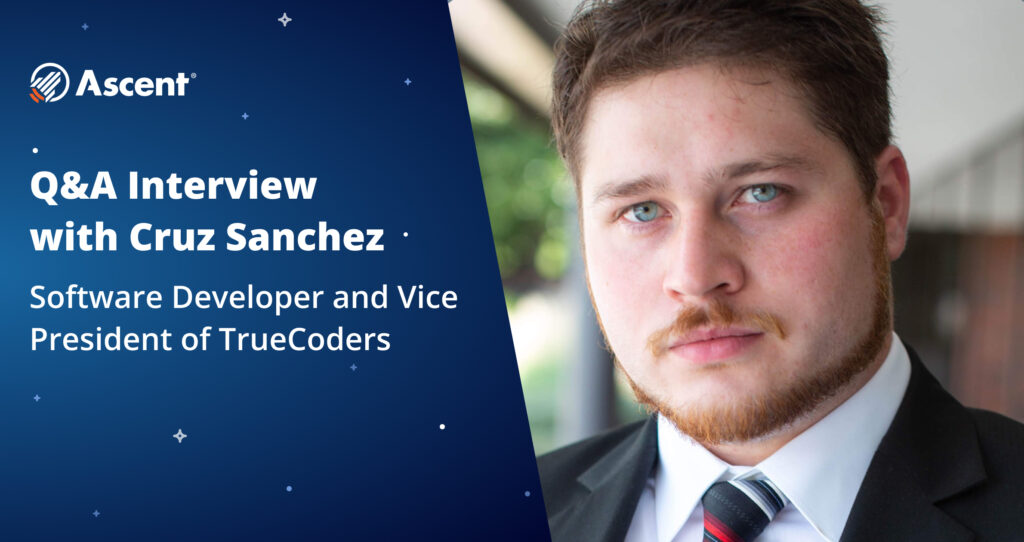 A Q&A Interview with Cruz SanchezEveryone’s path to a career they love looks different.
 -
 9 Reasons Why Coding Bootcamps Are Worth AttendingIs a coding bootcamp worth it? Ascent explores 9 reasons coding bootcamps could be a good decision for your future. Learn more on the blog.
 -
 A Guide to Software Engineer BootcampsLearn more about what software engineer bootcamps are, how they work, and how they can accelerate your career path in this guide from Ascent.
 -
 Is a Cybersecurity Bootcamp Worth It?Learn more about what cybersecurity bootcamps are, how they work, and how they can accelerate your career path in this guide from Ascent.
 -
 Coding Bootcamp vs. Computer Science DegreeLearn more about the differences between getting a computer science degree and completing a coding bootcamp to help you decide which is best for your future.
 -
 Coding Bootcamp Costs: What You Need to KnowWhether you have already been to college or are considering alternative higher education routes, bootcamps can be a great pathway to a fulfilling career.
Tips to save
Ways to earn
Your Ultimate Guide to College Funding
Discover interactive tools, expert insights, and real-world strategies to help you pay for college with confidence.