-
 Ascent Recognized as One of Southern California's Best Places to WorkWe’re proud to share that Ascent has been recognized as one of Southern California’s Best Places to Work by Best Companies Group, an independent organization that honors companies creating strong workplace experiences for their teams. Best Places to Work SoCal is a research-driven program from Best Companies Group that reviews participating companies’ practices, programs, and benefits, then gathers employee feedback about their workplace experience. Companies that meet the program’s criteria are named among the Best Places to Work SoCal. For Ascent, this recognition reflects more than our benefits or programs. It reflects the people who make our work meaningful every day. At Ascent, we’re focused on building a workplace where people feel supported, trusted, and able to grow. Our mission is to help students access education and move toward academic and economic success, and we know that work starts with our own team. When employees feel valued and connected to the work they do, they’re better equipped to make a meaningful impact. Our team is curious, collaborative, and open to new ideas. Leaders encourage learning, create space for feedback, and support career growth across the company. We believe great ideas can come from anywhere, and we work to make sure employees feel heard, included, and empowered to contribute. Supporting employees means supporting the whole person. Ascent offers flexible and hybrid work options, generous PTO and leave policies, paid parental leave, wellness support, continuing education opportunities, and a 401(k) match. These benefits are designed to help team members care for themselves, grow professionally, and build sustainable careers. Recognition is also part of how we show appreciation. Through programs like Cosmic Kudos, professional development opportunities, and company-wide celebrations, Ascent makes time to acknowledge the work happening across the team. It’s one way we help create a culture where people support each other, celebrate progress, and take pride in the impact they’re making. “We’re proud to have built a workplace where employees feel trusted, supported, and genuinely connected to the work they do,” said Emily Skoubo, Director of Human Resources at Ascent. “This recognition reflects the collaborative culture our team has created together and our continued focus on providing an environment where people can grow, contribute, and feel valued.” At its core, Ascent’s culture is people-first and purpose-driven. Team members support one another, celebrate wins together, and stay connected to a shared goal: helping students and families plan for, pay for, and succeed in school. That mix of mission, collaboration, and opportunity is what makes Ascent a great place to work. We’re grateful to every employee who helps shape that culture every day and proud of what we’ve built together. As Ascent continues to grow, we’ll keep investing in our people, strengthening our culture, and creating opportunities for employees to do meaningful work while building rewarding careers. Because when our people succeed, the students and families we serve benefit too.
 -
 Why You Should File the FAFSA® as Early as PossibleThe Free Application for Federal Student Aid, or FAFSA, is the first step in the application process for federal student aid, encompassing all federal loans. For students looking to secure financial aid for the upcoming school year, it can pay off to be proactive and file the FAFSA as early as possible. Read on to find out why, plus we'll review important FAFSA deadlines, eligibility requirements, and tips for a successful application process. 5 Benefits of Filing the FAFSA Early Filling out the FAFSA early maximizes your chances of securing the most possible federal aid. The sooner you apply, the sooner you’ll have a clear view of the bigger financial picture. This gives you more time to seek out alternative sources of funding—like private student loans—should federal aid not cover the full cost of your tuition and expenses. Those are just a few reasons to file the FAFSA as early as possible. Here’s the full list: 1. Maximize Financial Aid Opportunities Some federal student aid, namely grants and scholarships, areis awarded on a first-come, first-served basis. Completing the FAFSA early gives applicants the best chance of securing the maximum federal financial aid they may qualify for. 2. Access to State Grant Programs Not only is some federal aid granted on a first-come, first-served basis, but a portion of state aid is as well, especially state grant programs. Since many of these programs determine eligibility at least partially through the FAFSA, filing early may increase your eligibility for state grants and other state student aid. 3. Avoid Last-Minute Panic The college and student aid application processes can be stressful, especially when facing critical deadlines. Avoiding last-minute rushing gives you time to ensure your FAFSA submission is thorough and accurate. This can help curb your stress levels and ensure you can provide the most accurate information on the application. 4. Ease of Comparison Between Colleges The sooner you complete the FAFSA, the sooner you may receive your financial aid award letters. This can give you more time to carefully compare the aid packages offered by different colleges and make the best possible decision for your educational (and financial) future. 5. More Time to Pursue Other Forms of Financial Aid Submitting the FAFSA and getting your results as early as possible gives you more time to explore and pursue other financial aid options, such as scholarships and private grants. It also gives you more time to pursue private student loans as a supplemental option should federal aid leave a gap between funding and your total expenses. FAFSA Eligibility Requirements To qualify for federal student aid through the FAFSA, prospective students must meet the following general FAFSA eligibility requirements: A demonstration of financial need as determined by information provided in the FAFSA U.S. citizenship, U.S. national status, or eligible noncitizen status A valid Social Security Number, unless the applicant is a citizen of the Freely Associated States A high school diploma, GED, or other recognized ability-to-benefit alternative Enrollment (or acceptance for enrollment) in an eligible degree or certificate program Continued satisfactory academic progress In addition to the above, you’ll also have to consent to have your personal tax information transferred into the FAFSA form and sign a certification statement pertaining to your intended use of funds and qualification to obtain further education. For a visual aid on the information above, check out this FAFSA eligibility infographic. The Importance of Meeting FAFSA Deadlines Meeting FAFSA deadlines is critical for several reasons. First, it can help ensure that you receive the maximum federal financial aid you’re eligible for. Second, it can impact your ability to meet deadlines for state and institutional aid programs. Lastly, advanced planning can help your family plan for college funding and their anticipated contribution. Conversely, missing important FAFSA deadlines can have negative consequences. The pool of available funds you’re eligible to receive might be reduced, limiting financial aid options, and the disbursement of your financial aid may be delayed. Additionally, many aid programs have strict deadlines, leaving applicants who file late submissions ineligible for certain types of aid. With that in mind, here are some important FAFSA deadlines for the 2024-25 school year: December 31, 2023 – The 2024 FAFSA goes live; the earliest possible application date February 1, 2024 – The first state deadline for priority consideration (some states don’t offer priority consideration, and those that do have different dates) April 2, 2024 – The first state deadline for program consideration (all states have different dates) June 30/July 1, 2024 – The deadline for many states (most states set their deadline either at this point or before) June 30, 2025 – The last possible date a 2024 FAFSA can be submitted September 14, 2025 - The deadline for any corrections or updates to be submitted School deadlines – Each institution may have its deadline; check with the school you’re interested in attending The 2025-26 FAFSA form is scheduled for public release on or before December 1, 2024. Additional deadlines will be added as they are announced, so check back for updates. Although not ideal, there are still options if you submit the FAFSA late. However, it will limit your options considerably. According to StudentAid.gov, “some states and colleges continue to award aid to FAFSA latecomers.” Still, your odds of receiving aid become slim, and payouts are often lower. Contact the financial aid offices at schools you’re considering for assistance and information on their options for late submissions. Private scholarships, grants, and loans are one possibility to potentially replace federal or state aid for students who miss deadlines. Tips for a Successful FAFSA Application Completing the FAFSA can significantly impact the financial aid you’re eligible to receive. Here are some tips for a successful application. Gather the necessary documents and information immediately and keep them in a single, easily accessible location. This includes Social Security numbers, tax returns, tax forms (such as your W-2), and other financial records. Provide up-to-date and fully accurate information to increase approval chances and minimize delays or errors in the application process. Complete and submit the FAFSA as early as possible to maximize possible aid. Seek professional guidance from financial aid professionals or counselors if you are unsure about any aspect of the FAFSA. Keep track of all federal, state, and institutional application deadlines that apply to you, and make sure you meet them. Carefully review the confirmation page for accuracy and completeness after you submit the FAFSA and address any issues immediately. Update your FAFSA if your financial circumstances change significantly. Learn More with Ascent You deserve to achieve your academic dreams. But to do so, you must be able to fund them. Whether you’re looking for graduate or undergraduate student loans, Ascent is here to help with a range of options to finance your education, including cosigned student loans and no cosigner student loans. Visit our Bright Future Hub for more resources to help you succeed in college and beyond. FAQ Do you get more money from FAFSA if you apply early? You can often get more money from FAFSA if you apply early. There are a few reasons for this. You may be prioritized for the many federal, state, and institutional aid programs allocated on a first-come, first-served basis. You will also have more time to apply for scholarships, grants, and private student loans and to compare the financial aid packages offered by institutions you’re considering. Why is it best to file the FAFSA as early as possible? There are many reasons why it’s best to file the FAFSA as early as possible. Some of the most important include: Maximizing the financial aid opportunities available to you Maximizing access to state and institutional aid programs Receiving award notifications faster Having more time to make informed decisions about college acceptance and financial planning Maximizing the chances of taking part in the Federal Work-Study program Planning and comparing financial aid packages and eligibility as soon as possible Meeting institutional and state financial aid application deadlines Reducing stress and last-minute panic Minimizing the possibility of mistakes and errors that could negatively impact financial aid eligibility When should I fill out my FAFSA? You should fill out your FAFSA as soon as possible. The FAFSA for the 2024-25 school year is live and can be filled out anytime. Be aware that each state and institution will have its own FAFSA application deadlines, as will many private scholarships and grants. The last possible day to fill out the 2024-25 school year FAFSA is June 30, 2025.
 -
 Which Interest Rate Is Better for a Student Loan, Variable or Fixed?If you submitted the Free Application for Federal Student Aid (FAFSA) and are anticipating a gap between your covered financial aid and your tuition expenses, you’re not alone. Like many students and families in your situation, you’re likely exploring supplemental financing options to help you cover the rising costs of college. This is where options like scholarships and private student loans can come in handy. Understanding the different options for student loans can be a stressful, but important step as you prepare for your educational journey. One consideration you need to make when selecting a student loan is the interest rate. You can choose from two major types of interest rates: fixed or variable. Whether a student loan with a fixed or variable interest rate is a better choice depends on many factors, including your financial circumstances, educational goals, and loan terms. Read on to understand how student loans work and the differences between fixed and variable interest rate student loans. What Is a Fixed Rate Student Loan? A fixed rate student loan is a type of student loan with an interest rate that remains the same for the duration of the loan. The payment due on a fixed rate student loan will not change over the life of the loan. Fixed rate loans can help protect borrowers from increases in market interest rates that could otherwise cause payments to fluctuate. Fixed rate student loans can cover some education-related expenses, including tuition, fees, housing, textbooks, and other educational necessities. Fixed rate loans can apply to undergraduate, graduate, and professional degrees. Typically, repayment on a fixed rate student loan begins once the student completes their degree program, and repayment is done through installments over a fixed number of years. Many lenders offer flexible repayment options, so be sure to compare lenders while you are doing your research. Pros and Cons of Fixed Rate Student Loans There are many advantages of fixed rate student loans, including: Stability and predictability of monthly payments. The ability to accurately and confidently budget your future payments. Protection for borrowers from fluctuations and increases in market interest rates. Knowledge of the total cost of the loan from when it is signed. A potentially lower overall cost if interest rates rise significantly over time. High desirability for risk-averse borrowers. On the other hand, there are also some disadvantages of fixed rate loans, those include: Likely higher initial interest rates. Likely higher initial loan payments. No benefits or cost savings if interest rates go down. Lower flexibility than variable rate loans. Potentially higher overall loan costs when market interest rates remain low over time. The loan may not reflect future economic conditions or market interest rates. What Is a Variable Student Loan? Also known as an adjustable-rate student loan, a variable student loan has an interest rate that can periodically change. In most circumstances, changes in variable rate student loans are caused by updates to a specified financial index. The terms of your loan will determine how often the interest rate may change, whether annually, semi-annually, or monthly. Due to changing interest rates, the payments on a variable rate student loan may fluctuate significantly over the life of the loan. Variable rate loans expose borrowers to fluctuations in market interest rates. Like fixed rate student loans, variable rate loans can be used to pay expenses for undergraduate, graduate, and professional degree programs and for education-related expenses, such as tuition, fees, room and board, textbooks, and other necessities. Repayment for variable rate student loans typically begins after the borrower is no longer enrolled in their degree program unless deferred for some reason, such as entering a new degree program. Repayment takes place over a set time through installments. Like fixed rate loans, multiple student loans can be consolidated into a single variable rate student loan. Pros and Cons of Variable-Rate Student Loans There are many advantages of variable rate student loans, including Likely lower initial interest rates. Likely lower initial loan payments. May decrease interest rates and loan payments over time. High cost-effectiveness in low interest rate environments. Potentially lower overall loan costs in low interest rate environments. Greater flexibility than fixed rate student loans. May better reflect future economic conditions or market interest rates. On the other hand, some disadvantages of variable rate student loans include: Expose borrowers to interest rate volatility. Eliminate the ability to accurately budget for more than a short period in the future. Potentially higher interest rates. Potentially higher monthly payments. Potentially higher overall loan costs if interest rates rise over time. Less desirable for risk-averse borrowers. May expose borrowers to greater refinancing risks. Dependency on market conditions. Uncertainty of the total cost of the loan until it is paid in full. Do not protect borrowers from fluctuations and increases in market interest rates. Factors to Consider When Choosing Between Fixed vs. Variable Rate Student Loans Many factors must be considered when choosing between a fixed rate vs variable rate student loan. Here are some of the primary factors you should evaluate: The Interest Rate Outlook: If interest rates are expected to remain low or increase gradually over the life of the loan, variable rate loans are often more desirable, and vice versa. Risk Tolerance: If you prefer stability, accurate planning, and low risk fixed rate loans are a better choice. If you are willing to accept some risk of paying more under certain market conditions in order to potentially pay less initially, variable rate loans might be a better choice. Loan Repayment Timeline: The shorter the loan repayment time, the less likely you are to experience significant interest rate changes. Loan Terms and Conditions: Be sure to carefully review the terms and conditions of each loan you are considering, including any and all rate caps or limits on variable rate adjustments. Overall Financial Goals and Stability: You should consider your financial priorities, such as a consistent monthly payments, minimizing risk, paying the least possible amount, projected salary, and much more. Should I Get a Fixed or Variable Rate Student Loan? Deciding on what type of loan to apply for can be challenging. Unfortunately, unless you can predict the future, it is impossible to know whether a fixed or variable student loan will be the right choice for you. However, making an informed decision about the best decision for your situation is possible. The first thing to consider are your loan options based on income, credit score, and other eligibility criteria. You may only get approved for certain loans depending on your credit score and other factors. You will need to compare all the terms and conditions of the specific loans to decide on the right one for you. When comparing fixed vs. variable rate student loans, you must balance many factors and consider your circumstances and preferences. For example, if you are uncomfortable with risk, a variable rate loan will probably not appeal to you. On the other hand, if the potential to save money over the long term is worth some risk to you, a variable rate loan might be ideal. If you anticipate your salary will remain relatively stable over time, a fixed rate loan might be more advantageous. For a better understanding of your potential rates and repayment options, it can be helpful to review some hypothetical APR and repayment examples. If you are ready to view your personalized rate, you can check your rate in minutes without impacting your credit score. Learn More with Ascent Choosing the right student loan is a major decision that will impact your finances during and after college. Knowledge is power, so research which loan type is best for your unique circumstances. Whether you are looking for more information on how to get a student loan or comparing undergraduate student loans, Ascent is here to provide various financial wellness resources for students and families. If you need an additional financial boost to help cover your tuition expenses, we offer several loan types to meet your needs including cosigned student loans and no cosigner student loans. We look forward to helping you take the next step toward pursuing your goal in college, and beyond. Fixed Rate vs Variable Rate Student Loan FAQs Can I Change my Student Loan from Variable to Fixed? In many cases (but not all), you can change your student loan from variable to fixed if you meet certain criteria. You can do so by consolidating multiple student loans into a single fixed rate student loan or by refinancing the loan. Whether or not these options are available to you, as well as the specific terms that are available to you, will depend on several factors, including the type of student loans you have, the policies of the lender or loan servicer, the terms of your loan, and your creditworthiness and repayment history. Can you Refinance on a Fixed Loan? It may be possible to refinance a fixed rate student loan. You will typically have to obtain a new loan with different terms, including a new interest rate. Whether you can refinance a fixed rate student loan depends on several factors, including the loan type, the lender’s policies, and your financial situation. It may also be possible for you to consolidate your fixed rate student loans with other student loans to form a new, single student loan.
 -
 What is FAFSA and how does it work?The Free Application for Federal Student Aid (FAFSA) is a form current and future students need to fill out to get financial aid. Learn more from Ascent Funding.
 -
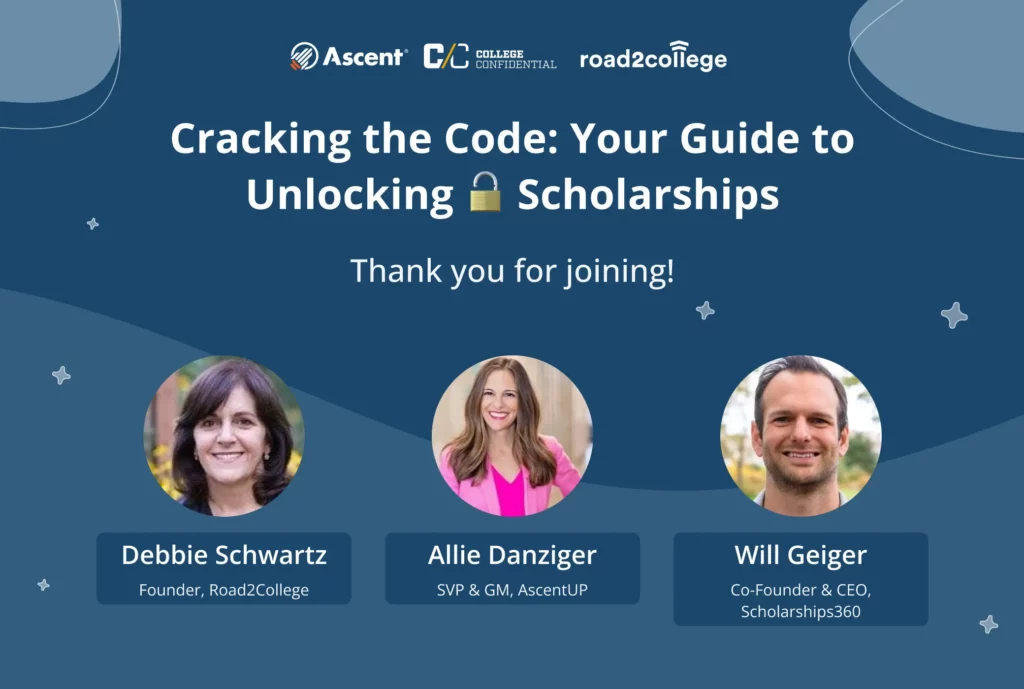 Webinar Recap: Cracking the Code on ScholarshipsAs the cost of education increases, scholarships have become a lifeline for countless students looking to pursue their academic dreams. However, with so much competition and so many options, the scholarship search can be disheartening. Understanding the nuances of scholarship applications, finding the right opportunities, and writing a winning scholarship essay remain daunting tasks for many. Luckily, Ascent and Road2College joined forces to discuss scholarship options, featuring panelists Will Greiger, Allie Danziger, and Debbie Schwartz. In case you missed our webinar, “Cracking the Code: Your Guide to Unlocking Scholarships,” you can watch some of the recording here: https://www.youtube.com/watch?v=X53OnJ5VQp0 What are the different types of scholarships? Understanding what types of scholarships are available is critical when trying to decide which ones to apply for. Will Greiger, CEO and Co-founder of Scholarships360, breaks down the four main types of scholarships: 1. Federal & government scholarships: These include grants such as the Pell Grant and other types of aid awarded through the Free Application for Federal Student Aid (FAFSA ®). Some states also have aid programs that fall into this category as well. 2. Scholarships from colleges: Like government scholarships, a college may also use information gleaned from your FAFSA to award you need-based aid. Many college scholarships are based off academics or talents (aka merit-based scholarships). A subset of college scholarships is a departmental scholarship, which you might earn for being in a specific area of study, studying abroad, or being a part of a club. 3. Non-profit scholarships: Non-profits are well-known for their generosity in scholarship awards. Some examples of these organizations would be the Elks Club, the Girl Scouts, or a smaller, local non-profit in your community. 4. Scholarships from private organizations: Many private companies also give out scholarships! To date, Ascent has given away over $330,000 in scholarships to students and families. Enter now for a chance to win one of our no-essay student scholarships – it only takes a few minutes! You do not need to have an Ascent loan to enter. https://www.ascentfunding.com/scholarships/ Common scholarship myths To get you started on the right foot, we take a moment to break down and debunk these top misconceptions about applying for scholarships: 1. “Only top achievers & athletes get scholarships” - While being a star athlete or straight A student can be a great thing to mention when applying for scholarships, there are plenty of opportunities out there if that’s not you. Researching for more niche scholarships that align with your unique passions, or entering more content style scholarships could be the best way to go. Plus, many scholarships are focused more on the financial need of the applicant, meaning federal and government scholarships may be a great fit for you! 2. “Scholarships are too competitive, so don’t bother applying!” - Applying for financial aid may feel competitive, but researching and applying for scholarships that align with your talents to boost you toward the top of the applicants. Applying for local scholarships will also mean less competition. 3. “Start researching for scholarships your senior year of high school” - While there may be plenty of scholarship opportunities out there during your senior year, there are scholarships available to you as early as your freshman year and plenty to keep exploring throughout your college journey. 4. “You must be a great essay writer to win scholarships” - Essay scholarships can feel daunting, and you should always invest time and effort into your submissions, but showcasing your creativity and who you are as an individual in your essay can be just even more valuable. Starting your scholarship search: Before diving into your scholarship hunt, our panelists suggest a quick look inward to find what you should be looking for in a scholarship: - Consider what makes you unique and start there. This will give you insight on the types of scholarships you should look for based off your passions, talents, and life experiences. - Be specific when you consider all the qualities of yourself that you might include in your scholarship research. Even the smallest or strangest interests could generate scholarship opportunities! - The more niche, the better! Finding a scholarship opportunity revolving around a lesser-known hobby or interest can mean less competition and a better chance of winning that money for school. A few key takeaways: As you embark on your journey of paying for college, we’ll leave you with these four key takeaways to keep your scholarship search successful: 1. Scholarships offer invaluable financial support for students and families on their educational journey. 2. Start your scholarship search early to maximize your opportunities 3. Leverage your various scholarship research tools, including online platforms, educational institutions, and organizations 4. Apply for as many scholarships as you can! Congrats to our latest scholarship winner! One of our top priorities at Ascent is to contribute to the success of all students. That’s why we have given over [scholarship_awards_amount] in scholarships to date! Join us in congratulating our most recent scholarship winner below: Kamiyah B., Pace University, Unlocking Scholarships $500 Scholarship Giveaway
 -
 How Long Does it Take to Get Student Loans? (Federal and Private)How long does it take to get a student loan? Factors such as when you submit the Free Application for Federal Student Aid (FAFSA®), your credit score, and the loan certification process all play a role in determining when you will receive your student loan funds. However, we understand that you must get your student loans in time to pay for tuition, books, and other college expenses. Let’s unpack how long the application and review process takes for federal and private student loans and the steps you can take to get ahead of the process. Key Takeaways Start your student loan application as early as possible—ideally right after your college acceptance—to give yourself enough time to complete paperwork, resolve issues, and secure funding before tuition is due. Federal student loans typically take several weeks to a few months to process, depending on when you complete the FAFSA and how quickly your school certifies the loan. Private student loan timelines vary by lender but often take anywhere from a few days to a few weeks, depending on eligibility checks, credit evaluations, cosigner involvement, and school certification. Loan disbursement usually happens shortly before the academic term begins, with funds going directly to the school to cover tuition and fees. Monitor your loan status using lender-specific portals or federal tools like the FAFSA mobile app, and contact your lender directly if you haven’t received your loan funds by the expected date. When to Apply for Student Loans The best time to apply for student loans is as soon as possible. For most students, this is shortly after their acceptance. There are several reasons for this timeline. Overall, loan providers (including the federal government) receive increasing applications as the school year approaches. Some loans and other forms of student aid are granted on a first-come-first-served basis, meaning that an earlier application makes it more likely you will receive them. Because timing fluctuates considerably from applicant to applicant, it’s challenging to estimate exactly how long it takes for student loan approval. However, you should still be aware of the general timeline for the process. Starting the loan application process as early as possible will help save you some stress in the long run and may even increase your chances of securing funding. It’s also important to consider that even if you qualify for federal loans, these may only cover part of the cost of college attendance. Because of this, it’s common to apply for other financing options, such as private student loans, or alternative forms of financial aid, such as grants and scholarships. Starting the application as soon as possible will give you more time to find supplemental funding if needed. How Long Does it Take to Get Federal Student Loans? How long does it take to get a student loan from the federal government? The average time to receive your funds can vary significantly based on several factors, primarily when you fill out your FAFSA application. The process generally takes several weeks to a few months, depending on how many applications they receive. Here is a general list of steps to be completed to receive your funds: Create an FSA ID: The Federal Student Aid (FSA) is your electronic signature for the FAFSA and other federal student aid documents. To create your FSA ID, visit https://studentaid.gov/fsa-id/create-account/launch. Gather necessary information: You will need your Social Security Number, full name, date of birth, tax information, and other details about your family’s financial situation. Complete and submit the FAFSA: The Free Application for Federal Student Aid is the application for federal student aid and will determine your qualifications for federal student loans. Receive and review your Student Aid Report (SAR): After processing your FAFSA, the government will send you your SAR. Review for accuracy and make any necessary corrections. Review financial aid offers: Colleges and universities you have applied to will send you financial aid offers once your FAFSA has been processed. Accept or decline federal student loans: If you choose to accept the loans, you will follow the instructions provided by the school. Complete entrance counseling: If you are a first-time borrower of federal student loans, you must complete entrance counseling to learn about your rights and responsibilities as a borrower. Sign the Master Promissory Note (MPN): The MPN is a legal document in which you promise to repay your federal student loan. How Long Does It Take to Get a Private Student Loan? Like federal loans, the typical timeline can vary. This is because each lender has its process, and each applicant must navigate it uniquely. Generally, most applications take a few days to several weeks or months. Here is a general list of steps to complete when working with Ascent to receive your funds: Determine loan amount – Calculate the amount you need to borrow, including tuition, fees, living expenses, and other educational expenses. Remember that private loans can cover up to 100% of the total cost of attendance, minus other aid received. Check your eligibility – Every lender has eligibility requirements for borrowers, but most consider credit history, income, enrollment status, and similar factors. Gather necessary information – The exact information required will vary but will likely include personal, academic, and financial information. Apply for the loan – Most loan applications can be completed online or at a lender’s office. Pass the credit check – Most lenders require a credit check to determine your creditworthiness. With Ascent, you can check your rate in under 3 minutes without impacting your credit score. Find a cosigner if necessary – If you lack sufficient credit history or do not meet the eligibility requirements of the loan, you may need a cosigner. (Even if you qualify without a cosigner, applying with one may qualify you for a lower rate or better terms). Get the loan approved – The lender will review your application after it’s submitted. Review and accept loan terms – If you are conditionally approved, you must carefully review all the loan terms, including interest rate, fees, and repayment terms. Then, you must decide whether to accept the loan offer. Complete school certification – Once you accept the loan offer, the school’s financial aid office may need to certify the loan amount by confirming your enrollment status and ensuring the loan amount adheres to the school’s cost of attendance. Finalize the loan – Complete any additional requirements the lender demands, such as signing the loan or providing additional documentation. Once your loan is finalized, review your loan terms and conditions to determine when the payment will be issued to your school. For example, Ascent’s student loans are distributed to schools on the second Wednesday after the program starts. How to Monitor Your Student Loan Status For a federal student loan, you must first access your personal FSA account to monitor your federal student loans. From there, you can view loan details and identify the loan servicer for each loan. You can also create an account on studentaid.gov using our FSA ID to access your federal student aid information and manage your loans. There is also a Federal Student Aid Mobile App that can help monitor your federal loan status. The process of monitoring your private student loans will vary significantly from lender to lender. The best way to begin is to contact your lender directly. Check your loan agreement or the lender’s website for contact information. Many lenders have an online portal where you can log in to view your account, while some (including Ascent) may offer a mobile app for added convenience. If you have specific questions or concerns about your student loan, contact your lender’s customer service department or the phone number on your monthly statement. If you’d like to contact your dedicated Ascent college student loan specialist, contact us at 877-216-0876 or [email protected]. Private Student Loans vs. Federal Student Loans: What’s Right for Me? Choosing what type of loan is right for you is entirely determined by your unique needs and circumstances. Some students will find that federal loans alone will meet their needs, but most will find they will need additional funding sources. Similarly, the amount of aid available to students will dramatically differ based on needs. The only way to know for sure whether federal, private, or both student loans are the right choice for you is to complete the application process and compare your options. Whatever option you choose, you must begin the process as soon as possible to give yourself the most time and options. For more information about student loans, visit our Student Loans 101 page or learn how to get a student loan. Learn More with Ascent Prioritizing your student financial aid and ensuring it is all in place before you start your college education is crucial to your success with the loan process. That means you should start the student loan application process as soon as possible. Luckily, you can start the process today. Ascent offers a variety of undergraduate student loans and graduate student loans to help you achieve your financial goals and academic dreams. With cosigned student loans and no cosigner student loans, you can find a loan type that best fits your unique needs. How Long Does it Take to Get a Student Loan FAQs How Long Do Student Loans Take to Process? The time it takes to process a student loan varies significantly by the lender and the school. While some loans may be processed in as little as a few days, others may take several months. Are Student Loans Given to You Immediately? Most student loans are paid out after some time and will be disbursed directly to the school shortly before the start of the school year. Why Hasn’t My Student Loan Been Disbursed? The only way to find out why your student loan hasn’t been disbursed is to contact your lender and speak with one of their representatives. Some common reasons why a lender would not have disbursed a student loan include incomplete loan requirements, enrollment status, school certification delays, incomplete verification process, incomplete loan acceptance, or the loan not yet scheduled to be disbursed.
 -
 Navigating Credit Scores: Your Key to Long-Term Financial SuccessYour credit score is a number between 300 and 850 that’s determined by a range of factors including the current amount of debt you have, the type and number of bank accounts you have open, how you utilize your credit, your payment habits, and your credit history (if you have any). By understanding credit scores and why they matter, you’re well on your way to reaching financial independence. Why does my credit score matter so much? Many people think that the main reason they need a good credit score is the ability to borrow money. While this is true and better credit can lead to better approval rates for credit products (like a credit card or loan), lower interest rates, and better credit terms and benefits, a good credit score is also important for your career success. Many careers and professional opportunities today may require you to manage finances or determine your department’s spending and budget, and at the very least show that you are responsible with finances. Employers occasionally check credit history as part of the interview process – and you want your credit history to look good! Curious what kind of student loan rates you can get without impacting your credit score? Check your rates here. Have a lower score? Here are 6 ways to build your credit history: 1. Learn to budget Think of budgeting as a roadmap for your money. You calculate how much money you earn, and figure out what you can and can’t afford. When you budget well, you're more likely to pay your bills on time and manage your debts responsibly. This shows lenders that you're reliable, which can gradually increase your credit score. Whether it’s finding a mentor, using free education tools like AscentUP2, helpful budgeting apps, or keeping track of subscriptions that can sneak up on you, budgeting is essential for managing your finances effectively and achieving your financial goals. If you’re looking for more information on how other students budget, learn from Gemma Cook, a past intern at Ascent, on her best practices on our blog! 2. Apply for a secured card A secured credit card can help you build your credit history. As an example, with the NerdUp by NerdWallet card, you don’t need credit history to build credit history. Designed for people looking to build or rebuild their credit history, there’s no interest, no annual fees, no application fees, and no catch*. How the NerdUp by NerdWallet card works: Make a deposit: Put down an initial deposit of $100 or more to set your credit limit Build your credit: As you make on-time payments and strengthen your credit, you may start to become eligible for unsecured cards. Get a new card: When you're ready to graduate, NerdWallet will recommend smart unsecured credit cards from its partners based on your spending. 3. Keep track of deadlines to avoid late or missed payments Be sure to keep track of when your bills are due - if you miss a payment or pay late, it can negatively affect your credit score. But don't worry! By staying organized, being proactive, and making sure you pay on time, you're showing lenders that you're good at managing your money which gives you an opportunity to boost your credit score. Be sure to keep a planner or set calendar reminders with all your due dates and sign up for autopay to avoid late or missed payments! (TIP: Some lenders will give you discounted rates when you sign up for autopay.) 4. Consider credit counseling Credit counseling can be a smart move if you're struggling with debt or managing your finances. When you meet with a credit counselor, they'll take a close look at your finances, including your income, expenses, debts, and savings. Based on this information, they'll help you come up with a plan to manage your money better. Working with a credit counselor not only helps you manage your finances better but can also positively impact your credit score. So, it's not just about managing your money—it's also about making your credit score look good too! 5.Add your rental history to your credit reports Adding your rental history to your credit reports can be a smart move for building your credit history. Your payment history is a key factor in determining your credit score, and including on-time rental payments can demonstrate responsible financial behavior to lenders. By showing that you consistently pay your rent on time, you're building a positive credit history, which can help you qualify for loans, credit cards, and other financial products with better terms in the future. 6. Choose your lenders wisely Good lenders can help you build a strong credit history, making it easier to get approved for loans and credit cards in the future. But if you choose lenders who aren't so great—maybe they have sneaky fees or unfair practices—it could actually hurt your credit and wallet. At Ascent, we are committed to helping students and families build responsible credit; as a leading student lender, we are focused on each student’s journey to academic and financial success, ensuring they have the right tools, knowledge and skills to be set up for long-term success. We put our borrowers first with benefits like a 1% cash back graduation reward1, access to AscentUP2 a professional training platform to help learners get access to career readiness tools and resources that can help them succeed in school and in their careers, autopay discounts3, and much more. So, take your time, do some research, and choose a lender that treats you right, and helps you reach your credit goals without any nasty surprises! Your credit score can stick with you for a long time, but it doesn't have to be a burden. With the right tools and patience, you can build your score and create more opportunities for yourself. It's all about establishing credit responsibly, being proactive and managing your credit wisely by paying bills on time and keeping balances low. It takes time, but with dedication, you can make positive changes and set yourself up for financial success! *NerdUp by NerdWallet credit card: NerdWallet is not a bank. Bank services provided by Evolve Bank & Trust, member FDIC. The NerdUp by NerdWallet Credit Card is issued by Evolve Bank & Trust pursuant to a license from Mastercard International Inc. The NerdUp maximum credit limit is $10,000. Any deposits above this amount will not increase your credit limit beyond $10,000. Impact on your credit may vary, as credit scores are independently determined by credit bureaus based on a number of factors including the financial decisions you make with other financial services organizations. Failure to make monthly minimum payments by the payment due date each month may result in delinquent payment reporting to credit bureaus which may negatively impact your credit score. This product will not remove negative credit history from your credit report. There are instances when cardholders will be assessed a fee, including but not limited to ATM withdrawals, cash advances, returned payments, or late payments. See NerdUp by NerdWallet and cardholder terms and conditions for details. 1Ascent’s 1% Cash Back Graduation Reward is for eligible college students only and subject to terms and conditions. Eligible students must request the graduation reward from Ascent. Learn more at AscentFunding.com/CashBack. 1% Cash Back Reward amount dependent upon total loan amount for Ascent college loan borrowers; approximately $365 average reward amount based upon eligible borrowers who received Cash Back Rewards in 2023. 2Eligibility for the AscentUP platform requires that a student be an undergraduate associated with an Ascent college loan, either as the borrower or through a parent, grandparent, guardian, or sponsor who has applied for an Ascent parent loan. Ascent’s graduate student loans and consumer loans for bootcamps do not qualify for access to AscentUP. Eligible students must agree to the AscentUP terms of service and privacy policy before accessing AscentUP. 3The final ACH discount approved depends on the borrower’s credit history, verifiable cost of attendance, and is subject to credit approval and verification of application information. Automatic Payment Discount of 0.25% is for credit-based loans and a 1.00% discount is for outcomes-based loans when you enroll in automatic payments. For more information, see repayment examples or review the Ascent Student Loans Terms and Conditions.
 -
 How Do Student Loans Work? A Comprehensive Guide for ParentsIf your child plans to attend college, one of your primary concerns may be how to help them fund their education through options like undergraduate student loans. Student loans could help make their dreams a reality. But navigating the complex world of student loans isn’t easy. This student loan guide for parents covers what you need to know to support your child through the student loan process. We’ll demystify the process by breaking down everything from how to choose between federal and private student loans to how to consolidate and refinance student loans. Can Parents Get Student Loans For Child? As a parent, supporting your child through the student loan process helps pave the way for their academic and financial success. In addition to helping your child graduate with minimal debt, your involvement in the loan process could help them secure a larger loan amount or more favorable loan terms. Helping your child choose the right student loan typically begins with researching the types of federal and private student loans available. Before comparing lenders, you should also familiarize yourself with interest rates, repayment plans, loan forgiveness plans, and other loan terms. While student loans are one form of financial aid, you should encourage your child to explore all available financial aid options, including: Federal aid, such as Pell Grants and subsidized loans, may be available depending on your family’s financial circumstances. Students can determine their eligibility by completing the Free Application for Federal Student Aid (FAFSA®). Explore our FAFSA 101 guide for an in-depth review of the FAFSA application process and deadlines you and your child should be aware of. Scholarships and grants are available through various sources, including private organizations, charities, labor unions, community groups, and religious organizations. Some organizations award based on academic or extracurricular achievements, financial need, or a specific field of study, while some organizations (like Ascent) extend scholarship eligibility directly to parents. Private student loans are issued by banks, credit unions, and lenders like Ascent. Private student loans can cover any gap between federal aid and the full cost of tuition and expenses, helping to limit out of pocket costs. Private loan interest rates vary by lender and are influenced by the borrower’s credit score, credit history, loan type, and other factors. Private student loans may offer more flexible borrowing limits, more repayment options, and faster approval times compared to federal loans. Choosing Between Federal or Private Student Loans While thousands of student loan options are available, federal and private student loans are the two most common types. The United States government provides federal student loans and typically has uniform application processes, eligibility requirements, interest rates, and loan terms. Private student loans are issued by private organizations, with loan options, terms, and approval criteria that vary by lender. Federal Student Loans for Your Child Several types of federal student loans are available, each with unique terms and conditions. The most common include PLUS loans, direct subsidized loans, and direct unsubsidized loans. Parent PLUS loans are another loan option specifically designed to help parents finance their dependent children’s undergraduate education by bridging the gap in financial need not covered by other forms of aid. One major advantage of federal student loans is that the government offers several loan forgiveness and repayment programs. Two of the most prominent are: Public Service Loan Forgiveness (PSLF): This program is available to those working in qualifying public service jobs. Income-Driven Repayment (IDR): These plans base your monthly payments on your income, and the remaining balances are forgiven after a certain period. Federal loan repayment begins shortly after your child graduates. Typically, there is a six-month grace period before payments begin. Depending on your child’s financial circumstances, several repayment plans are available, including income-driven, as mentioned above, as well as standard, which offers a fixed monthly payment over a set period of time, usually 10 years and extended, which offers repayment beyond the 10 years. While it’s hard to know what post-graduation will look like, you can find comfort in options like student loan deferment and student loan forbearance which may also be available to help your child have a smoother repayment journey during financial hardship, if needed. Private Student Loans for Your Child Private student loans can help bridge the financial gap when federal student aid does not cover the full cost of your student’s degree. They can also help cover tuition expenses if your child is deemed ineligible for federal aid, based on financial need. Each private lender and loan type has unique qualification criteria, loan terms, and conditions. Carefully research your options and compare different lenders. Consider elements such as lender reputation, interest rates, repayment term options, quality of customer service, and if they offer support in your career journey post-graduation. Unlike federal student loans, which have fixed interest rates that remain the same regardless of market conditions, private loans may offer either fixed or variable rates that go up and down. Understanding the future economic outlook is critical when determining which type of interest rate will be best for your student over the long term. It is also important to know the repayment terms, grace periods, and available forbearance options, which can vary significantly from those available on federal student loans. Application Process and Eligibility Requirements While some lenders allow you to check your rates without a hard credit check upfront, private lenders generally conduct a credit check to determine loan eligibility. If your child has a limited credit history or poor credit, they may not be eligible for no cosigner student loans. However, as their parent, you may be able to cosign your child’s loan or apply for a parent student loan, the latter in which the parent or guardian is the sole borrower. Applying as a cosigner has several benefits. As a cosigner, you may help your child meet minimum qualification criteria, qualify for a larger loan amount, or secure more favorable terms. This decision should not be taken lightly, however, as cosigning means you will take responsibility for repayment of the loan if they cannot. Every private lender has a unique application process, and your child will need to apply directly with each of their chosen lenders with a separate application for each loan. Approval and available interest rates will be contingent on your child’s creditworthiness, including their credit score and credit history (or lack thereof). In addition, cosigning a loan can impact your credit positively or negatively, depending on how repayment is handled. Make sure that you and your child are fully aware of all terms and conditions before accepting any private loan to ensure you can fulfill your financial obligation. Planning for Student Loan Repayment with Your Child Helping your child plan for student loan repayment may dramatically improve their financial health and reduce their stress during and post-graduation. Charting a repayment plan is a big step toward managing your child’s student debt successfully and responsibly. It also helps them understand the implications of their financial commitment, budget effectively, and avoid stress. A structured plan can help your child make timely payments and build a positive credit history. Here are five tips for healthy repayment practices: ACH Payments: Set up automatic payments so you don’t miss a payment! Some lenders (like Ascent) offer a discount for enrolling in automatic payments. Proper Budgeting: Don’t budget just for student loan repayments. Craft a comprehensive budget that includes all monthly loan payments, essential living expenses, savings, recreational money, and all other regular expenses. Extra Payments: Making extra payments or paying more than the minimum when possible will speed up the repayment process and reduce the total interest paid. Some student loan providers will even offer discounts to incentivize borrowers to start making minimum payment during in school and grace periods. Refinancing: Refinancing can lower interest rates, decrease monthly payments, and lower the total repayment cost. Loan Forgiveness Programs: Forgiveness programs like PSLF offer a pathway to debt relief after a qualifying period, especially for federal student loans. Emergency Fund: Building an emergency fund provides a financial safety net that helps avoid missed loan payments when unexpected expenses arise. Additional Student Loan Resources for Parents Although the world of student loans can seem complex, your family is not alone in this process. Plenty of resources exist for parents and students alike to help navigate this major financial decision. Here are some to check out: Financial aid offices and counselors at colleges and universities you are considering Parent support networks like College Parents of America or institution-specific groups Online tools and mobile apps for tracking repayment of student loans and other debt, such as Mint and EveryDollar The Federal Student Aid (FSA) website The Institute of Student Loan Advisors (TISLA) Ascent’s Student Loans 101 guide and blog Learn More with Ascent At Ascent, we’re committed to helping your child achieve their educational dreams while building a strong financial foundation for their future. From our award-winning loan options to our dedication to student success and financial wellness, we go beyond the typical student loan experience. Our graduate and undergraduate student loans are designed with your family in mind. Whether you’re cosigning your child’s loan or applying for a parent student loan, Ascent has the right loan for you with some of the most flexible and competitive repayment terms in the industry. FAQ Do parents have to take out student loans for their kids? Parents do not have to take out student loans for their kids, and many lenders (including Ascent) offer non-consigned loans for students who qualify. A cosigned loan may be a good option for students who do not qualify for a loan in their name. A cosigned loan can help student borrowers build their credit history. In contrast, the added financial security of the cosigner may help qualify them for a better interest rate and loan terms. Plus, borrowers with cosigners can apply to release their cosigner after making 12 consecutive full, on-time payments. How much can a parent borrow for student loans? The amount a parent can borrow for student loans will vary from one parent to the next depending on their financial qualifications, the loan type, and the lender terms.
 -
 When Does Student Loan Interest Start To Accrue?When does interest start to accrue on student loans? Ascent explains when student loans start to accrue interest and when to start paying.
 -
 FAFSA Simplification Act: Changes to the FAFSAAscent Funding walks you through the changes that will be happening to the FAFSA with the FAFSA Simplification Act.
 -
 When is FAFSA Due for the 2024-25 School Year? Deadlines & FAQs for StudentsWorried about missing important FAFSA deadlines for the upcoming school year? Ascent Funding outlines all of the financial aid deadlines you need to know!
Tips to save
Ways to earn
Your Ultimate Guide to College Funding
Discover interactive tools, expert insights, and real-world strategies to help you pay for college with confidence.